The Tata Super Ace mini truck is narrow enough, with a long wheelbase, to be an easy drive in tight city streets while remaining stable in middling fast turns.

She’s compact enough to make navigation in tight spaces a breeze.
The Tata Super Ace mini truck is narrow enough, with a long wheelbase, to be an easy drive in tight city streets while remaining stable in middling fast turns.
She’s compact enough to make navigation in tight spaces a breeze.
Drive her right and the CVT variant of the second-gen Suzuki Celerio is the closest you’ll come to experiencing a hybrid without it being, you know, an actual hybrid.

Exploiting that early clutch lock-up on the Celerio’s JATCO CVT7 gearbox mitigates the typical “rubber-band” feel of continuous variable transmissions. And, with the sub-compact hatchback’s 1.0L 3-cylinder K10B engine delivering peak torque so early, waiting those few seconds for lock-up before getting assertive on the gas pedal will deliver this pleasant disconnect between a nice surge in force and the engine still running quietly under 2500rpm.

Good torque even with silent running and the smooth shiftless feel of a sensibly driven CVT, you’d think they somehow snuck in an electromotor under the hood.

She’s the fleetest, most compact Honda brandishing their 118hp 1.5L i-VTEC engine–a hatchback against the City sedan, the Mobilio MPV and their BR-V crossover SUV.

And, with a squat and long wheelbase geometry underneath a one-box design that makes the cabin paticulalry rigid while making it look more like a two-row MPV, the Jazz’s power and handling puts the maxi-space hatchback at home even on climbing twisties.
The Tata Super Ace “Big Boy” with it’s air-conditioned jeepney-style rear body can seat 16 in back and 2 in front. That 18 pax capacity and the over two tons of gross weight is all the more remarkable given the mini truck’s diminutive yet robust 1.4L turbo diesel that’s smaller even than that on a Hyundai Accent sedan.

Yet the powertrain delivers with a 5-speed manual gearbox that puts torque through extra deep 1st and 2nd gear ratios.
Exclusive Hino trucks and buses distributor Hino Motors Philippines (HMP) turned over ten W342L light duty aluminum panel trucks and eight SS2P heavy hauling tractor heads to logistics service provider Inland Corporation last month, providing initial units in the customer’s fleet upgrade program and hoping to fill their orders for 150 more in 2017.

At a ceremony held at the HMP plant in Canlubang, Laguna last November 8, Hino chairman Vicente T. Mills, Jr. and president Horoshi Aoki formally turned over the new trucks to Inland president Teresa R. Antonio and senior vice president for trucking and logistics Alfredo O. Gomez.

HMP’s Vicente Mills said: “We are confident in our capability to support Inland Corporation’s logistics needs and business growth targets. Total support is our mantra and we are committed in delivering this promise to Inland Corporation and our other clients.”
All trucks delivered were tailored to some extent by HMP to Inland’s requirements. Engaged in assembly and exclusive distribution of Hino commercial vehicles for more than 40 years now, HMP draws on decades of expertise to produce current-day models to meet customer requirements while introducing innovations both from Hino headquarters in Japan and here with their local truck-body manufacturing operations. Mills recalls when Hino was called on to produce mobile service buses like roving hospitals and the Supreme Court’s fleet of courtrooms on wheels.
Inland’s Teresa R. Antonio confirms: “We will continue to upgrade our fleet and explore more services in line with movement of merchandise for production from plant to plant. We are banking on Hino’s product and service expertise to increase our local reach.”
Mills estimates that Inland has 180 trucks in their fleet now and said that HMP is looking to supply 150 new units as part of the logistics company’s re-fleeting program next year. This year HMP sales grew by 46 percent from January to September and Mills attributes the up-tick in numbers to the growing trend of trucking customers themselves stipulating rolling stock acquired brand new by logistics companies doing their mission critical deliveries.
Just months after the model was introduced globally, Suzuki Philippines brings back to their showrooms the Super Carry of long-running multi-cab fame. This time, it’s with a powertrain that’ll cause double takes among the street savvy and even with those who’ve thought of upgrading beyond their surplus-sourced mini trucks. For the new Super Carry mounts a two-cylinder 793cc intercooled turbodiesel, a unique engine that’s been proving itself roadworthy in tough real world conditions. Since last year, its been used in India on the diesel variant of Suzuki’s popular Celerio sub-compact hatchback.
Press Statement by Suzuki Philippines, Inc., “Suzuki Philippines brings new line in the Utility Commercial Vehicle segment with all-new Super Carry,” 2016:

Manila, 27 October 2016—Today, Suzuki Philippines (SPH), the pioneer manufacturer of compact vehicles, officially launched the all-new Super Carry at the Megatent Events Venue in Quezon City.
Bringing in additional line up in the utility commercial vehicle segment, an emerging segment with 11% percent year-on-year growth, SPH aims to cater to the needs of small to medium-sized businesses.
“Super Carry is brought to the Philippine market with the objective of improving business processes and operations especially among small and medium sized businesses which comprise more than 90 percent of the overall in the country” said Mr. Shuzo Hoshikura, Suzuki Philippines General Manager for Automobile.
“We seek to help more businesses flourish and reach their maximum potential and what better way is there than through this reliable workhorse,” he continues.
Following the ever-growing number of MSMEs in the country are corresponding implications. Among these are the daily inconveniences brought by the pressing need for transport vehicles such as heavy traffic, increasing fuel costs, uneven road conditions and worsening pollution.
Built to endure the toughest of conditions, this utility commercial vehicle is designed to address such issues. Equipped with strength, high quality performance, superior loading capacity and a Euro-4 certified Diesel engine, Super Carry is really meant to serve as a perfect fit for any kind of business’ requirements in a manner that truly cares for the environment.
High performance
Offering superior loading capacity with an area of 3.25 sqm and a maximum capacity of 735 kg, Super Carry is equipped with a light steering wheel and a low turning radius of 4.3M which allows effortless driving no matter how heavy the cargo is and ensures easy maneuverability even in tight areas.
It features latest automotive technologies – the 793cc, 2-cylinder and DDis Euro-4 diesel engine with 5 speed manual transmission, and a peak power of 32 HP @ 3,500 RPM and torque of 75 NM @ 2,000 RPM – making the vehicle more cost efficient and eco-friendly than others of the same caliber. It consumes a mere liter of diesel for an average distance of 22.07 km which makes going around for errands less costly and more practical.
The new engine is also equipped with an Engine Control Module or ECM that monitors its condition during servicing and ensures continuous peak performance. It complies to the latest regulations on emissions standards and exhibits lower emissions than Euro-2 engines at 68 percent less particulate matter emissions, 57 percent less nitrogen oxides emissions, and 50 percent less carbon monoxide emissions, for a more environment-friendly driving.
Comfort & Convenience
The designers of the Super Carry gave careful thought to the comfort and convenience of the driver and passengers and enhanced both via the vehicle’s spacious interior and cabin features.
With the driver seat adjustable up to 90mm coupled with the extended portion of the passenger seat, there is enough legroom and space for the driver to lie down and combat fatigue in between long drives.
The cabin also features numerous cubbyholes, trays, pockets and storage spaces for documents, food items and other necessities.
Underneath the seats are thick glass fiber heat shields for better insulation. The bulb/balloon type weather strip in the Super Carry also lessens noise, vibration and harshness (NVH).
To add to the driving comfort, its pedals, gear shift knob and instrument panels are all ergonomically positioned.
The vehicle’s rear window is also bigger and can readily be opened with an ergonomically placed locking mechanism. This allows a large amount of air to flow inside the cabin when needed.
Safety & security
Fitted with theft prevention measures, Super Carry features a lock-on fuel tank cap, a secured spare tire mounting bracket, and battery with provision of lock.
Inside the cabin, the seats are equipped with a 3-point Emergency Locking Retractor (ELR) seatbelt.
The Super Carry ensures superior braking performance via a front ventilated disk brake for better heat dissipation, plus drum brakes on the rear featuring Load Sensing Proportioning Valves (LSPV) for stabilized braking in different load conditions.
Sealing the deal are the high tensile and galvanized chassis materials used in the Super Carry. The galvanized materials provide more resistance to rust while high tensile materials limit intrusion inside the cabin.
Its integrated sheet metal body front panel enhances body quality and rigidity, as well as, ensures the driver’s safety. This is complemented up front with a bigger windscreen for better driver visibility.
Accessories
The Super Carry has a 1 Din Audio Unit with Built-In speaker featuring AM/FM Tuning, USB/SD Interface, Auxiliary input and LCD display will make driving the Super Carry more enjoyable.
This Super Carry in four different body types with the new APV Utility Vehicle (UV) with Dual Aircon will surely bring any business to new heights!
| The Super Carry Truck | Php479,000 |
| The Super Utility Van (UV) | Php565,000 |
| The Super Carry Cargo Van (CV) | Php529,000 |
| The Super Carry Jeepney Body (JB) | Php550,000 |
| The APV Utility Van w/ Dual Aircon (UV) | Php630,000 |

For more information on the Suzuki Super Carry, please visit http://suzuki.com.ph/auto/ and like it on www.facebook.com/SuzukiAutoPH, https://twitter.com/SuzukiAutoPH and follow on Instagram at @suzukiautoph.
Dubbed a “selfie-expert,” the OPPO F1s proved its worth as a handy laptop and camera replacement, on the job and covering the bustling opening of the 2016 Philippine International Motor Show last month.

Convergence in smartphones happened because of key components being leveraged for wider utility, and after end-users accepted these as useful substitutes for bigger, dedicated gear. When sharper, colored screens came online, that’s when vendors got to thinking, “what if we add a camera, the parts are small enough compared to the whole package, and we now have the same screen, even better than the ones on point and shoot digicams.” And it’s the consequences of convergence that vendors are now capitalizing on to establish distinctions between otherwise identical smartphone slabs.
 The camera phone brought the selfie phenomenon, and some vendors went with it full tilt early on. OPPO of China is now the number two brand in the country, likely precipitated by Samsung’s Note 7 crisis, but also intentional after they launched their mainstreamed selfie-centric F1 series last February. Departing from the gimmicky take of their N3 swivelling camera phone, the F1 simply puts top tier auto-focusing cameras both in the rear and in front. Both cameras have large sensors, big fast apertures and sharp auto-focus, and can be put through radical post-shoot filters for pro-looking, airbrushed portraiture.
The latest model in the series, the F1s, bumps up against mid-range parameters with some premium specs that put it unabashedly in the new selfie mainstream. Good as the rear camera is with its fast phase-detect auto-focus (PDAF), big open f/2.2 aperture and exceptionally large 1/3” sensor delivering 13mp photos, the front camera is even better with its 16mp output. Overtly a typical slate phone, that inverted asymmetry in camera specs is the only sign that the OPPO F1s is selfie-centered gear.
A sealed brick, there’s no rear panel to remove to get to the slots. The battery is fixed and your SD card and sim modules fit onto a small slideout tray you can pop out with a pin key that comes with the kit. The phone’s heft is proof of a rigid metal frame for the slim case, weighing it down nicely in a confident grip shaped by OPPO’s trademark chamfering. The front of the slab is reassuringly dense with the smooth mineral feel of 2.5D Corning Gorilla Glass 4.
 Their Color OS 3.0 fork of Android 5.1 is layered on top of an octa-core 1.5 GHz Cortex-A53 CPU and Mali-T860MP2 GPU controlled by a Mediatek MT6750 chipset, the processing package working off a roomy 3GB of fast accessing LPDDR3 memory backstopped by 32GB of fixed storage that’s of course expandable by micro SD. The tech package seems well integrated, no hangs or unexplained slowdowns, and although the 3075mAh Li-Po battery is short of having exceptional capacity, it does get you through a heavy work day.
The cameras on this puppy beg pushing, not just for self-portraits but also for full-blown photo work, and particularly because of its solid build and tech package. It’s simply too handy to trade for a camera when coverage starts happening, its smartphone connected utility stands ready to close the loop on getting the photos published in a full story.
For print work, raw resolution on both cameras fall short of the 19mp needed for a magazine’s full, two-page spread, but all F1 series phones (the F1, F1 Plus and the F1s) have Ultra HD as well as panorama modes to render images up to as much as 51mp. Ultra HD does a rapid series of either three or six shots for a single scene. These shot sets are then processed to interpolate more detail into the scene, delivering either 23 or 51mp images, respectively. It won’t conjure up the same sharpness as on a large sensor DSLR, but the enhanced details are there with fuzziness in the edges that doesn’t add to what happens with ink on paper in print reproduction.

 Auto-focus / auto-exposure (AF/AE) metering points are easily selected with on-screen taps, the reticle staying on the selected point to conveniently confirm things. Chosen properly, those AF/AE points always yield sharp, accurately colored and well saturated images. And because the FIs doesn’t prevent shutter clicks at any point, there’s this lag window you can exploit after focus sharpens and before exposure is adjusted.
 Stay alert and quick on the draw, you can simulate having manual override of settings while getting realtime, what-you-see-is-what-you-get feedback from the sharp 1080p screen. Tap first on the a mid-grey item in your sight picture to adjust the metering, then tap on your actual focus point and click it before the metering also adjusts to the new target.
 If you’re dealing with a moving subject, there’s AF/AE lock to work with. Press long on a metering point to lock up settings (the screen showing the reticle labeled “AF/AE lock”), you can pre-set focus and meter at a point where you want your subject to be sharp on a dynamic panning shot. Lock on a dark spot and it slows down shutter speed enough to get that 1/15th of a second or slower that you’ll need for motion blur.
If you want to push things even more, there’s a set of controls in expert mode for manual focusing, ISO selection, long exposures starting at one second, and even the pro’s grail feature of raw image capture.

Proof of OPPO smarts in many ways, the F1s is as sharp as they come in its mid-range segment. Introduced last August at an SRP of PhP12,999, the entire first-delivery allotment was sold out within days of a splashy launch that flooded social media with images of celebrity influencers hamming it up for new normal selfies.

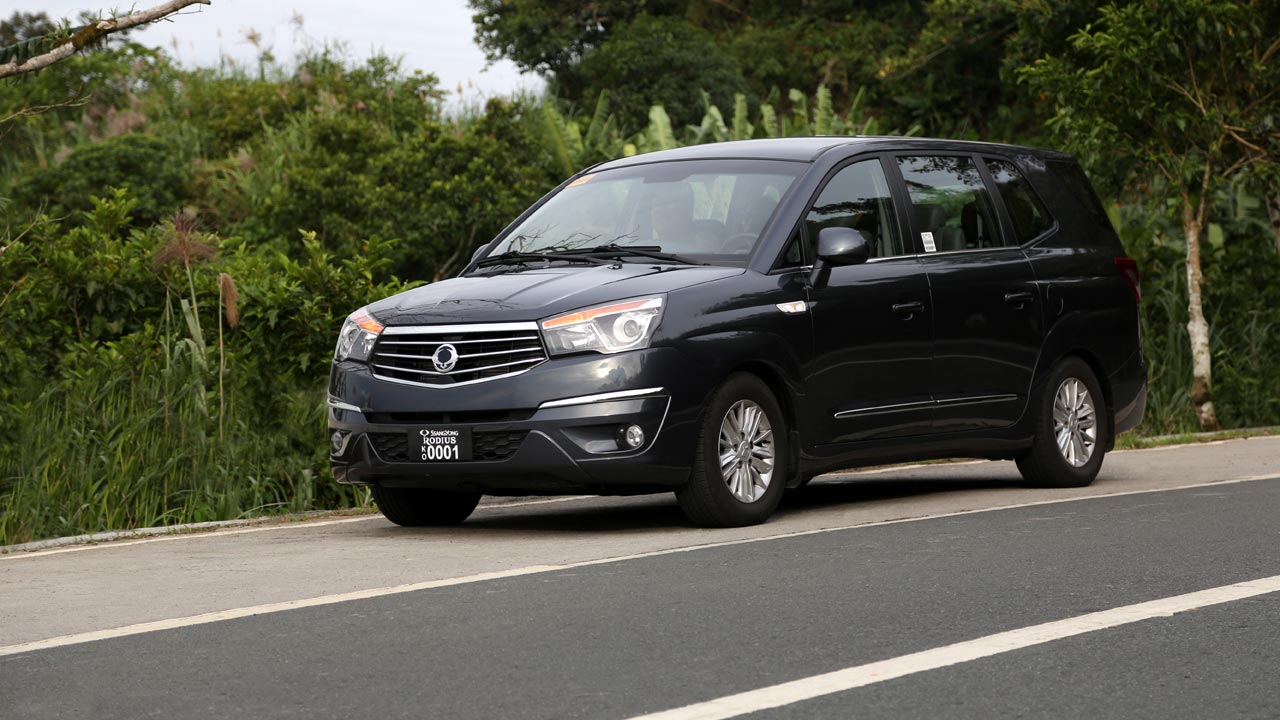
If you’re anywhere near an actual test drive of the new Rodius, don’t read this. It might ruin your fun discovering how this big MPV can’t be what it’s supposed to be.
With looks that are a dramatic improvement over a previous model once called the ugliest vehicle on the road, Ssangyong’s second generation Rodius MPV otherwise offers no change from the front-engine / rear-wheel-drive (RWD) layout of its first generation model. So, new looks, but maybe not-so-modern engineering. Turns out, no, not even close.

RWD but not the way you’d expect
The Rodius features this compact RDU (rear drive unit) that’s commonly used for giving basic front-wheel-drive (FWD) crossovers an all-wheel-drive option
Those rear driving wheels, especially on a big, full-sized MPV, usually mean rugged body-on-frame construction atop a rigid axle. The ride in back might be a compromise at best, the kind that would get better only with more passengers, the price to pay for a robust ladder frame and solid axle dog bone—mediocre comfort in exchange for hard durability.
 But instead, the Rodius features this compact rear drive unit (RDU) that’s commonly used for giving basic front-wheel-drive (FWD) crossovers an all-wheel-drive option. From the longitudinally mounted engine up front, the driveshaft that runs underneath the cabin to the back connects to an RDU box which in turn transmits torque to the rear wheels through secondary shafts mounting universal joints on both ends. There’s no rigid beam between the wheels.
 And this explains the Rodius’ four wheel drive (4WD) variant, unique among MPVs. To outfit her with part-time 4WD they simply add a drive unit for the front (it may already be in there, this latent transaxle just waiting for shaft connections to the front wheels).
Suddenly, that multi-link independent rear suspension described in the brochure makes a lot more sense, stabilizing an assembly of undulating links that isolate one wheel’s movements from that of the other. All these are under a lightened unibody enhanced with front and rear sub-frames for mounting the running gear and firming up the body ends. The ride in back is excellent with a full load or not—comparable to that of the Honda Odyssey and Kia Carnival, both full-size MPVs with unibody construction and a FWD format that allows for independent rear suspensions—but with the Rodius offering the rarity of a responsive RWD feel at the driver’s seat up front.

With stabilizing double wishbones in front and a long three meter wheelbase in the middle functioning as a keel to keep her upright in turns, the Rodius’s rear drive wheels pushing her into those curves puts you ahead of the powertrain, literally, with straight line force from the back not complicating the steering geometry in front. Those rear wheels also feature dynamic camber—the tops of the wheels leaning inwards, the bottoms splaying outwards to widen their track, under heavy load or under body-rolling G’s in fast turns. The Rodius might have high ground clearance of 185mm, this in deference to her utilitarian MPV roots, but the engineering that SsangYong invested in this high-riding hauler makes her hunker down in those fast turns, making her handle like a big low-slung sedan instead.
A drivetrain tuned for power
This Rodius’ second generation model mounts the 2.0L SV200 inline-four, a turbocharged direct injection diesel that’s been downsized from the first generation’s five cylinder 2.7L. The new 2.0L has high pressure direct injection but no variable geometry on the turbo. The compression ratio is even lower than usual for a diesel at 16.5:1. So you’d maybe think this engine was downsized for fuel efficiency, a Euro 4 compliant eco-responsible mill that just barely makes the grade against the Rodius’ hefty two tons of curb weight. Another surprise: no, there’s no compromise hindering this turbodiesel.
 The 2.0L SV200 brandishes the rich torque of an engine obviously tuned for power. Behind its humdrum 151hp @ 3400~4000rpm, there’s impressive torque of 360NM @ 1500~2800rpm. That’s equivalent to the torque of a 3 liter 265hp gasoline engine. Although the diesel’s low revs handicap keeps it from the high revs to make it equate to the same horsepower, it has a diesel’s distinction of making 52 percent of that torque available at the low end, 190NM already on tap even with the engine still just above idle.
It needs an expert’s touch at the gearshift to make the most of this much early onset torque and that’s where the Rodius’ powertrain shines as well. For its automatic transmission (AT) variant, the Rodius features the 5G-Tronic five-speed automatic gearbox sourced from SsangYong’s one-time partner Mercedes-Benz. It’s the same transmission series that the luxury brand has on their high performance sedans.
 Working the gears is a shift mechanism that’s so smooth, with a lock-up clutch that kicks in early, with triggers that are so intuitive, it’s like having a veteran stick man in there doing the shifts for you. Gear ratios on the 5G-Tronic closely match those of manual five-speed gearboxes, with ratios slightly taller to indicate minimal slippage in the hydraulic converter driving the transmission (they didn’t need to resort to slippage to multiply torque, the 2.0L turbodiesel being powerful enough, apparently). And going through these familiar ratios is controlled electronically by the gearbox’s artificial intelligence (AI) module. You read it right: there’s an AI in there that at first imposes an ideal shift schedule but then adapts it to your driving style as you, and it, go along.
On my test drive, the Rodius fell back on a conventional shift schedule of upshifts at 20km/h increments but at varying RPM points. Up-shifts triggered at around 1750rpm when we went easy from roll-out all the way to cruise. On those occasions when the Rodius’ seating capacity is fully used, 2000rpm keeps you at a smart 95km/h cruise, slightly more revs keeps you at 100. When I gave into the fun of this smooth saloon masquerading as an MPV, we reached cruise faster, the tachymeter hitting 2000 to 2500rpm at the upshifts. All these, exactly the way I would’ve done it if it had been a manual.

There’s the option to go manual with sequential shift commands on the electronic AT, but it’s not something you’d need in city driving, not even on the highway where accelerator punches for overtakes prompt fast-twitch kickdowns (that AI is really something else). Although, those override commands will come in handy when you want engine braking to slow down entry into twisties and/or downhill stretches. Not that you’d have to depend too much on drag from the idled engine. Those ventilated disc brakes on all four wheels with an anti-lock brake system (ABS), give such assertive and controlled grip, it’s like they thought you’d be doing heavy hauling, like with the momentum of a cargo truck.
Handsome engineering
 The Rodius has this sense of snugness to her, no slack tolerated in engineering that’s well put together. With the efficient mass of a modern unibody and the comfort and responsiveness of a fully independent suspension under that, the Rodius manages to bring back that well grounded RWD feel that we had been missing lately on big FWD MPVs such as the Honda Odyssey and Kia Carnival.
And the significance of how they’ve implemented that rear driving powertrain can’t be repeated enough. The surprisingly small turbodiesel brimming with power; the AI-equipped AT with little intrinsic slippage completing the illusion of the expert system acting as your pro on a manual’s clutch and stick; transmitting that intelligent power to a modern RDU box that keeps the rear suspension supple; and the dynamic camber that contrives to widen the rear track on fast turns; all these point to diligent engineering that make the Rodius’ price point more startling.
 This second generation Rodius introduced in 2013 puts straighter character lines, a sharp faceted look, and a keener, more aggressive face on the successor of a dowdy first-generation model that earned the derision of many. Yet, ironically, with a cabin spacious enough to take three or four rows of seating, and despite its unique 4WD option on an MPV, the comparatively low prices for Rodius variants ranging from PhP1.29 to PhP1.59 million, depict it as maybe being this lumbering behemoth that’s just been dressed up premium. But this MPV’s second generation reboot features solid fundamentals that counter this notion nicely, reminding us that prices are kept relatively low because of recently enforced tariff breaks for South Korean imports.

And, it seems that those all-important fundamentals have been there all along. The first-gen ugly sister had the same dimensions, same wheelbase, same RWD with 4WD option, and all with a curb weight that says it too was of modern unibody construction. It may already have featured the all-important RDU and independent suspension. Good thing then, this second-generation reboot that finally lets SsangYong’s surprising engineering shine through.

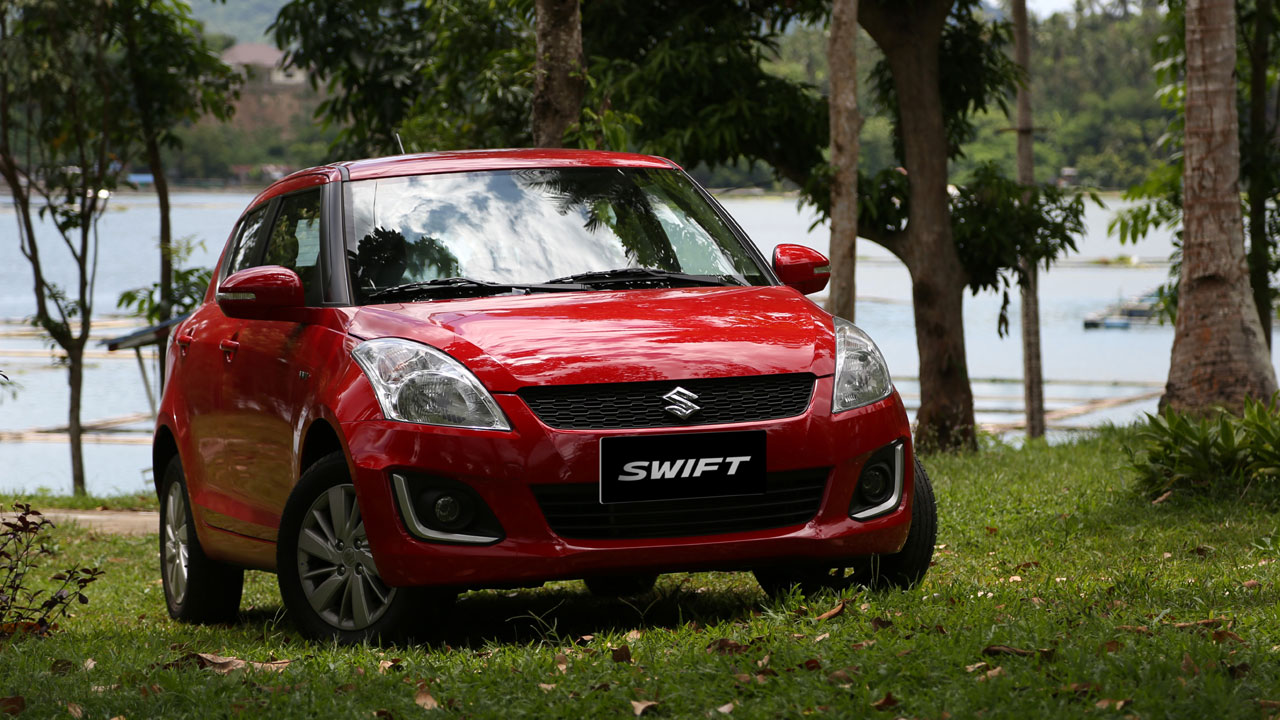
With the Swift’s smallest engine yet, and riding higher with big cushiony tires, its 1.2L version might seem to hurt the hatchback’s stellar standing, but it doesn’t, not in the least.
The Swift looks small the same way the current-model MINI is, which isn’t, not anymore. It’s all in the proportions and what Suzuki is known for: compact, subcompact, even smaller than subcompact automobiles. Spot a Swift on the road, her rather un-small size becomes obvious beside other, efficiently proportioned cars, more so if you spy her beside the smaller Celerios and Altos from the Suzuki stable.
In the Suzuki line-up of small and even smaller cars, the Swift is both upscale and big. Her defining form was laid out in 2004, on her second-generation model, and Suzuki knew well enough not to mess with a good thing when they rolled out the third-gen evolution in 2010.

Her lines are elegant enough to eventually become classic, her hatchback form making her look smaller than she really is. The Swift is shaped into a ground-effect half-shell, that dome of a hood flaring into a cabin made rakish by up-sloping character lines and tapering to the rear to render the whole body into an aerodynamic teardrop.
Swift’s street cred
With its volume whittled down to the rear, it of course has a small boot—just 211 liters in capacity but expandable by collapsing the rear seats. That’s just the predictable tradeoff on a hatchback cut out for sportier stuff. For the Swift’s handling is a given, its responsiveness well known among her followers. Good and fun on the twisties.
 The wheels are pushed to the corners of a trunkless body with very little overhang, the Swift’s length dominated by that long 2.43m wheelbase. What overhang lingers is mostly in front where the extraneous weight is pushed into turns by the steered wheels, not trailing behind the rear wheels where centrifugal force would act on it more and possibly cause lift-off oversteer. At close to 70 percent of its wheelbase, the Swift’s width puts the wheels on wide tracks, splayed out well to keep her grippy and upright through those fast turns.
No surprise that the Swift has gone further in other markets with more powerful engines mounted on sportier variants, and further in engineering with the hatchback’s platform stretched out and built up into the three-row wagon that is the popular Ertiga MPV. What did surprise was when they came up with this high-riding 1.2L version for our market instead.
The Indian connection
What seemed like Suzuki’s attempt to recast the Swift as an economy hatchback, their adding this 1.2L version to the 1.4L one they started out with in the market, actually traces back to an astute move for the India market. Maruti-Suzuki, the Indian-Japanese partnership has 45 percent of India’s huge 2 million unit automobile market, and that is where the Swift 1.2L was introduced to get the hatchback into the country’s Sub-4 tax category.

Under the Sub-4 category, all vehicles measuring less than four meters and mounting petrol engines displacing 1200cc or less are subject to reduced excise taxes of just 12 percent. And that tax break matters enough to have global leader Toyota trying to develop a new Sub-4 car and, at the same time, lobbying the Indian government to cancel the category and the tax advantages it affords their competitors.
 Other than its left-hand drive configuration, the Swift 1.2L here matches India specs so closely, it even features the same ground clearance—raised from the 1.4L’s 140mm up to the Indian 1.2L’s 170mm. (Clearances of 160mm or more are typical in India where roads could be much rougher than those we have here.)
And, although we ourselves don’t have a Sub-4 tax category, the downstream effect seems to bring major savings to Suzuki Philippines, savings that are telegraphed to buyers with Swift 1.2L variants being priced lower than those of the Swift 1.4L by more than P100k. But have those savings come at too much of a cost? With a less powerful engine and higher center of gravity, is the Swift 1.2L still worthy of the popular badge? Yes, apparently so.
Still swift
Delivering 87hp @ 6000rpm and 114NM @ 4000rpm, this Swift’s 1.2L K12M engine gives up 9 percent in horsepower and 15 percent in torque to that of the 1.4L K14B. That’s enough of a downgrade to raise concern, better nominal fuel economy or not, considering the Swift’s around 1,000kg of curb weight. And, on the 1.2L AT variant we tested, matters are compounded by pumping losses inherent in all automatics.
 But on the Swift 1.2L AT, the automatic gearbox is so well tuned to that smaller engine, the slightly lower torque seems well compensated for by proportionate, well matched slippage in the transmission’s hydraulic torque converter. Slippage happens when the impeller driven by the engine’s flywheel rotates faster than the turbine that it pumps hydraulic fluid to, the turbine which in turn drives the transmission. That slippage may seem inefficient but it actually multiplies torque (and is not the cause of an AT’s pumping losses, not in itself). Think of it as dynamic gear reduction that self-adjusts as the turbine and impeller eventually match rotation rates. On the Swift 1.2L AT, that slippage is working the whole time you’re accelerating, becoming more apparent whenever you stomp on the gas.
 With the engine at idle, the Swift 1.2L eagerly rolls out as soon as you let off the brake. Slowly increasing throttle then will bring assertive acceleration at around 2250rpm, eventually bringing you to a cruise with shift points at 20, 50 and 80km/h. Settle down at 80km/h and clutch lock-up will soon kick in, that hydraulic action between impeller and turbine being replaced with this hard physical contact that then eliminates slippage. You can then ease off the gas to maintain cruise with 2000rpm—note that 250rpm increment from the 2250rpm you were using with hydraulic conversion still going on.
 Go faster and you’ll notice revs going relatively high, the 1.2L’s need for more gear reduction becoming obvious. But the engine’s variable valve timing (VVT) valvetrain seems to compensate well, making the fuel mix lean enough to deliver impressive consumption numbers of 16km/l while cruising at 100km/h with 2500rpm, 19km/l at 90km/h with 2250rpm, and 20km/l at 80km/h with 2000rpm.
If you punch it for an overtake while at cruise, the transmission does a prompt kickdown out of 4th gear overdrive, zooming you up quickly to 140km/h, the lock-up clutch disengaged and engine revs quickly climbing to 5000rpm. With the engine revved up that much, the slippage-amplified torque is made apparent by this relentless acceleration.

Still a Swift
With that kind of performance, the 1.2L is spirited enough to demand good handling. And on the 1.2L, even with a higher center of gravity, the Swift’s famous handling is still there, mostly intact. Although there’s pronounced wind noise above 100km/h, the Swift is rock steady at high speed. There’s no denying the fact that the higher ground clearance lets more air get under the front spoiler.
 But the reduction in aerodynamic down-force seems marginal enough not to erode the Swift’s ground-hugging weight. In fact, the slight reduction in down-force, making the Swift somewhat lighter at high speed, seems to contribute to its impressive fuel economy
Contributing to that higher ground clearance are 185/65 tires mounted on 15” alloy rims. These are the biggest wheels they’ve put on a Swift, their 621mm as big as on the rugged Toyota Avanza sub-compact MPV. High ground clearance and these big wheels make easy work of rough roads–the height above ground giving you confidence in negotiating uneven surfaces, those big cushiony tires easing onwards past holes and bumps.

The door sticker says 29psi max pressure on all tires. This means the Swift’s weight on those big tires is manageable enough to allow tire pressures of under 30psi, and that weight is distributed evenly enough to put equal loading on the hatchback’s front and rear axles. With judicious tire pressure adjustments, the high-walled tires can be inflated up to 29psi for smooth highways, or slightly lower for everyday mixed terrain. With two guys on board, the Swift 1.2L rode well and evenly on tires inflated to just 28psi, fighting nicely against body roll and wayward steers in fast curves reaching 80km/h.

It was a risky thing for Suzuki to have offered the Swift 1.2L. Over here, there isn’t the tax break that overtly justifies its downsized engine nor the Indian context for country roads ground clearance. But because it retains that healthy power reserve and trademark handling, while also offering its tall big-wheeled stance and significantly lowered price points, the Swift 1.2L has definitely been a risk well taken.

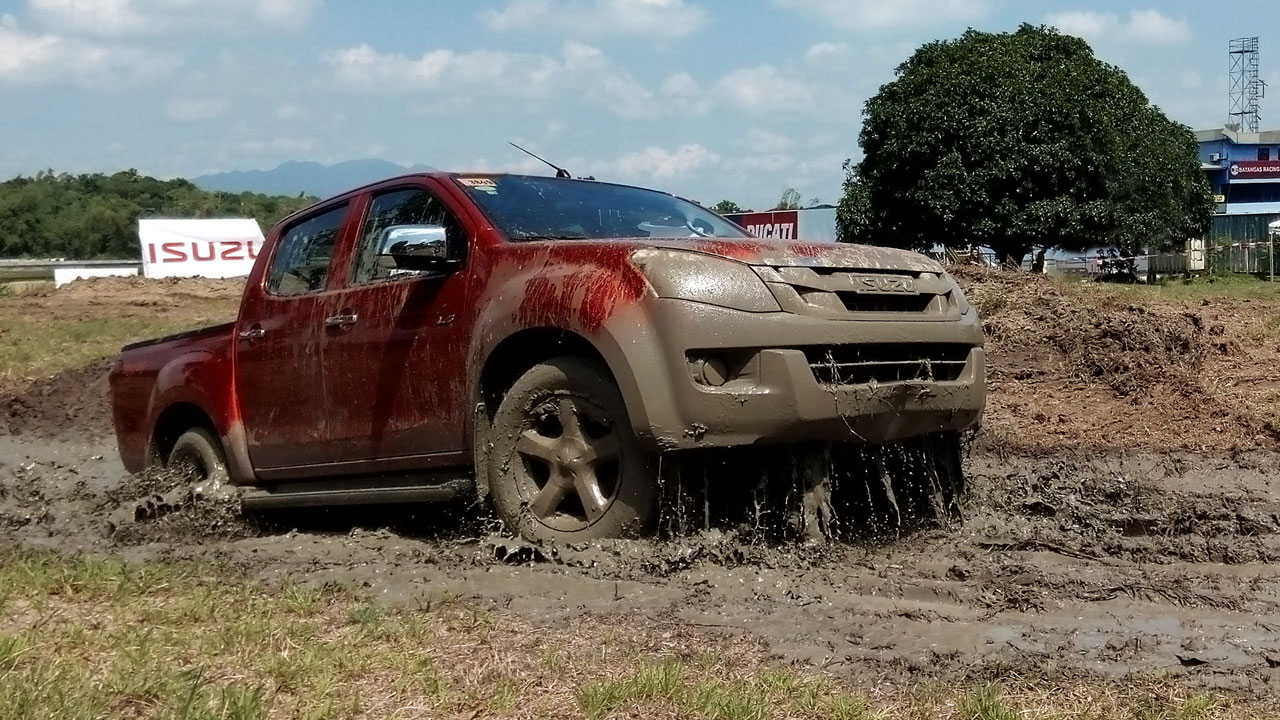
After June sales that put their Mu-X SUV at the top, selling better than market-leading Toyota Fortuners and Mitsubishi Monteros even after these were recently updated to new-generation models, Isuzu Philippines now reports increased sales across the board for the first half of 2016 that puts them ahead of the growth curve in the country’s automotive industry. And, being fully invested in utility vehicles (in cargo haulers as much as, if not more than, people movers) and at price points that paint their buyers as pragmatic owners (low for premium-trimmed vehicles such as their SUVs, but at par with or slightly higher than prices of rival models for their durable trucks, buses, AUVs and pickups) Isuzu Philippines’ numbers somehow suggest a build-up in capacity, in nation-building capabilities, rather than a mere increase in consumption.
Press Statement by Isuzu Philippines Corporation, “Diversity of product range drives Isuzu Philippines’ growth in H1 2016,” 2016:
Manila, 19 July 2016—THE extensive product range offered by Isuzu Philippines Corporation (IPC) has allowed the company to record a phenomenal growth rate during the first half of 2016.
 IPC sales in the first six months of 2016 reached 13,258 units, a significant 30.4-percent increase from the 10,169 units sold during the first half of 2015. As reflected in the joint report of the Chamber of Automotive Manufacturers of the Philippines Inc. (CAMPI) and the Truck Manufacturers Association (TMA), IPC’s performance traces a steeper upward trajectory than the 27.4 percent rate, or 167,481 units sold, posted by the country’s automotive industry for the same period.
 “The brisk movement experienced across Isuzu Philippines Corporation’s model lineup is a manifestation that the company offers consumers some of the most relevant products available locally. With many of Isuzu products geared toward business use, the growth is also an accurate indication of the market’s optimistic view regarding the economy,” IPC President Hajime Koso said.
The entire product range of IPC registered increases in the first half of the year, with deliveries of Isuzu heavy-duty Category V trucks logging the best result with an unparalleled 833.3-percent spike. The record is aided by the increases achieved by Isuzu’s Category IV buses (25 percent), light-duty Category III commercial trucks (18.8 percent), and Category IV trucks (16.6 percent). Combined, sales of IPC’s commercial trucks and buses totaled to 2,703 units, a 36.7-percent rise from the 1,977-unit tally for the same months last year.
 Bolstering this is the performance of IPC’s light commercial vehicle lineup. During the same period, a total of 2,361 Crosswind units were sold, a 20.4-percent increase from a year ago. Deliveries of the D-MAX pickup were not far behind at 1,897 units, which is a 34.3-percent jump.
Meanwhile, IPC’s best-selling vehicle continues to be the mu-X SUV, which for the first six months registered a 30.7-percent increase, or total sales of 6,297 units. The result places the mu-X as among the top models in its category, securing a 29-percent share in the segment. In June alone, the mu-X’s tally of 1,181 units has outpaced the result logged by its direct competitors.
 The rest of IPC’s models performed equally well in June, with the company posting a 13-percent growth compared to the same month in 2015, or 2,439 vehicles sold in June this year versus 2,159 units sold in June last year. Supporting the mu-X’s tally for the month were those of the Crosswind at 434 units, the D-MAX with 304 units, Category III trucks with 307 units, Category IV buses with three units, Category IV trucks with 140 units, and Category V trucks with 70 units.
In June, IPC also recorded its best monthly tally this year, besting its result in March by two units.