

When they launched the Mobilio, globally in 2014 and in this market in 2015, it finally filled a glaring gap in Honda’s product line-up. Here, at last, was a three-row people-mover from Honda Cars Philippines which previously had only five-seat sedans, hatchbacks and SUVs under the substantially high price points of their premium US-spec’d Odyssey MPV and Pilot SUV offerings.

The Mobilio mini-MPV has seven seats, an efficiently powerful i-VTEC engine, and, most surprisingly, the size and price point to closely match those of Honda’s popular City sedan. With those three seating rows making it far more useful, the Mobilio retains cargo space equivalent to that of the City’s trunk when the third row is folded and yet weighs only 67kg more, is 5cm shorter, and has the same 118hp 1.5L i-VTEC engine as on the sub-compact sedan.


Not surprisingly, the Mobilio quickly made it to many wish lists as 3,000 reservations went on the books within three months of its launch. Honda’s new seven-seat form-factor has already spawned the BR-V, the Mobilio-derived SUV they launched globally in Indonesia in January 2016 and then very quickly introduced here, uncharacteristically quick after just a few months, last September. The BR-V, by going into the SUV hunting grounds that Honda has been favoring of late, brings the carmaker the distinction of being the only brand with a three-row sport utility with prices that start under P1M.

Together, the utilitarian Mobilio and BR-V three-row models bump up against the price points of the City sedan and Jazz hatchback, yes, but ironically also reinforce the image of these like-priced five-seaters as being relatively premium. In 2015, the Mobilio’s maiden year here, the City’s sales remained strong, still bringing in half of Honda Philippines’ volumes for record-breaking sales growth even after the mini-MPV was launched. And, given the Mobilio’s (and BR-V’s) origins, this effect seems serendipitous if not brilliantly intentional.
From small beginnings
It’s hard to miss the Mobilio mini-MPV being based on the Brio, their relatively new A-segment micro-hatchback. On the outside, the fascia are equivalent in character, and, on the inside, the dashboards are veritable clones.

What they did was capitalize on the compactness of their current generation i-VTEC engines—with DOHC (double overhead cams) replaced by SOHC (single cams) that’s been contrived to still drive those two pairs of valves on each cylinder—which render the hood space of the Brio still roomy enough to take on a bigger engine. With the larger, more powerful 1.5L L15Z1 i-VTEC under the hood, they lengthened the Brio platform by 77cm, turned it into a four-pillar wagon, stretched the wheelbase back by 30cm, and raised the ceiling to make the cabin nearly 12cm taller. That additional headroom they used to make the seating more upright, thereby lessening the depth of each seating row, and allowing them to add that defining multi-purpose rear bench.

Because they couldn’t stretch the wheelbase back further, the third seating row is nestled between the rear wheel shrouds, giving the Mobilio a seven- instead of an eight-seat capacity —two in front, three in the middle, two in the narrowed down rear.
Nevertheless, the space design is so elegant, with decent legroom on all three rows (though with six-foot passengers being more comfortable in the first two), there’s still enough leftover cargo space for all seven passengers to have a decent amount of weekend luggage. If more cargo space is needed, you could revert the Mobilio to station-wagon duty and fold away that third seating row to turn the 223-liter default space into a 521-liter cavern.
That significant rear luggage area that remains even with all seats deployed is also a reassuring reminder of the Mobilio’s asserted compliance with Honda’s G-Con safety standards. Standing for G-force control, the rating looks comprehensively adapted on the Mobilio with that luggage area also serving as a credible crumple buffer in the event of a rear-end collision.
From go-kart to minivan
Slightly shorter than the City, the Mobilio tempts you to demand more than the sedan-like handling that’s enough of a distinction for other MPV’s. Instead, with her Brio roots, you’d naturally expect the Mobilio to retain some of that small hatchback’s hallmark traits—and the Brio with her wide stance, 98hp 1.3L i-VTEC engine and responsive steering, has this reputation of being as nimble as a go-kart.

Now, while the Mobilio certainly isn’t a cornering demon, it does a good job of fighting body roll in fast turns. Although there’s some relative under-steer that needs managing, the pay-off is that the Mobilio holds up well, staying upright when you go into spirited curves. Much of that stability comes from the long wheelbase, that long moment arm that also, vertically, dampens road shocks for front and middle row passengers.

The other factor that makes the Mobilio an intuitive handler is her weight distribution. The door sticker recommends a maximum of 32psi up front and in the back with a medium load, indicating a 50:50 distribution with five passengers and luggage on board. Only in the case of a full passenger loadout do they recommend upping the rear tires to 43psi (while keeping the fronts at 32). Clearly, the otherwise well balanced Mobilio is burdened with a rearward weight bias only when her MPV role is invoked.
And that rear bias, quite elegantly, makes the ride in the rearmost seats quite tolerable, if not comfortable, particularly when you do some judicious tire pressure adjustments. We found that going up to only 36psi on the rear tires (instead of the recommended 43) was just right for third row riding comfort, and for keeping the tires soft enough to enhance traction at the back (to mitigate the risk of lift-off over-steer on those hard turns).

About the Mobilio’s engine performance, that i-VTEC engine, the only one in the mini-MPV class with variable valve timing and lift, clearly leads the pack with peaks of 118hp at 6600rpm and 107lbft of torque at 4800rpm. On the top-spec Mobilio RS with CVT gearbox, 2000 to 2250rpm will easily keep you cruising at 100km/h.
Considering the nod to further efficiency with that continuously variable transmission, the engine’s oomph still gets through, if you give it a chance. When rolling out, giving her very little gas for just two seconds sees you hitting 20km/h where the lock up clutch engages, replacing the hydraulics in the torque converter with a hard link between engine and driveshaft. That’s when goosing the gas pedal either in normal N drive or sporty S mode brings this satisfying and responsive push, the powertrain staying middlin’ quiet while telegraphing this clear sensation of all that torque being put to actual use.

Staying sensible and continuing that light pedal work after roll out, the Mobilio RS delivers easily on the benchmark 10km/l mileage in city driving even when fully loaded, and ups that number to 14km/l in mixed city/highway driving (and still with a full load).
A first for Honda, but not the first
With the Brio already in place by 2011, the timing of the Mobilio’s development three years later suggests that it was in response to what a rival did for India. In 2012, a year after the Brio came out, the Maruti Suzuki Indian-Japanese partnership introduced what is now one of Suzuki Global’s bestselling models, the Ertiga mini-MPV. Touted as their first model meant specifically for the Indian market, the Suzuki Ertiga—this miniaturized MPV with its seven seats, front-wheel-drive and unibody construction—is a utility crossover based on the Swift sub-compact hatchback.

In effect, what Suzuki asserted and proved correct was that emerging markets have entry-level buyers who are discerning enough to evaluate price against utility. Those five economy seats in base model sedans or hatchbacks are nice, but these won’t stop prospective new owners from doing the math and opting for more passenger capacities on crossed over, car-to-MPV people movers.

So, two years after the Ertiga came out, Honda did something similar but also improved on what Suzuki did by ironically dipping deeper. Instead of building a mini-MPV from the Honda Global Small Platform underpinnings of their Jazz hatchback (by size, their counterpart to the Swift), they instead chose to stretch the smaller Brio—what had initially been dubbed as the Honda New Small Concept hatchback.
Premium follow-on
Consequently, Honda’s mini-MPV is 12cm longer but minutely narrower and slightly lighter than Suzuki’s. While both models have large 185/65 tires on 15 inch rims, the performance specs come down in favor of the Mobilio with its slightly larger but more densely powerful 118hp 1.5L engine versus the Ertiga’s 98hp 1.4L mill.

And, because their respective price ranges do reflect what they bring to the table, the Suzuki Ertiga and the Honda Mobilio are now both popular enough to be mounting this pincers assault on top-brand Toyota’s top-selling Avanza MPV. The Ertiga now rivals the 1.3L Avanza J and E variants while the Mobilio competes strongly against the upscale 1.5L Avanza G variants.

In this mini-MPV class the Mobilio is priced high overall, and with good reason. With the Mobilio being slightly longer and retaining the Brio’s thin yet adequate upholstery, the Honda mini-MPV has better default legroom in the rear seating rows. In contrast, because it keeps the Swift’s thickly plush seats, the Suzuki Ertiga requires thoughtful sliding of the middle row to reach an acceptable compromise between second and third row passengers. (This, as we observed in our review of the Ertiga, makes it more of an expandable wagon rather than a mini-minivan.) And, with the Mobilio being a significant 24cm longer than the Avanza, it’s easy to see why Honda’s mini-MPV offers actual, useable cargo space behind the third row, compared to Toyota’s.

Particular to Honda is that the main draw of any of their models is invariably the engine and, in this regard, the Mobilio’s i-VTEC mill delivers in spades. Even with a CVT gearbox making things more scientifically efficient rather than kick-in-the-butt fun, the power density of that L15Z1 i-VTEC engine burns through the eco-friendly equations and makes clear its advantages over Suzuki’s 1.4L, and Toyotas 1.3L and 1.5L offerings.
Definitely, a Honda
Going back to the Brio, when it was launched globally from Thailand in 2011, and then here in 2014, the micro-hatchback had lowered the floor on Honda’s product line-up. With the maturing Jazz hatchback and City sedan models having grown bigger and/or pricier to still be considered entry-level models, Honda rolled out the Brio hatchback and Brio Amaze, and it was clear right out of the showroom that these were not the usual fare from the Japanese carmaker. With unmistakably miniaturized dimensions, the new entry-level hatchback was heralded thus: the Brio is small, but it’s a Honda.

Now, with the Mobilio, the Brio’s offspring, as it were, Honda could be more cavalier with their tagline, and make it work better than before. In the mini-MPV class where it takes top marks in every respect, even with its relatively high price, Honda could say of it: the Mobilio is yet another mini minivan meant for emerging markets, sure, but she’s also, most definitely, a Honda.


 She’s aptly named and could’ve been badged either as the Transporter or the Commuter–that’s how optimized she is for the people-mover role.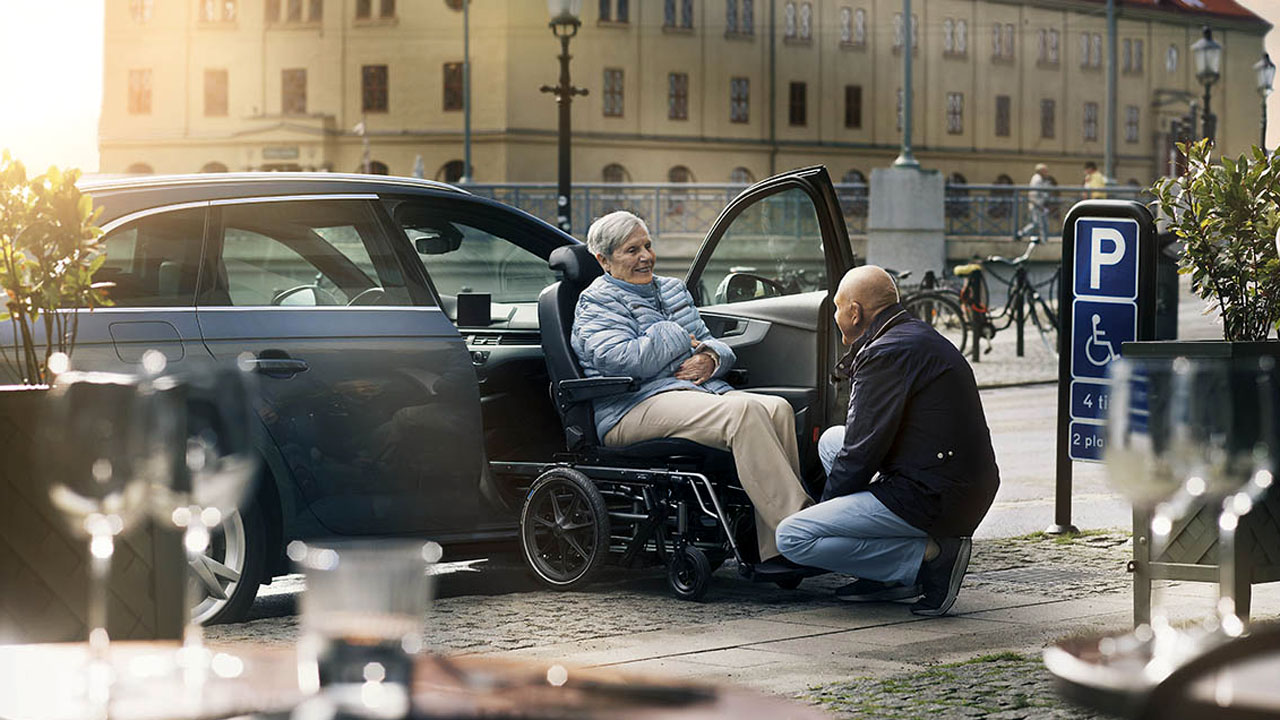

 The family found a solution, a system that objectified the process, replacing servile help with servo mechanics. The Carony wheelchair system offered a way to automate their mother’s boarding and disembarking from a vehicle, turning it into a pushbutton affair, empowering her with the ability to push that button herself.
 Fortunately, the family had the means but not the frivolousness to even consider such a course of action. Instead, with full appreciation of how the Carony wheelchair system could be as valuable to others as it was for them, they gave body to their conviction, incorporated PBC Car Adapt, and themselves became that elusive distributor that they needed to be here, in-country.


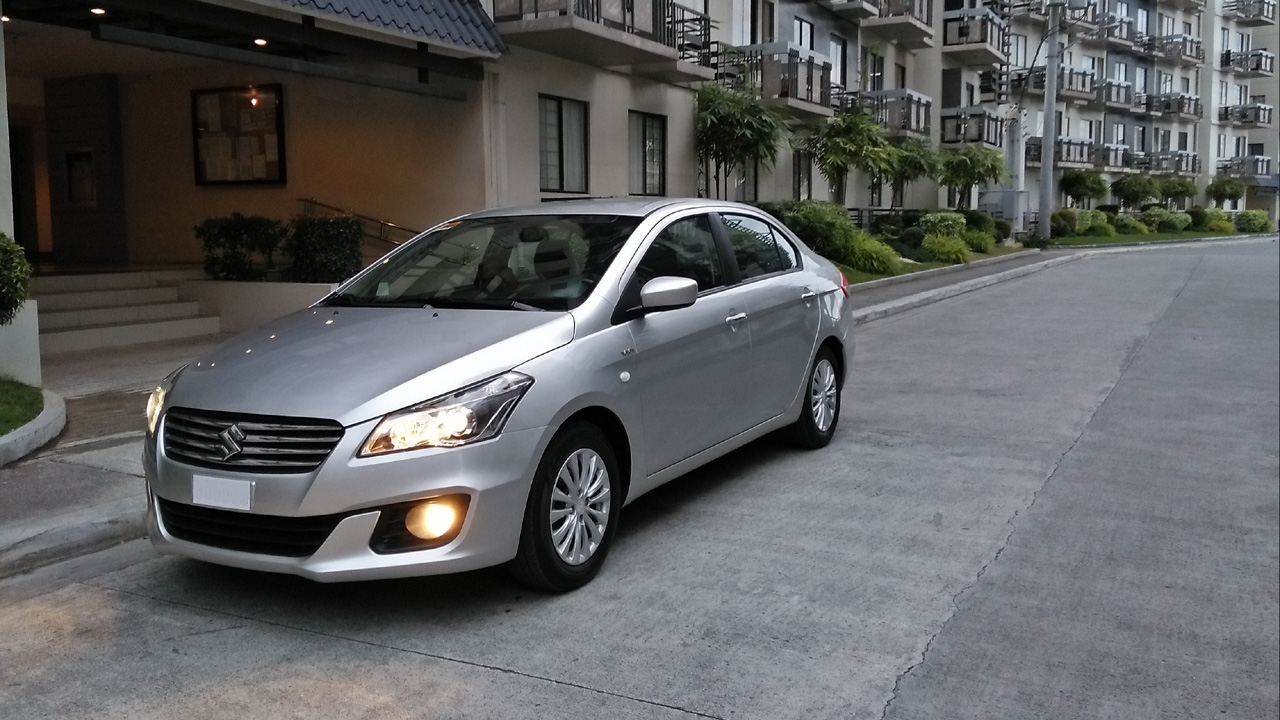


 That’s an average of 11.25km/l and a cost of around P2.50 per kilometer. Not bad for all the use we got out of her.


 So, you usually just get in the trike, trying to look like a local, and then just ask how much fare is when you get at your destination, like it was just a lapse in memory. If the fare sounds exorbitant, you have the option of haggling and maybe making a scene, but you’re already behind the curve at that point.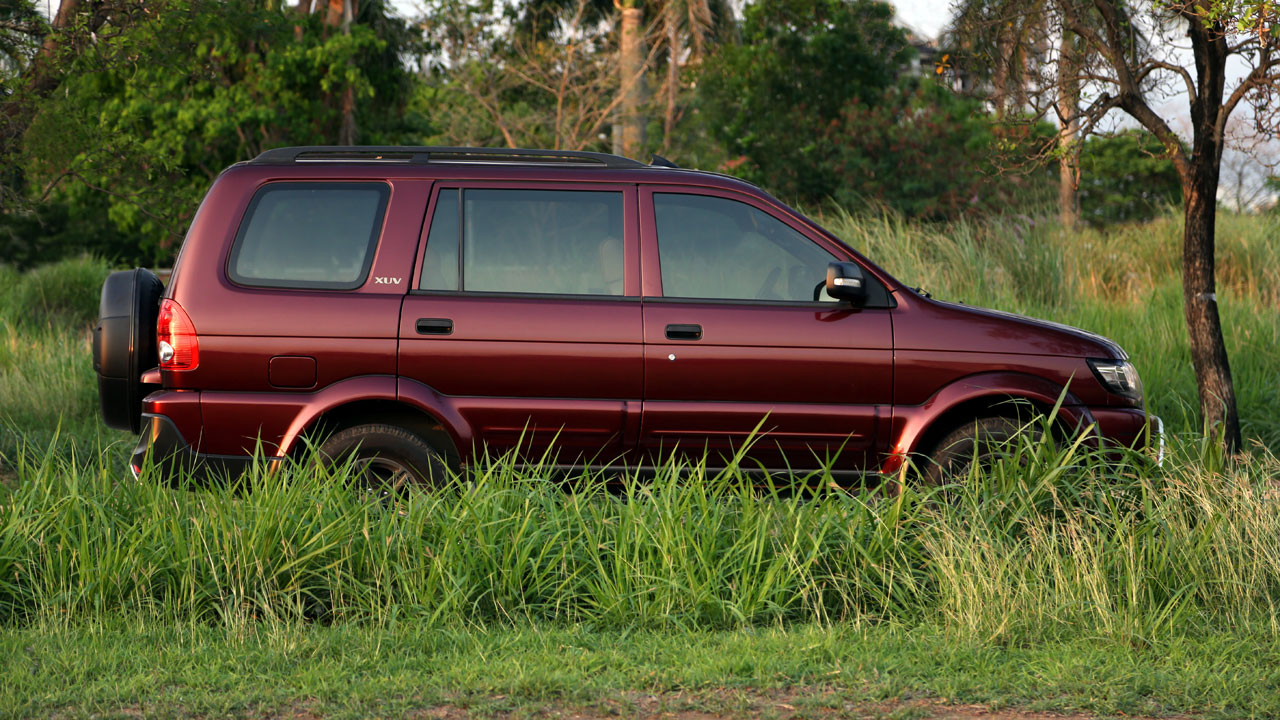


 With no major changes in the interior’s basic vynil upholstery (unlike the leathered top-spec Sportivo X), this variant, more than any, paints you as committing to that armored AUV vibe, and to adventures in hinterland that the Crosswind was originally designed for, bodykit or not.