Bulacan’s San Jose Del Monte kicks off conversion to modern PUVs with Isuzu-Centro units and Isuzu’s trademark after-sales services

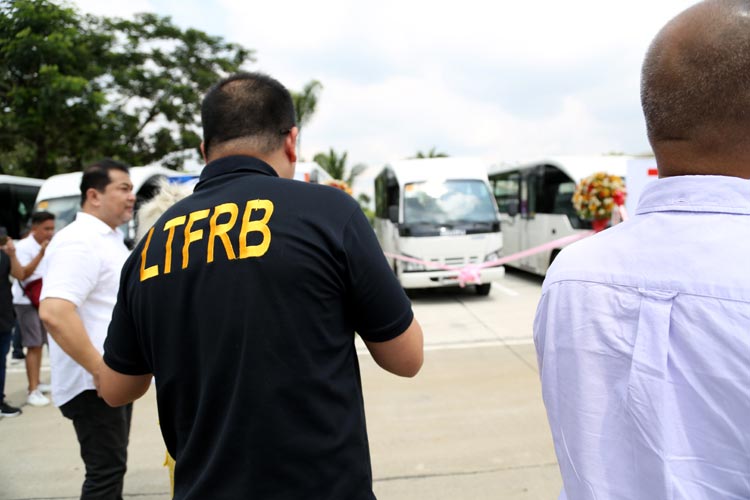
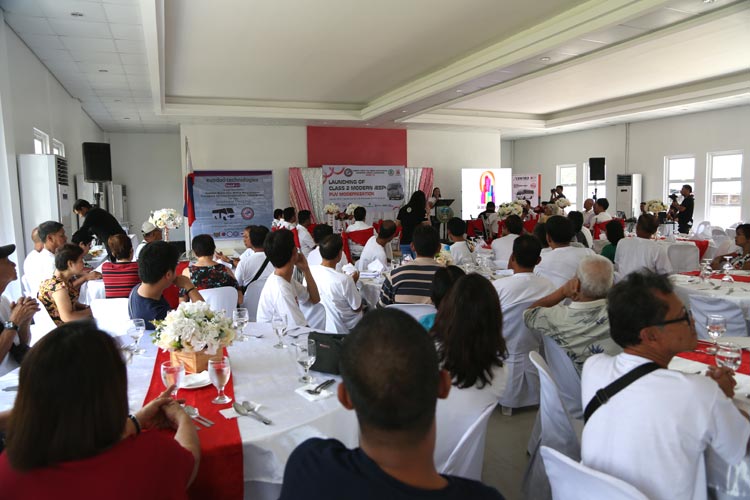
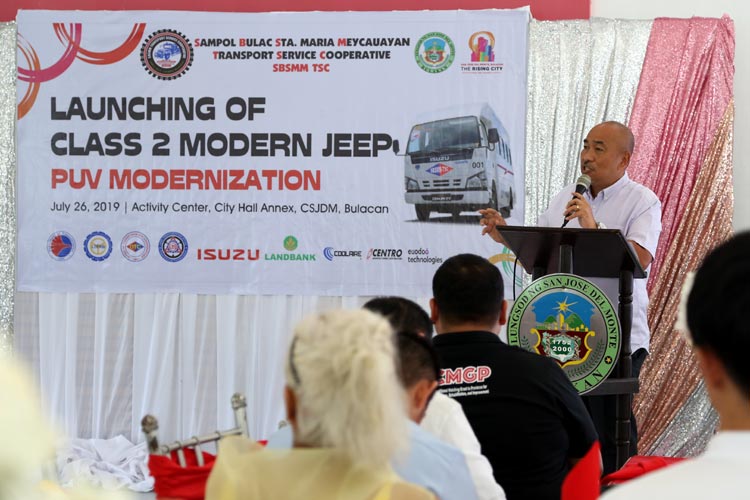
San Jose Del Monte, the intended terminus of the MRT 7 commuter train line from Quezon City in Metro Manila, and what is boasted of by its mayor, Arturo B.Robes, as the most urbanized city in the province, is now the first locale in Bulacan to convert to modern PUVs. Sampol Bulac Santa Maria Meycauayan Transport Service Cooperative (SBSMM-TSC) is the first of San Juan Del Monte’s 14 transport cooperatives, and is the country’s first consolidated cooperative (merged from several organizations), to convert to modern PUVs, says Land Transportation and Franchise Regulation Board (LTFRB) Region 3 director Ahmed Cuizon.

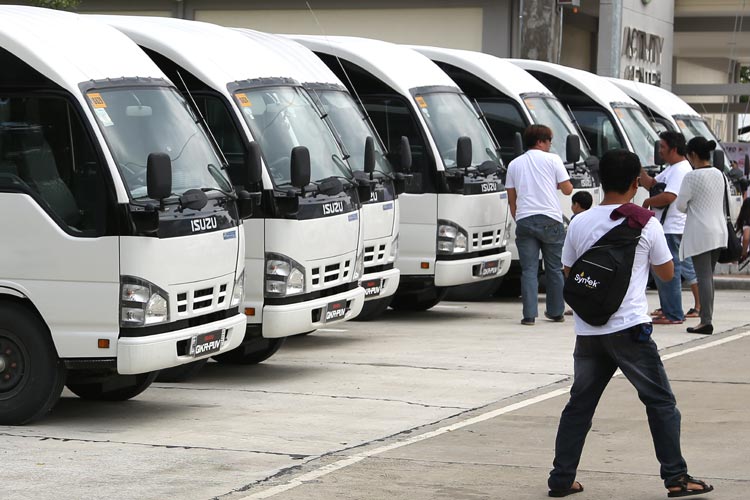
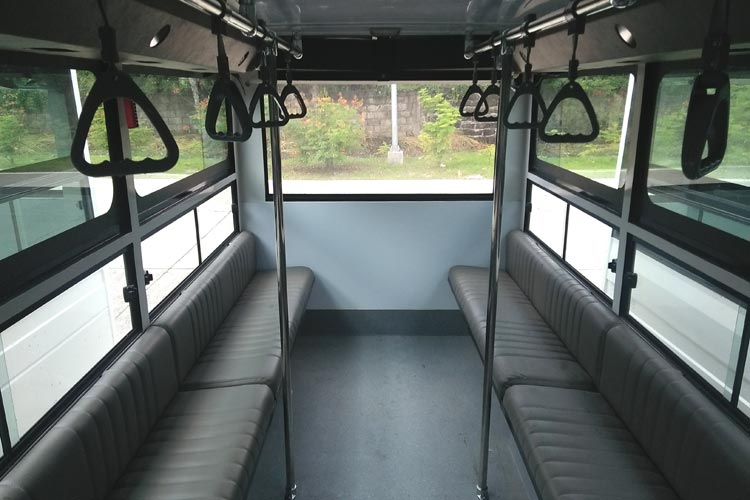
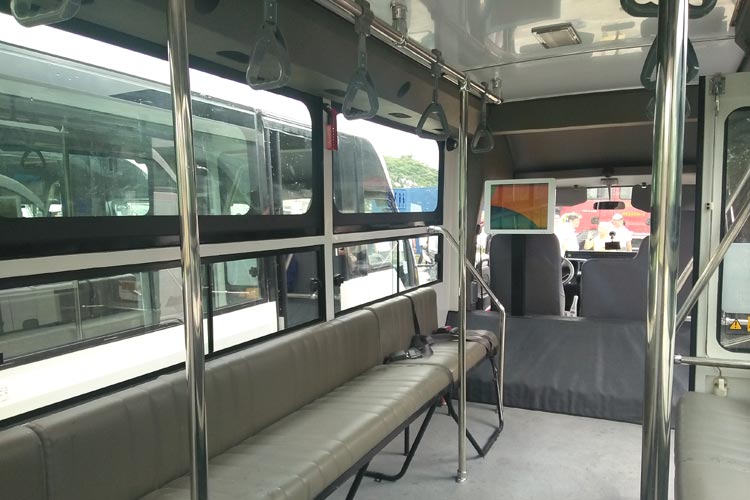
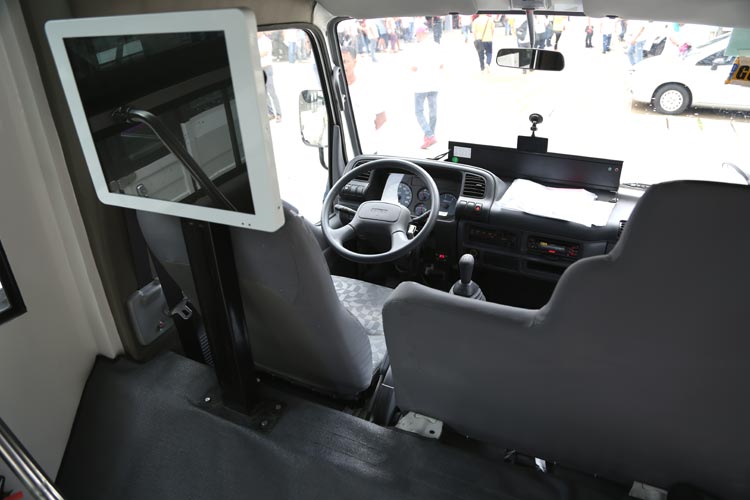
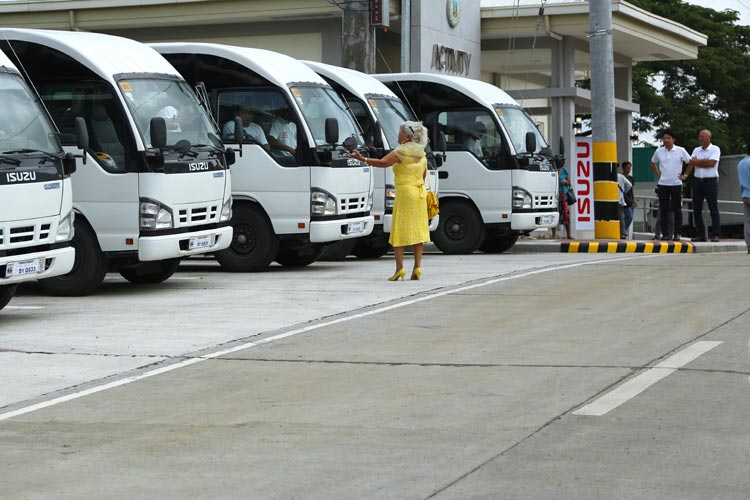
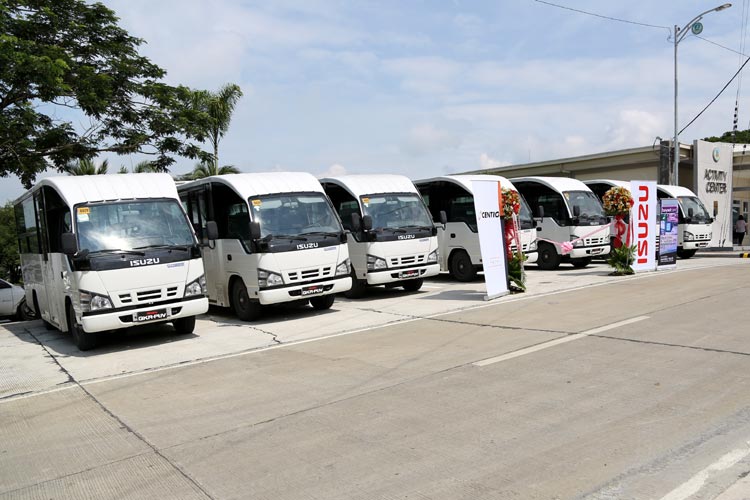
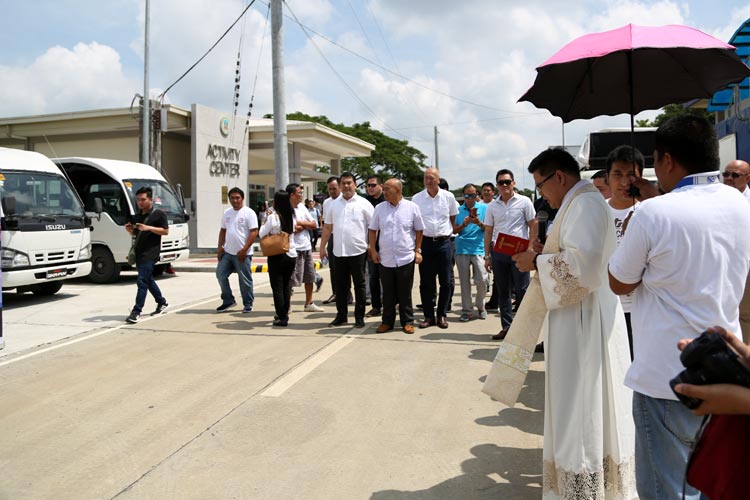
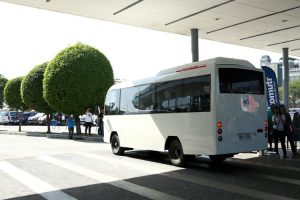
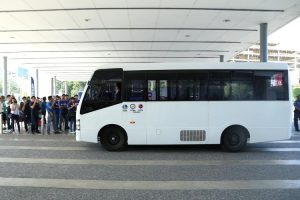
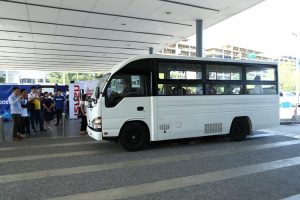
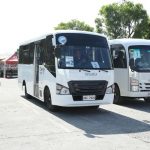
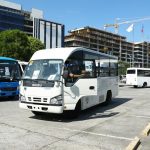
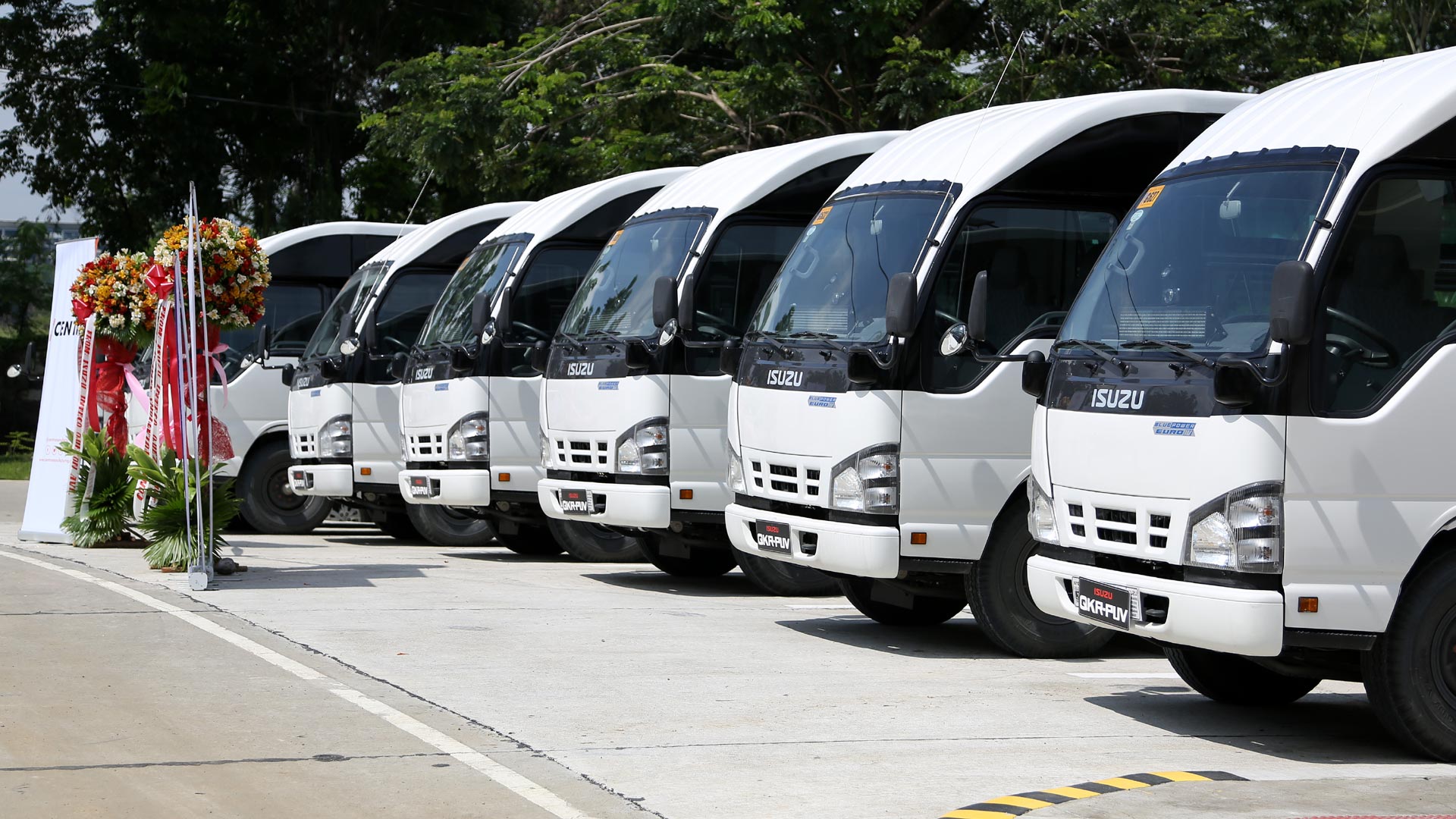
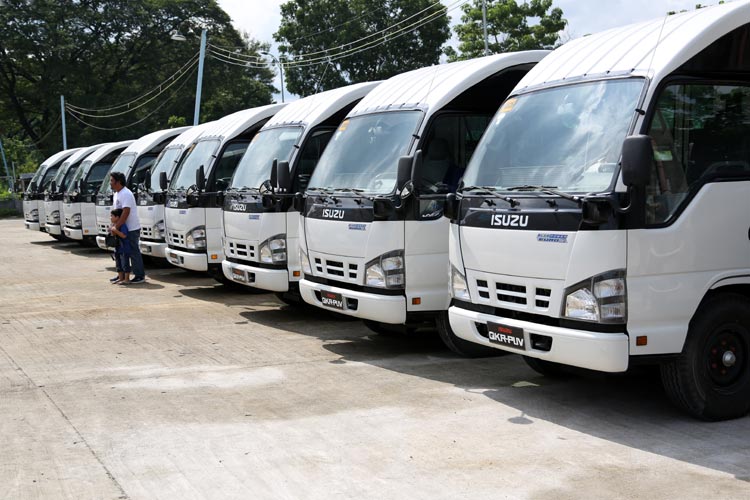
SBSMMTSC received 16 modern PUVs last week on July 26, initial delivery on what the transport cooperative’s secretary Roberto Lopez Villacruz says is their total order for 35 vehicles. The new jeepney replacements are all Isuzu QKR77 modern PUVs with Centro-built bodies–the largest single delivery of Isuzu-Centro modern PUVs so far. (The turnover of 24 modern PUVs to the Alabang Transport Service Cooperative last month included 9 units with Centro-built bodies.)

For their Isuzu QKR77 modern PUVs, SBSMM-TSC’s Villacruz says they opted for  Centro-built bodies (over Almazora and Santa Rosa builds) because of what they perceive would  be better support with the strategic location of the body builder’s Bulacan factory along their transport route in nearby Marilao.  In contrast, SBSMMTSC formally sourced the built-up vehicles from Isuzu’s major dealer, Industrial & Transport Equipment, Inc. (INTECO) at Quezon Avenue, Quezon City.

SBSMM-TSC’s Villacruz said the Isuzu dealership’s relatively distant location was not a detracting factor since they will be relying on the major truckmaker’s after-sales on-site services, particularly for preventive and on-call maintenance for their vehicles done at the cooperative’s garage-depot in San Juan Del Monte.  In addition to such on-site maintenance under Isuzu’s Service Medic mobile service, Villacruz confirmed that they also intend to implement fleet management and vehicle operation best practices with data captured using Isuzu’s Mimomari vehicle telemetry technology.

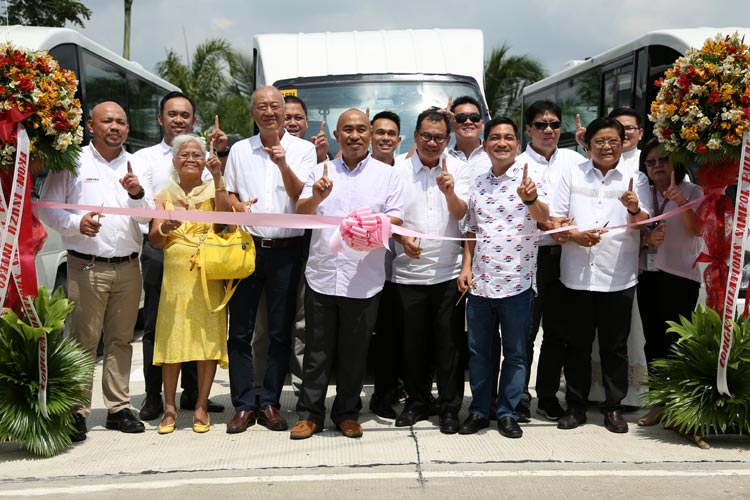
Isuzu Philippines Corp. EVP Shojiro Sakoda and SBSMM-TSC chairman Elizabeth D. Villacruz

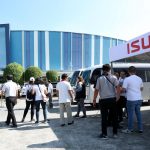
Also present at the turnover of modern PUVs to SBSMM-TSC was Bernard Flores of the Sapang Palay Minuyan Loop Transport Cooperative (SPMLTC), another organization among San Jose Del Monte’s 14 transport cooperatives. Flores says SPMLTC with its 80 individual members is expecting imminent approval of its Development Bank of the Philippines (DBP) loan and then the delivery of their own initial batch of 15 Isuzu QKR77 modern PUVs.

Bernard Flores of the SPMLTC and Roberto Lopez Villacruz of the SBSMM-TSC transport cooperatives
SPMLTC’s Flores says that they found the Isuzu QKR77 modern PUV’s 3.0 liter Euro 4 compliant turbodiesel to be more efficient than closest rival Hino’s PUV with its larger 4.0 liter engine displacement, but that they did have questions about the smaller Isuzu engine’s power, initially. He said that the cooperative’s members had no doubts about the ruggedness, reliability and fuel efficiency of Isuzu engines, per se, but they needed to test the QKR77’s 104hp and 230NM 4JH1-TC turbodiesel’s suitability to San Jose Del Monte’s hilly terrain. This issue was settled decisively when Isuzu Philippines arranged a mass test-drive for PUV operators last December which saw them driving Isuzu’s 3.0 liter PUVs up to Baguio City via the long, unrelenting uphill grades of its Marcos Highway ascent route.
Isuzu’s PUV-X after-sales services for modern PUV operators: Isuzu’s after-sales services for modern PUV operators are actually headlined in the PUV-X program that was launched at the same time last week at the 2019 Philippine Bus and Trucks Expo held at the Mall of Asia Complex in Pasay City from July 24 to 26. The PUV-X program asserts the following 10 advantages for Isuzu modern PUV customers: (1) Isuzu’s reputation for reliability, (2) experienced body builders, (3) accredited accessories suppliers, (4) industry-leading 3-years or 150,000kms warranty coverage, (5) nationwide dealership network, (6) customer assistance from their Truck Elites truck experts, (7) nationwide availability of parts, service and technical assistance from authorized providers and from mobile Service Medic vans for roadside assistance, (8) driver and mechanic training, (9) extensive fleet management systems including Mimomari vehicle telemetry, and (10) all-around customer assistance.

Isuzu joins LTFRB Modern PUV Caravan series, shows new NLR77-based PUV at kick-off event in Clark, Pampanga

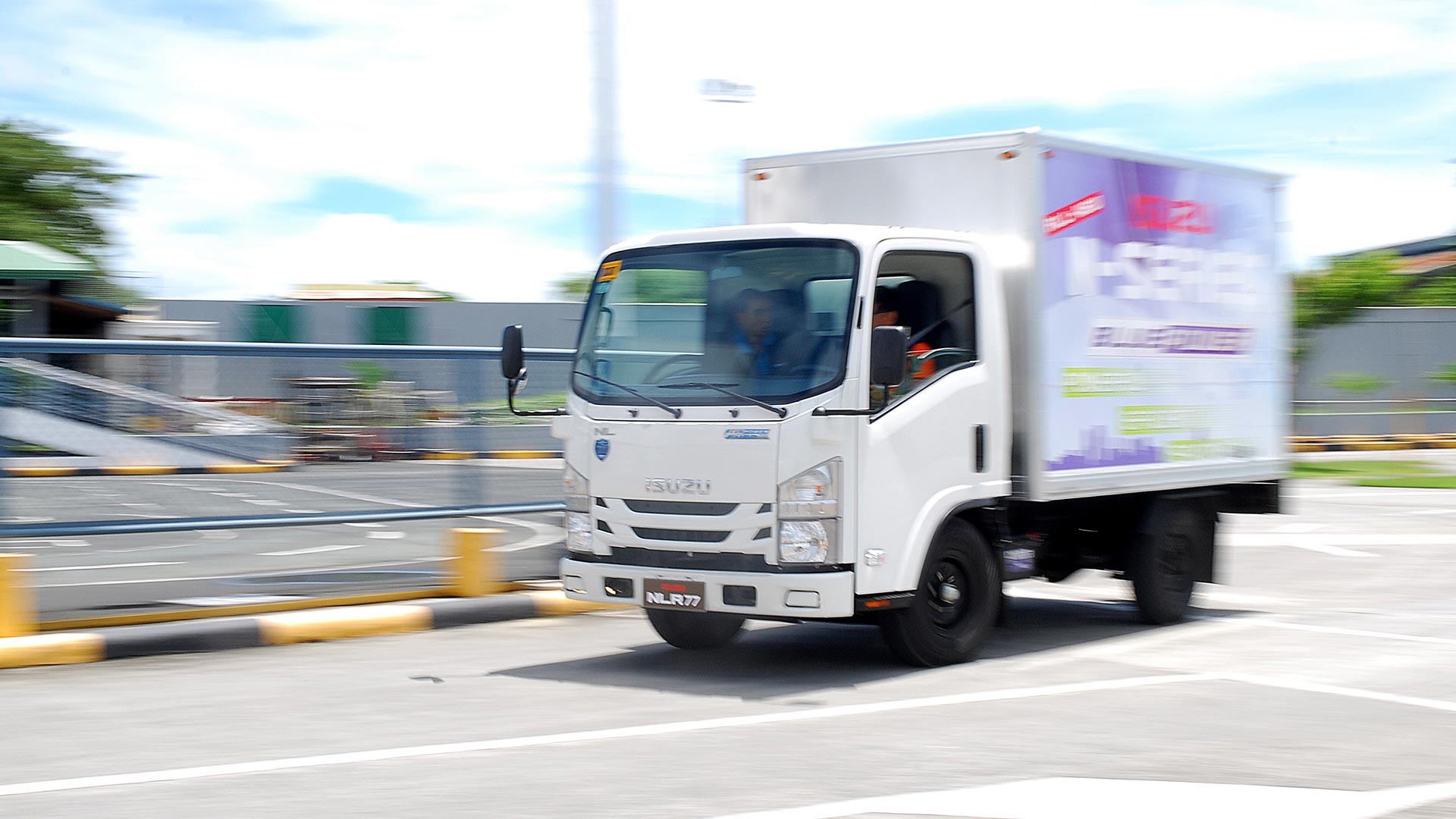
Isuzu Philippines Corporation (IPC) joined the LTFRB’s Modern PUV Caravan 2019 with the leading truckmaker showing their next stage NLR77-based Class 2 public utility vehcile (PUV) for the first time in public at the kick off event last Thursday, the fourth of July, in Clark, Pampanga. In what IPC President Hajime Koso confirmed to be the model’s first public appearance, the NLR77-based transport’s showing at the start of the multi-sectoral and months-long road show signals Isuzu’s continued commitment to the much celebrated Public Utility Vehicle Modernization Program (PUVMP), yes, but more pointedly represents both an upgrade to and a mainstreaming of their modern PUV line up.

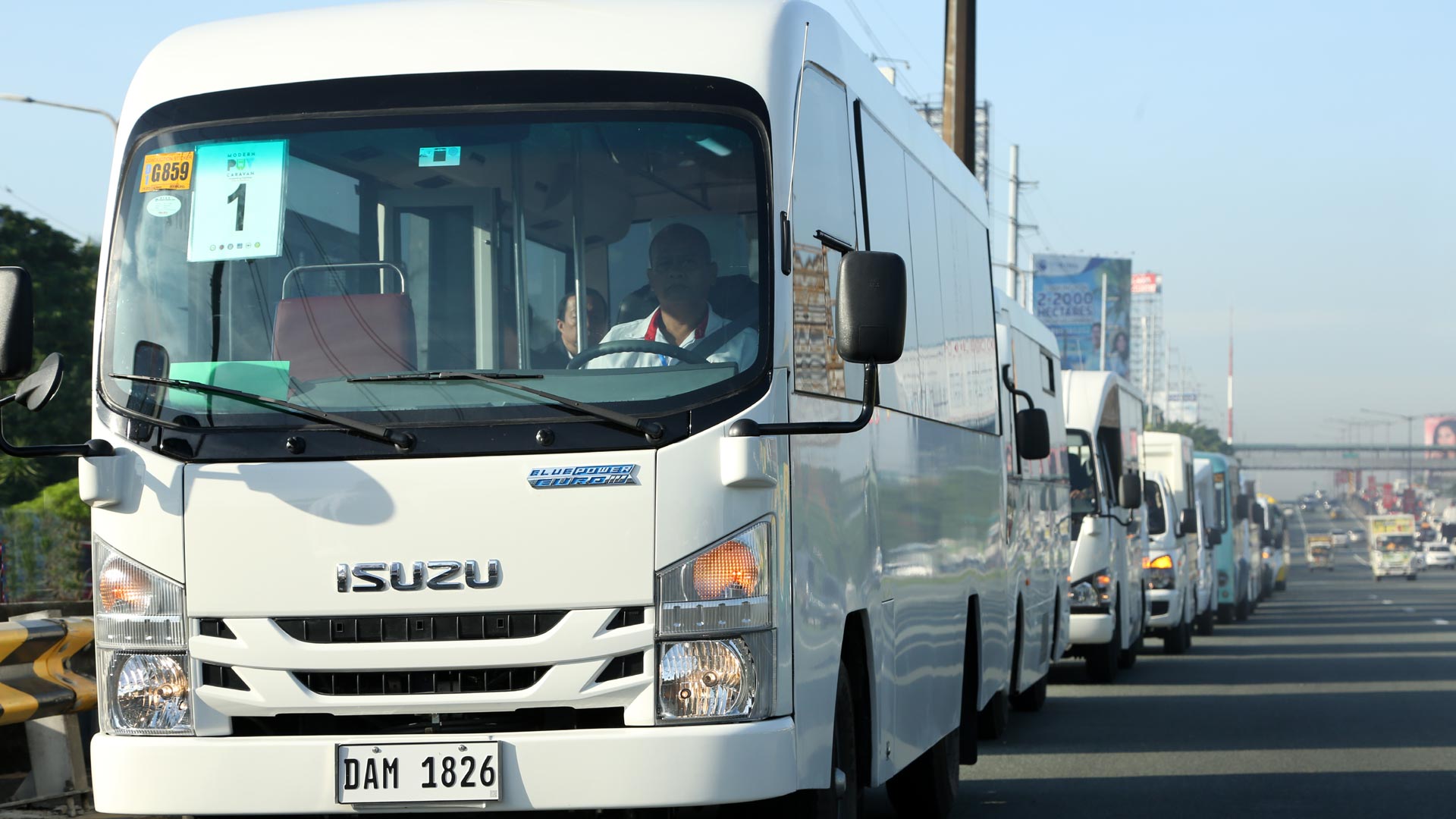
Isuzu NLR77 Class 2 PUV leads motorcade to LTFRB Modern PUV kick-off in Clark, Pampanga

Isuzu QKR77 and NLR77 truck platforms

Back in September 2017 when IPC and partner body builders Centro and Almazora were already several months into the development of Isuzu’s modern PUVs, the brand introduced their updated, Euro-4 compliant light-, medium- and heavy-duty truck lines. That revamp was in response to the  mandate for all newly acquired trucks to have Euro 4 engines by the following year, the initiative that put the country ahead of all other markets in the region.

Before motorcade roll-out: (left-to-right) IPC Sales Head Joseph Bautista, IPC VP for Sales Yasuhiko Oyama, and IPC President Hajime Koso with new Isuzu NLR77 Class 2 PUV in foreground, Isuzu QKR77 PUVs with Centro and Almazora bodies in background

Since 2017, in what must be tumultuous times for the Philippine market leader and global major player, Isuzu has been: (1) facing a public transport modernization program forecasted to more than double the demand for light-duty trucks until the next decade; (2) responding to an early, some would say premature, push for first-world fuel emissions standards on the nation’s all-important cargo haulers; and (3) all these while defending dominant market shares in all truck segments, something that has defined Isuzu Philippines since before the turn of the millennium.

Accelerated timetables for multiple, and separate, public sector agendas, plus the requirement for market-friendly pricing, forced Isuzu to first build their modern PUV contender on the most basic model of their N-series light-duty truck platforms and then to keep this as a holdover model updated with a new Euro-4 engine after the wholesale revamp in 2017. This was re-designated the QKR77. It featured the previous generation’s cabin (not Isuzu’s current Hexapod design that pushes out walls to maximize internal space) mated to a new 3.0 liter 4JH1-TC turbodiesel that’s made Euro 4 compliant mainly with electronics that fine tune its new high-pressure common-rail fuel injection system (a commercial truck with an engine made high-end refined with a CRDi package).

The QKR77 platform has been put to good use, accounting for over a hundred units sold since Isuzu delivered the modernization program’s very first jeepney replacements–15 units of Class 2 PUVs, to the pioneering Senate Employees Transport Service Cooperative (SETSCO) of Pasay City in June last year.  Last month, Isuzu delivered the program’s first Class 3 PUVs–15 units to the Metro Comet Transport Cooperative to serve as point-to-point transports between Rizal and Metro Manila.

(Left-to-right) IPC President Hajime Koso and IPC Sales Division Head Joseph Bautista with Isuzu-Centro QKR77, Isuzu-Almazora QKR77 and Isuzu-Santa Rosa NLR77 Class 2 PUVs

Now, IPC President Koso reports that they’ve not only kept their modern jeepney models at pace with Isuzu’s global line up with their development of the current-model NLR77-based PUV, Isuzu Philippines has also diversified vertically with new local production of driveline components for their light-duty trucks.  The new NLR77-based PUV: features bodywork by large scale body builder Santa Rosa Motor Works of Laguna; mounts a prototype roof-mounted airconditioning pack that they are working on with global brand Denso; and is equipped with a 5-speed manual transmission and a drive axle that are now produced locally by IPC (for the NLR77 as well as all other light-duty truck models).

IPC President Hajime riding shotgun and getting driver feedback on the new NLR77 modern PUV

Isuzu’s move to mainstream their modern PUV models with the new NLR77 build, and their localization of transmission and axle production for these as well as other light-duty truck models, put meat to Koso’s assertion that Isuzu PUVs are “of the Filipinos, by the Filipinos, for the Filipinos,” and, more importantly, demonstrate how the leading truckmaker is putting muscle to the nation’s efforts to modernize the transport sector.

At LTFRB Modern PUV Caravan kick-off exhibit in Clark, Pampanga: (left-to-right) IPC President Hajime Koso, Cabinet OIC for Land Transportation and Infrastructure Undersecretary Mark Richmond de Leon, and LTFRB Chairman Atty. Martin Delgra III

LTFRB Modern PUV Caravan

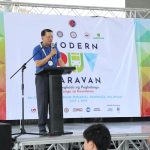
The Land Transportation and Franchise Regulatory Board’s (LTFRB’s) Modern PUV Caravan is a series of exhibits to be held nationwide until next year to showcase the new PUV’s that major truckmakers and body builders have developed for the nation’s PUV Modernization Program (PUVMP) initiative to replace classic but obsolete modes of public transport.  At the directive of the LTFRB Chairman Atty. Martin Delgra III, LTO Assistant Secretary Edgar Galvante and the cabinet OIC for Road Transportation and Infrastructure Undersecretary Mark Richmond de Leon who attended the kick-off exhibit last week, each exhibition event of the Modern PUV Caravan are to be venues for government one-stop-shops to answer the questions of all PUVMP stakeholders, particularly the transport cooperatives and their drivers who will be operating these new tricycle, jeepney and minibus replacements.

The Modern PUV Caravan’s first phase from July 4 to August 2 will be at the following locations in North Luzon:

  • Clark and San Fernando in Pampanga on July 4 to 5
  • Tarlac, July 8
  • Urdaneta and Dagupan, Pangasinan, July 10
  • Baguio, Benguet, July 12
  • San Fernando, La Union, July 15
  • Vigan, Ilocos Sur, July 1
  • Laoag, Ilocos Norte, July 19
  • Tuguegarao, Cagayan Valley, July 24
  • Cauayan, Isabela, July 26
  • Solano, Nueva Vizcaya, July 29
  • Cabanatuan, Nueva Ecija, July 31
  • Marilao, Bulacan, August 2

The roadshow’s second phase in September will be at the following South Luzon venues:

  • The Paranaque Integrated Terminal Exchange on September 2
  • Antipolo, Rizal, September 4
  • Bacoor, Cavite, September 6
  • Santa Rosa, Laguna, September 9
  • Lipa, Batangas, September 11
  • Calapan, Mindoro, September 13
  • Lucena, Quezon, September 16
  • Boac, Marinduque, September 18
  • Naga, Camarines Sur, September 20
  • Legaspi, Albay, September 23
  • Puerta Princesa, Palawan, date to be announced later

The third phase in November will bring the exhibitions to the Visayas at the following locations:

  • Catbalogan in Samar on November 4
  • Tacloban and Ormoc, Leyte, November 6
  • Tagbilaran, Bohol, November 8
  • Cebu City, November 11
  • Iloilo, Panay, November 15
  • Bacolod, Negros Occidental, November 18
  • Dumaguete, Negros Oriental, November 20

The fourth and final phase in January and February next year will bring then Modern PUV Caravan to Mindanao.

For information and updates on the Modern PUV Caravan, visit http://www.isuzuphil.com.

D-Max Boondock introduced at kick-off of Isuzu dealership open-house series

Isuzu Philippines introduced the current special edition Boondock variant of their popular D-Max pick up last weekend at Isuzu Sta. Rosa in Laguna where they also held the first of a series of open-house events to offer repeat customers exclusive discounts and gift voucher incentives.

Boondock: a westernization of the Tagalog word “bundok,” the term dates back to the early 20th century when U.S. military men in the Philippines would put on their boondockers (field boots) to go hiking in the boondocks (mountains).  Originally used to brand an off-roading special edition of the first generation D-Max a decade ago, the Boondock badge now returns on enhanced top-spec 3.0 LS 4×2 variants featuring larger all-terrain tires on a higher-raised and stiffened undercarriage plus body extensions that make the mid-size pickups even tougher and more versatile.

Large and knobby 265/70 R17 Yokohama Geolandar G015 all-terrain tires add to the Boondock’s rough-road flexibility adding more than 3cm to wheel diameters (compared to the 255/60 R18 tires of the standard 3.0 LS variant) and boosting the ground clearance up by 1.2cm (up to 24.7cm up from the 23.5cm of the standard LS).  Handling with the higher profile tires is compensated for with monotube nitrogen-filled high-performance shock absorbers where the neutral gas allows high pressurization of the hydraulic oil, delivering stronger damping control on springs while avoiding foaming of the pressurized oil.

The Boondock is offered in black or grey finish with more visible enhancements being …

  • Over fender and cargo bay wall extenders in contrasting color finish (grey on black or vice versa)
  • Black roof rails and side rocker panels
  • Steel, matte-black honeycomb-perforated sidestep with Boondock logo
  • The Boondock decal on the rear tailgate

Positioned above the D-Max’s urban-sleeked 4×2 X-Series edition, list prices for the D-Max 3.0 LS 4×2 Boondock special edition are P1.390M for the MT sub-variant, P1.450M for the AT.

Isuzu D-Max LS 4×2 variants MT list prices
AT list prices
3.0 LS 4×2 Boondock P1.390M P1.450M
3.0 LS 4×2 X-Series P1.350M P1.420M
3.0 LS 4×2 P1.320M P1.390M
1.9 (RZ4E) LS 4×2 P1.209M P1.279M

<SOURCE> Press Statement of Isuzu Philippines Corp. (IPC), “‘I Love Isuzu’ campaign shifts to Sta Rosa, as the D-MAX Boondock debuts in ‘Open House’,” 2019:

A month after the festive and successful launch of the “I Love Isuzu” campaign last April 25 at the Festival Supermall in Alabang, Muntinlupa City, Isuzu Philippines Corporation (IPC) shifts the celebration a bit further south at Isuzu Santa Rosa.

The focus of the “Open House” has now been the launch of the new Isuzu D-MAX Boondock.

The “Open House” concept, part of the “I Love Isuzu” campaign, makes Isuzu Santa Rosa dealership, its vehicle roster and aftermarket services, closer to its customers and potential buyers by way of fun and engaging activities, contests and promotions; the introduction of the new D-MAX Boondock.

The festivities started early with the motorcade of 24 vehicles drumming up excitement along the designated route from a SHELL station in Biñan going to the dealership.

The D-MAX Boondock was finally revealed after IPC Product Planning Head Robert Carlos described the new and exciting details about the pick-up.

And based on initial feedback by customers and members of the D-MAX Club coming from Team Isuzu Pilipinas and Team ICE in attendance, the D-MAX Boondock Edition packs in more of the tough, durable, and powerful persona that truly befits its name, its intended natural habitat.

The D-MAX Boondock Edition fits the utilitarian vehicle profile sought after by the premium lifestyle, with its higher ride height of 247 mm, 1, 900 mm overall height, off-road look, and a muscular stance that looks tough enough for anything that comes its way.

Based on the popular D-MAX 3.0L LS, the D-MAX Boondock Edition is fitted with 265/70 R 17 All-terrain tires wrapped around black alloy wheel R17 rims. This all-terrain tire has been engineered to provide ultimate traction across various conditions, whether rolling down the highway or leaving the pavement behind.

Monotube nitrogen-charged performance shock absorbers ensure instantaneous response to changing road conditions and offering faster damping reaction. As a result, improved steering control on different terrain and driving conditions is achieved.

The steel side steps not only give easy access but offer valuable protection to the pick-up body. The honeycomb design with the Boondock logo also helps in no-fuss cleaning and provides better traction during ingress and egress.

To complement the overall look, the D-MAX Boondock Edition is equipped with roof rail, cargo extender, rocker panel, over fender, and a massive Boondock decal installed at the tailgate.

Of course, the D-MAX Boondock Edition walks the talk, with its powerful, Euro-4 emissions rated 4JJ1-TCX 4-Cylinder in-line Blue Power 3.0-liter diesel engine with turbo intercooler and VGS Turbo Charger mated to a 6-speed manual transmission with gearshift indicator or a 6-speed automatic transmission with sequential shift. The D-MAX Boondock Edition is able to generate maximum power outputs of 177 PS at 3,600 RPM and 380 Nm of torque at 1,800 to 2,800 RPM.

Available in Cosmic Black and Galena Gray colors, the Isuzu D-MAX Boondock Edition is priced at P1.390 million for the D-MAX 3.0 4×2 LS MT Boondock, and P1.455 million for the D-MAX 3.0 4×2 LS AT Boondock.

Beyond the debut of the Isuzu D-MAX Boondock Edition, the “Open House” in Isuzu Sta. Rosa underscores how valuable Isuzu customers and the Filipino motoring public are to IPC, and it shows once more in the “I Love Isuzu” campaign in the dealership.

The “I Love Isuzu” campaign has entailed months of research, planning, and collaboration among IPC and its dealers, business partners, suppliers, and the various Isuzu auto clubs across the country. The campaign perfectly represents IPC and continues the good relationship with long-time clients and partners.

The “I Love Isuzu” campaign has hinged on not just Isuzu vehicles’ exceptional durability, reliability, power, performance, and fuel-efficiency, but also on the entire motoring lifestyle experience of their owners and their families and friends, the kind of lifestyle experiences that have evolved into fond memories throughout the decades.

Isuzu Sta. Rosa’s “Open House” as an integral part of the campaign, has lined up various activities and rewards schemes for its clients, customers and stakeholders, including: Special 10K worth of Isuzu Parts Coupon for closed transactions, 3K worth of SHELL Fuel Voucher for every successful referral offered to existing clients and 20% Isuzu Genuine Parts Discount. In addition to this, a whole day of bankers’ and client test drive, Fleet Service Clinic and open service shop for clients.

To know more about IPC’s “I Love Isuzu” campaign, upcoming Isuzu Dealer Open House schedules, and the D-MAX Boondock Edition as well as the complete roster of Isuzu commercial vehicles and light commercial vehicles, visit your nearest Isuzu dealer or log on to www.isuzuphil.com.
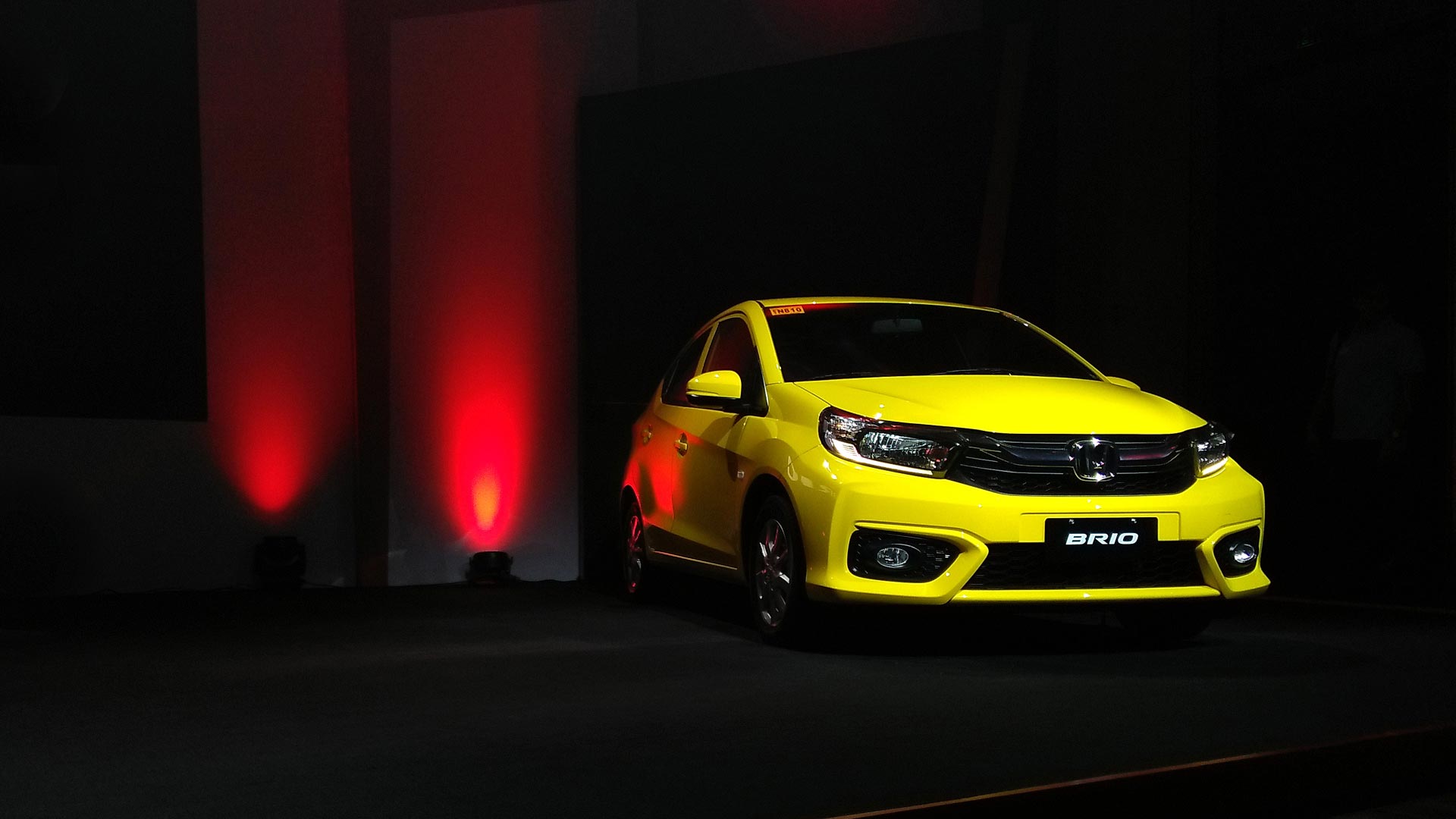
Honda’s new 2nd-gen Brio now largest in class, priced to rival more traditional favorites

Honda Philippines’ new, second generation Brio bumps up the model’s utility, preserves its sporty disposition, and dials back its introductory price for a surprising pivot back to their People’s Car beginnings.  The new Brio leapfrogs the badge from sporty-though-stubby to long-yet-lithe, from smallest to the largest among popular A-segment hatchbacks, and they’ve launched it with intro pricing that pits it directly against market leaders the Toyota Wigo and the Mitsubishi Mirage, among others.

When first introduced here in 2014, the Brio defaulted to a sport role with its standard 1.3 liter 4-cylinder 98hp i-VTEC engine setting it apart from offerings in other markets which reserved this for top-end sport edition variants and instead had the 1.2 liter 4 cylinder 88hp engine for its standard street configurations.  And that old first generation 1.3 liter Brio was priced accordingly into a premium bracket with SRPs ranging from P642k to P801k.

With Honda Philippines’ official launch of the new second generation Brio, the badge goes onto a longer model that’s now just about the largest in its class but with a powerplant that’s sensibly downsized back to Honda’s standard 1.2 liter engine for all other markets.  The new, smaller engine gives away 10hp of power and 17Nm of torque to the former 1.3 liter 98hp mill but, with peak figures of 88hp at 6000rpm and 110Nm at 4800rpm, the new and more miserly 1.2 liter L12B i-VTEC engine with its distinctive variable valve lift and timing valvetrain still delivers the best numbers in the sub-compact hatchback category. And, now, five years into its market life, and after other Honda as well as other carmakers’ models have gotten the market used to continuously variable transmissions (CVTs) as modern AT alternatives, the new Brio pairs its small but powerful 1.2 liter i-VTEC with a CVT gearbox with complete Drive, Sport and Low modes.

The new Brio which adds 6cm to its wheelbase and 20.5cm to its length, stays agile with the second shortest wheelbase underneath the longest body in its class. And, instead of being all-sport from the get go, the new Brio now has a top-spec RS variant priced at P727k (or P732k if with a black-top two-tone paint-scheme) and standing as flagship to its lineup that starts with a basic 1.2 S MT configuration, the only one with a 5-speed manual gearbox and now offered at a startling P585k for two months until this June.  The sub-P600k starting price puts it in the same bracket as that of the Toyota Wigo and undercuts that of the Mitsubishi Mirage, but with neither one of these more popular and smaller hatchbacks having an engine in the same class as the Brio’s–this, even with the downsizing to a 1.2 liter i-VTEC.

<SOURCE> Press Statement by Honda Cars Philippines, Inc. (HCPI), “Honda Launches the All-New 2019 Honda Brio in the Philippines, Now Made Sportier with a New RS Variant,” 2019:

23 April 2019 – Honda Cars Philippines, Inc. (HCPI), Honda’s automobile unit in the Philippines, is pleased to introduce the All-New 2019 Honda Brio as Honda’s entry to the A-Segment passenger car category in the Philippines. This is a response to customers who aspire to own and experience Honda’s signature sporty and practical characteristics in an affordable package.

DEVELOPMENT CONCEPT

Now on its 2nd generation, The All-New Brio was developed based on the grand concept “Proud Over Class”. The grand concept stemmed from the intention to improve aspects of the vehicle that its users need. With this, the All-New Brio was developed to be one-class above its segment with significant improvements specifically with its dimensions.

PACKAGING

Given its compact exterior dimensions, the All-New Brio now gets an additional 60mm of extended wheelbase and 90mm of extended cargo area as compared to its predecessor. This allows the All-New Brio to have a larger interior space that can accommodate a bigger rear seat for a spacious rear passenger cabin and bigger trunk space that can easily accommodate large items while maintaining a compact body size for easier maneuverability.

The All-New Brio boasts a very spacious interior feel. Given the extended wheelbase, the rear passenger legroom now provides a more comfortable rear cabin space with added legroom compared to its predecessor. As for the cargo space, the All-New Brio also manages to feature a well accommodating 258 Liters of cargo space with the rear seats up thanks to its additional extended cargo area. Given its hatchback body style, cargo capacity can be increased to 710 liters with the rear seats folded down. This flexible interior space allows the All-New Brio to carry various cargo given its compact body size.

DYNAMIC AND MATURE EXTERIOR

The All-New Brio boasts a dynamic and mature exterior styling aligned with the “Proud Over Class” grand concept. This aims to provide a sleek and sporty profile emphasizing low center of gravity and wide stance for Honda’s A-Segment hatchback. The All-New Brio sports a strong sporty front fascia that blends with its character lines featuring a Honeycomb Front Grille and Multi-Reflector Halogen Headlights with LED Parking Light Guides, which contributes to a wider look and strong sense of motion with a sporty expression.

At the rear, the All-New Brio now features a new tailgate as compared to the large glass panel found in its predecessor. This allows the All-New Brio to maintain an excellent rear visibility and provide improved body rigidity, which helps improve stiffness of the body structure while providing safety for passengers. In addition, new Rear Combination Lamps with Rear Reflectors are also found at the back of the All-New Brio. The large external red lenses of the tail and brake lights expand to the edge of the vehicle, emphasizing the Brio’s rear wide stance. The All-New Brio sits on 14-inch alloy wheels for 1.2 V CVT variant offering a sporty feeling with its triple dynamic design complimenting the All-New Brio’s sleek and sporty stance.

INTERIOR DESIGN

Interior Design of the All-New Brio revolves around the direction of “COMFORT, HARMONIZE and HIGH QUALITY” which is expressed in its space as well as the high quality interior materials that provide a sporty yet comfortable interior feel. A number of technology features has also found its way to Honda’s new subcompact Hatchback. For added convenience, the All-New Brio now features Manual Air Conditioning with Digital Display. For the in-car entertainment, two different audio head unit options can be found at the center of the All-New Brio: a 7-inch touchscreen audio system for the 1.2 V CVT, and a 1-Din Audio head unit for the 1.2 S MT. The two audio systems, despite their difference both provide a more intuitive entertainment functionality as then allow passengers to connect their devices via Bluetooth connectivity for audio streaming or connect their devices via USB port connection, which would allow various multimedia devices to be controlled through the audio systems.

ALL-NEW BRIO RS

With its popularity as a sport compact car in the Southeast Asian Market, The RS variant was developed to express Honda’s Sporty Spirit based on the Small RS Concept previewed last 2018. The RS variant aims to enhance the sporty exterior design of the All-New Brio, which represents Honda’s vision of a small sporty car. The All-New Brio RS features an aggressive sporty exterior design with its RS Design Piano Black Front Grille, RS Design 15-inch Alloy Wheels, RS Design Side Sill Garnish and Rear Bumper Garnish, and Tailgate Spoiler. All of these added features give the All-New Brio a more enhanced sporty exterior look.

Complementing the enhanced sporty exterior, the interior of the All-New Brio RS also emphasizes Honda’s sporty image. Inside, the variant’s RS Design Interior with Orange Accents is highly emphasized on both dashboard and door trims. Paired with Black Fabric Seats with Orange Accents, this gives the driver and passenger a sportier and high-quality appearance. Further enhancing the overall passenger experience, the All-New Brio RS also features a 7-inch touchscreen audio system with Bluetooth and USB connectivity for audio streaming. However, compared to the other variants, the All-New Brio RS features a 6-speaker audio set up inclusive of additional two tweeters which allows a more enhanced audio experience.

Completing the sporty image of the All-New Brio RS, a 2-Tone Black Top RS variant featuring the RS exclusive Phoenix Orange Pearl color found in other Honda RS models, will be available together with other colors for the 1.2 RS Black Top CVT Variant.

POWERTRAIN

Powering the All-New Brio is a new 1.2 Liter 4-cylinder SOHC i-VTEC engine that produces a maximum power of 90 ps at 6,000 rpm and 11.2 kg-m of torque at 4,800 rpm. This is mated to a Continuously Variable Transmission (CVT) developed based on Honda’s Earth Dreams Technology. The engine and transmission combined provide a smooth, powerful off-the-line acceleration and efficient fuel economy for Honda’s new small hatchback. For those who prefer driving a Manual Transmission, a
5-Speed Manual Transmission option will be available for the 1.2 S MT Variant.

SAFETY

In terms of safety, the All-New Brio boasts a Four Star ASEAN NCAP safety rating as it comes equipped with the essential active and passive vehicle safety features. Honda’s G-CON technology enhances impact absorption for the added protection of passengers in an event of a collision. In addition, all variants of the All-New Brio will get Dual Front Driver and Front Passenger SRS Airbags and Anti-lock Braking System (ABS) as standard. All of these give the driver and passengers peace of mind while on the road.

The All-New Brio will be available at all 38 Honda dealerships nationwide and will be available in five (5) colors:

    • Phoenix Orange (New color; exclusive for 1.2 RS Black Top CVT)
    • Carnival Yellow (New color; 1.2 RS Black Top CVT and 1.2 V CVT only)
    • Rallye Red (1.2 V CVT and 1.2 S MT only)
    • Modern Steel Metallic (1.2 RS CVT, 1.2 V CVT and 1.2 S MT)
    • Taffeta White

And as a treat to our customers, Honda will be offering the All-New Honda Brio at the following Special Introductory Suggested Retail Prices until June 2019:

    • 2 RS Black Top Navi CVT: Php 732,000
    • 2 RS Navi CVT: PHP 727,000
    • 2 V CVT: PHP 646,000
    • 2 S MT: PHP 585,000

For more information on the All-New Brio and other Honda products, visit any of the authorized Honda Car dealerships today or you may visit the Honda Cars Philippines, Inc. official website at www.hondaphil.com.

Suzuki Philippines introduces 2019 Jimny ahead of schedule and at a lower price than promised

Taguig City, 08 March 2019–With their surprise move of introducing the fourth-generation 2019 Jimny here today, just nine months after it was launched globally last year and four months before the date they had previously named for its commercial introduction, Suzuki Philippines seems to have crowd-sourced some heavy-hitting clout with the Japan head office both for and with the all-new 4×4 mini off-roader.

At the Philippine International Motor Show (PIMS) last October, they exhibited a handful of left-hand drive 2019 Jimny units because of what Suzuki Philippines general manager for automobiles Mr. Shuzo Hoshikura described as the thousands of inquires they had received asking if and when the new Jimny model would be introduced here–inquiries that were sparked by the speculations of a few aficionados after the new model was globally introduced last year. Pressed for when the Jimny would be available here in real commercial numbers, Hoshikura said in July or August, and at a base price of P1.1M.

Now, just nine months after the new model was introduced globally last June, after advanced orders they received at PIMS might have tipped the scales even further, and four months before Hoshikura’s promised arrival date in July at the soonest, Suzuki Philippines startles us once again with the early unveiling of the 2019 Jimny All-Grip Pro 4×4 off-roader. Unveiled and put on display at the Bonifacio High Street Ampitheater in Taguig City today until Sunday, March 10, the 2019 Jimny lists even lower than the initially promised price of PhP1.1M but notched above the P0.910 to P0.960M price of the previous generation model and with that All-Grip Pro label that distinguishes it from the previous model Jimny of which they might have some lingering stocks.

The Philippine-market Jimny’s AllGrip Pro label refers to Suzuki’s categorization of its four-wheel-drive drivelines (full-time all-wheel-drive AllGrip Auto, part-time all-wheel-drive AllGrip Select, and on-demand 4×4 low or high drive AllGrip Pro). And, like the previous generation Jimny, this new model is also assembled in and shipped over from Japan.

The 2019 Jimny AllGrip Pro will be available in the following variants and at the corresponding price points:

  • GL 1.5L M/T in monotone finish at PhP0.975M
  • GL 1.5L A/T in monotone finish at PhP1.035M
  • GLX 1.5L A/T in monotone finish at PhP 1.085M
  • GLX 1.5L A/T in two-tone finish at PhP1.095M

Suzuki PH launches all-new next-generation Ertiga 7-seat mini-MPV

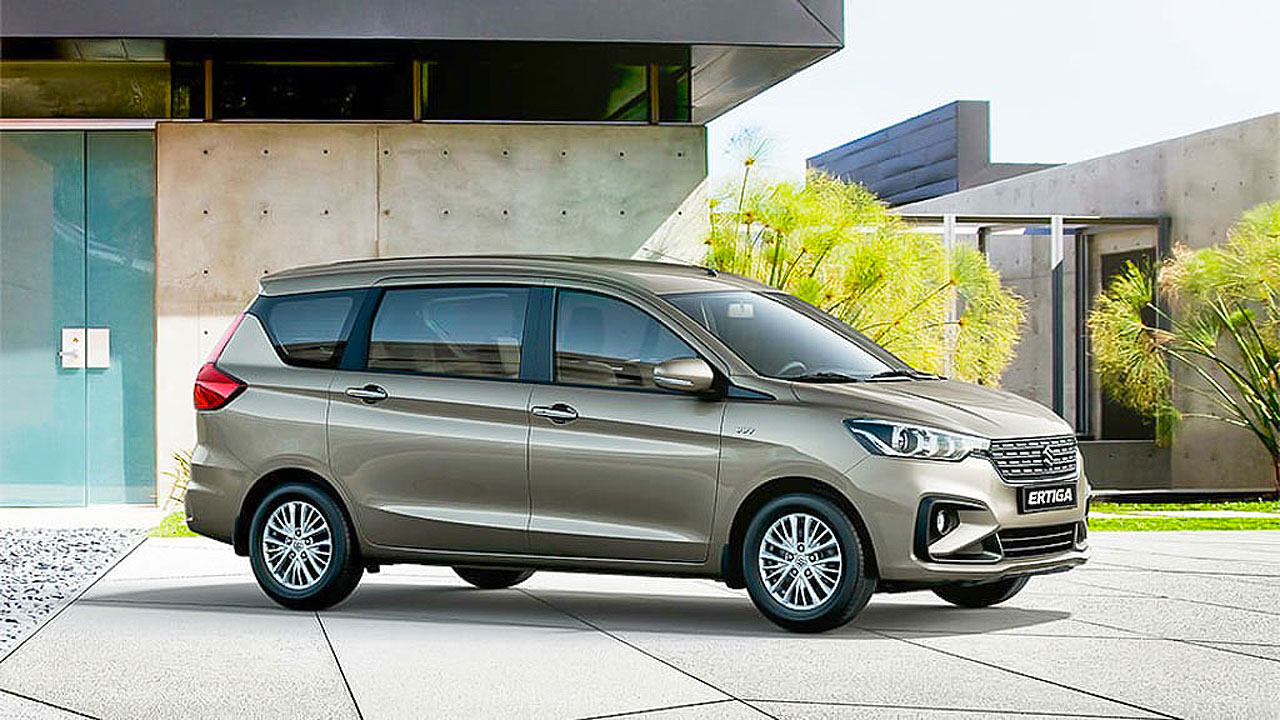
23 January 2018, Pasay City–Suzuki Philippines has introduced the second generation Ertiga and this new iteration of their popular mini-MPV checks the right boxes to go head to head against major players with their formerly bigger people movers.

Outgoing first generation Ertiga mini-MPV

The new Ertiga is built on the same HEARTECT platform that forms the underpinnings of its next-gen Swift and Dzire precursors, leveraging its class-leading 2740mm wheelbase into a stable handling platform for cabinwork that’s now 13cm longer and 4cm wider. And, with 209 liters of storage even without folding down the third row seats, the trunk space has been upsized by a significant 24 liters as well.

The new Ertiga now sports the K15B 1.5liter engine that will also be mounted by their new Jimny mini 4×4 and their next, updated Ciaz compact sedan. Gearbox choices remain as either a 5-speed manual or a 4-speed automatic transmission–both robust options.

Incoming second generation Ertiga

The new second generation Ertiga is still priced comfortably under the PhP1 million mark. The base GA MT variant lists at PhP728k and the next in line GL MT is at PhP848k. Among the auto gearbox selections, the base GL AT variant lists for PhP888k and the top spec’d GLX AT comes in at PhP978k. All in all, some pretty aggressive pricing against the new Toyota and Mitsubishi rivals that strayed onto Suzuki’s turf.

Detail Unit 1st Generation 2nd Generation
Body code ID ZE81S0 ANC22
Global intro Month April 2012 April 2018
PH intro Month July 2014 January 2019
Dimensions
– Length mm 4265 4395
– Width mm 1695 1735
– Height mm 1685 1690
– Wheelbase mm 2740 2740
– Trunk space ltr 185 209
Weight
– Curb weight kg 1185 1135
– Payload kg 585 575
– Gross weight kg 1770 1710
Engine
– Type K14B K15B
– Displacement liter 1.4 1.5
– Peak power hp@rpm 98@6000 102@6000
– Peak torque Nm@rpm 130@4000 138@4400

Caltex shows convincing evidence on the benefits of their Techron fuel additive

Designed as a detergent that gets completely burned away by the engine’s combustion cycles, as well as a pervasive lubricant that lingers and accumulates with regular use, Caltex’s Techron additive promised significant benefits that also begged for major proof. Now, after inspecting 694 valves from 94 vehicles in Asia with a Karl Storz borescope, Caltex presents convincing imagery on the benefits of Techron, their trademark fuel additive that they last reformulated for pre-mixing with their fuel products in July 2016.

Press Statement of Chevron Philippines, Inc., “Caltex fuel delivers proven cleaning power in the Philippines and across Asia,” 2018:

Latest borescope test in Asia proves not all fuels are created equal, with Caltex with Techron® achieving an average of 9.7 out of 10 score rating on the cleanliness of engine intake valves

Manila, 13 December 2018–Caltex today announced the results of a borescope test conducted in October of this year, achieving an average of 9.7 out of 10 score rating in Asia and 9.8 out of 10 in the Philippines on the cleanliness of engine intake valves when Caltex with Techron®, now with Clean & Glide Technology™ is used regularly.

Caltex’s borescope test was conducted in four Asian markets (Philippines, Hong Kong, Cambodia and Thailand) where they inspected 694 valves from 94 cars. The test utilized a Karl Storz borescope to examine the interior of a vehicle’s fuel system, comparing against the industry standard Co-operative Research Council (CRC) Intake Valve Deposit (IVD) rating system, where 10 denotes perfectly clean. A clean engine is important as when there is dirt buildup, the mixture of air and fuel is disrupted; impacting performance, power, acceleration, fuel economy and emissions.

The showcase event in Makati City on December 13 was attended by car club members and enthusiasts. Mr. Greg Engeler, Chevron’s Product Engineering Manager for Asia Pacific, shared the findings of the borescope test.

“The recent borescope test once again helps demonstrate to local motorists that not all fuels are created equal. Since our last test in 2013, Caltex fuels continue to work at keeping parts clean, thereby contributing to five performance benefits – maximized power, better fuel economy, lower emissions, a smoother drive, and reliable performance,” shares Engeler. “This is also the first time the new Caltex with Techron® formulation has been tested under the local market – with local fuels, under local climatic, driving, and traffic conditions. We are delighted that the latest Clean and Glide technology is proven to deliver unbeatable cleaning power to help our customers’ cars perform at their best.”

Vehicles that used Caltex with Techron® achieved an average score of 9.7 out of 10 across all four Asian markets, surpassing the average 8.9 score of vehicles using lower quality fuel. In comparison, some vehicles using lower quality fuels recorded valve readings of as low as 5.0, 5.0, 6.5, and 8.5 for Cambodia, Philippines, Thailand and Hong Kong respectively. Vehicles selected represent a cross-section of the market fleet to reveal an unbiased and true state of local passenger cars.

“We are extremely proud of the borescope test results as these provide concrete evidence of the consistent performance of Caltex with Techron. Achieving such a high score in valve cleanliness reflects our commitment to providing only the best-quality fuel products. We are thrilled to be sharing this news with our media and car club friends,” said CPI country chairman Louie Zhang.

The borescope test demonstrates Caltex’s commitment to cleaner engines, while staying true to the evolving nature of Techron® in anticipation of future engine technology and local market needs. All grades of Caltex gasoline contain Techron®, a fuel additive package backed by over 30 years of research and development, which has a polyetheramine component designed to clean up fuel system deposits and prevent them from reforming. Filipinos can head down to any Caltex service station to experience the benefits Caltex fuels with Techron®.

Elegant and efficient: Isuzu demonstrates benefits of Mimomari telemetry with timely eco-drive fleet training

Building on their proprietary Mimomari telematics tech originally developed for the Japanese domestic market, Isuzu has been offering their fleet clients some best practices lessons that are reinforced by realtime telemetry.  Since June 2018,  Isuzu has been holding monthly sessions for instructing fleet drivers on optimal methods for efficient and safe driving, and they’ve been putting meat to these lessons  by offering actual data on how the students fare with the training. 

Their Mimomari technology stack was first deployed to comply with Japan’s mandate for driver activity logs back in 2004 but has since grown into a system that provides realtime tracking of vehicles and monitoring of driver behavior.  What started out as a data-capture tool for ensuring driver welfare has expanded and deepened into a fleet management system that now adds options for advanced geo-fencing. 

Building on the realtime and remote GPS tracking features essential to Mimomari telemetry, the system now makes these even more actionable by offering fleet managers the option to declare authorized routes and localities–virtually fenced-in swaths on the map where fleet trucks are allowed to roam, any departures from which would raise an alarm.  The feature evolved in Japan where Mimomari tech eventually found its way to private vehicles, this for family members to monitor the location of senior citizens and other persons with elevated risk levels.  And it is this feature, ironically, that could make the current  Mimomari telematics suite of compelling relevance to fleet owners here where they face the constant risk of hijacked shipments.

Press Statement by Isuzu Philippines Corporation (IPC), “IPC optimizes truck fleet customers’ businesses with Isuzu Eco-Drive Training,” 2018:

Owning, driving, and maintaining an Isuzu commercial vehicle is already a sound business investment in itself, as the world’s foremost manufacturer of diesel-powered engine assures the power, reliability, durability, and fuel efficiency in every vehicle that rolls out of its assembly.

However, to maximize the strengths of every Isuzu truck, maintaining and operating it must also be up to par with the best practices, techniques, and technologies. These best practices and techniques can mitigate the adverse effects of the current volatility of fuel supplies and prices in the global market. This global volatility, and the resulting cycle of local price markups and markdowns, have been causing headaches for business owners who are finding it extremely difficult to project their medium- and long-term profits and losses.

Isuzu Philippines Corporation has taken the initiative to share with its fleet customers of Isuzu trucks the theories, practical knowledge, and the latest technology in optimal and responsible driving in its monthly Isuzu Eco-Drive Training. This special training, which only Isuzu can offer, ultimately aims to support the profitability of the businesses of fleet owners by expertly training their drivers how to drive efficiently.

These sessions–an adaptation of Wacom Hokkaido Co Ltd’s driver education program on economy and safety driving that has become well-received by customers over the years–began in June 2018. During these training sessions, IPC’s fleet customer representatives (mostly driver employees) engage in discussions and lectures on economical and efficient driving. Then, participants undergo actual driving exercises using Isuzu light-duty vehicles installed with the Mimamori Online Service advanced operation information system, and guided by specially trained expert Isuzu drivers.

The Mimamori Online Service advanced operation information system employs the latest communications and GPS technology to collect real-time data on vehicle operation status. This data is shared with the Mimamori Center, where it is analyzed to enable real-time vehicle management through interactive communication between the vehicle and the office. On the vehicle side, voice guidance and audible alarms advise the driver on fuel-use reduction and safe driving while the vehicle is in motion. Meanwhile, on the management side, the system provides the ability to track the vehicle’s current location and status of operation in order to help maximize logistics efficiency.

Finally, participants undergo a seminar on the actual practice of conducting daily inspections, which reinforces the preventive maintenance procedures for every Isuzu vehicle.

For more information on the Isuzu Eco-Drive Training sessions, log on to www.isuzuphil.com.

Body builder Centro introduces new products, announces new joint venture at PIMS 2018

Centro Manufacturing Corporation (Centro) introduced four new products and revealed their bright prospects for the decade at this year’s iteration of the biennial Philippine International Motorshow (PIMS) that ran from October 24 to 28 at the World Trade Center in Pasay City.

Centro launched four advanced truck builds, all initially on Isuzu chassis, thereby emphasizing how far they’ve come after decades of establishing themselves as the go to builders for their trademark jeepney-type rear bodies, and also underscoring how it all started for them in the 1990s with their first major contract coming from Isuzu Philippines. CMC launched their 20-foot wing van body on a medium-duty Isuzu truck chassis, refrigerator vans built on Isuzu’s NLR light-duty truck and D-Max single-cab pickup truck chassis, and their build of the Isuzu QKR Class 2 modern PUV.
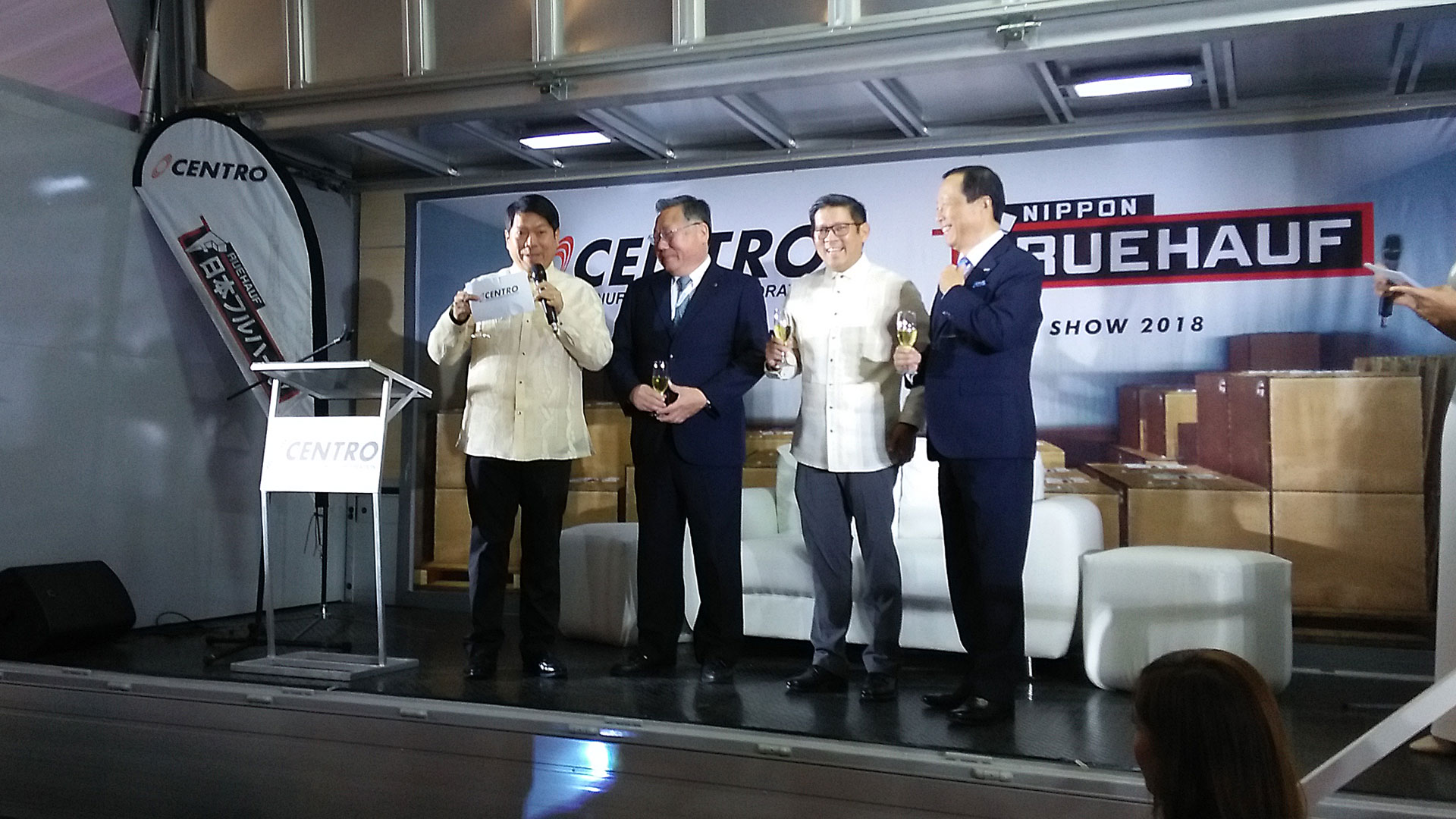
The 20-foot wing van set up as a stage for the Centro presscon

The new 20-foot wing van is a shorter, locally attuned version of the 32-footer that’s popular in Japan and which Centro and Isuzu launched last year. Different only in length, the new 20-footer retains the same lightweight aluminum panels and hydraulic roof actuators as on the longer wing van.

Light-duty truck refrigerated van

The light-duty and pickup truck refrigerated vans are built with improved insulated sandwich panels where aluminum composite sheets are made to cover extruded polystyrene insulation. They assert that compared to traditional injected polyurethane insulation, extruded polystyrene is less susceptible to water absorption, is more durable and is easier to maintain. Both refrigerator van body models can maintain cargo temperatures from minus 18 to plus 5 degrees Celsius. The light truck refrigerator van features a curbside sliding door that lets it have two separate internal compartments with potentially different functions–one as freezer the other as chiller, for example.

Pickup truck refrigerated van

The wing van and refrigerator van bodies are built in partnership with Nippon Freuhauf of Japan which foresees the Philippines’ domestic logistics industry growing by 12.3 percent over the half-decade of 2015 to 2020. Nippon Freuhauf president Hiroyasu Hiruma said that both they and Centro are ready to support this growth, and offered an explanation for the types of truck builds that Centro introduced. He said that the current administration’s completion of the bridges to connect Luzon, the Visayas and Mindanao will push up the demand for overland transport using specialized dry- and cool-box cargo carriers such as wing and refrigerated vans.

Isuzu QKR Class 2 modern PUV

Hiruma said that Nippon Freuhauf is so optimistic about Philippine prospects that on October 24, marking the first day of PIMS, they struck an agreement with Centro, committing to a joint venture to assemble refrigerator van bodies, and manufacture these bodies’ insulated sandwich panels, locally. Centro vice president for sales and marketing Rommel Juan disclosed that investment in the joint venture will start at PhP100 million in the first year, for construction of the manufacturing facilities, but that they expect capital infusions to reach a total of PhP 500 million in five years, after new products and plant capacities are brought online.

The fourth truck body build they introduced at PIMS 2018, the Isuzu QKR modern PUV implementation, represents even more new market opportunities for Centro. Centro’s Juan says: “It is a captive market with some 200,000 PUJs going to be upgraded during the next six years. And Centro is ready for it. We have on display at PIMS 2018 our version of the modern PUV Class 2, Gen 2 using the Isuzu QKR light truck platform to show for it.”

BAIC introduces big M60 MPV at PIMS 2018

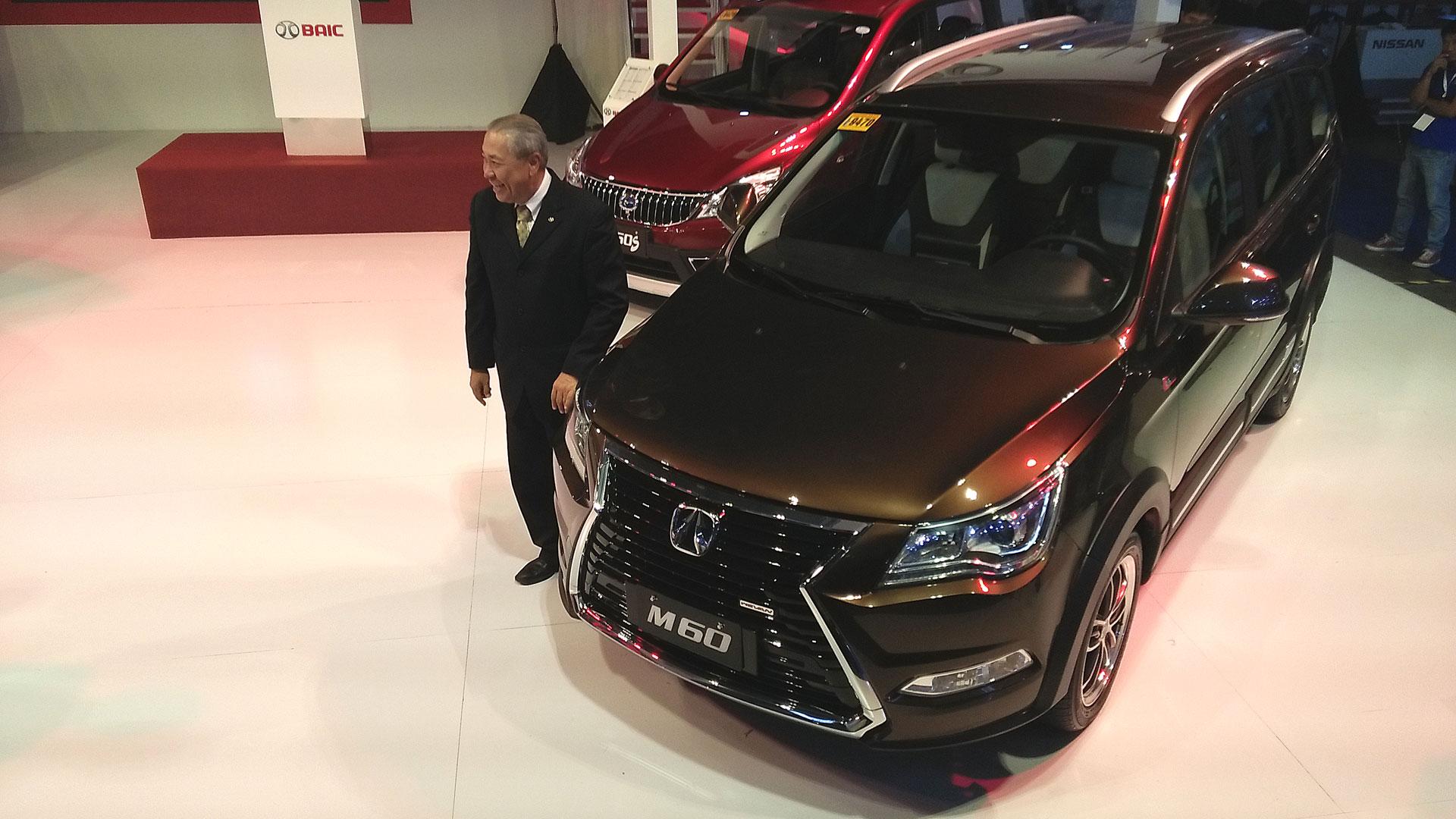
BAIC has introduced their large M60 multi-purpose vehicle (MPV) at the 7th iteration of the biennial Philippine International Motorshow (PIMS) which ran from October 24 to 28 at World Trade Center in Pasay City. The new M60 is their first van with: (1) front-wheel-drive, (2) unibody construction, and (3) an automatic transmission (a Punch Powertrain-sourced CVT in this case). By its curb weight, the M60 is technically a mid-size MPV like the Toyota Innova and Chevrolet Orlando, but at 4.8m long and with seven plush seats (with two bucket seats in the center row instead of a 3-place couch), this biggest of BAIC’s van-type transporters borders on being a full-size people mover like the Toyota Alphard. And this while the M60’s sticker price of P0.998 to P1.068 million puts it against much smaller compact MPVs such as the Toyota Avanza and Honda Mobilio.

Press Statement by BAIC Philippines, “BAIC shows new MPVs and SUV at PIMS 2018,” 2018:

Pasay City, 24 October 2018–BAIC Philippines will exhibit three new sport-utility and multi-purpose models at the 2018 Philippine International Motorshow (PIMS) which runs from October 24 to 28 at the World Trade Center in Pasay City. At the automotive industry’s major biennial trade show where the brand was first introduced four years ago in 2014, BAIC will launch their new M60 mid-size crossover multi-purpose vehicle (MPV), and will also showcase the M50S compact MPV and the BJ20 compact crossover sport-utility vehicle (SUV), models which they introduced less than a month ago on September 28.

The timing of the launches highlight how the new M60 mid-size MPV pushes further some of the best features of their new M50S MPV and BJ20 SUV models. The M60 scales up the people-mover dimensions of the compact M50S that BAIC dubs a modern-day station-wagon, depicting the bigger MPV as a roomy, seven-seater with the stature of an executive transport. On the other hand, the new M60 takes the BJ20’s small yet powerful 1.5liter turbocharged gasoline engine and continuously variable transmission (CVT) and puts this match-up to more practical use pushing a large three-row MPV to a top speed of 170km/h.

Delivering peak power of 150hp at 6000rpm and maximum torque of 210Nm over a surprisingly wide 2000~4500rpm range like on the BJ20 SUV, the M60’s 1.5 liter turbocharged mill has a power profile that rivals that of turbodiesels while burning cleaner Euro 5 gasoline. And, while the M60’s CVT remains an ideal choice for fuel efficiency and for keeping the turbocharger spooled up during acceleration (BAIC asserts a conservative yet impressive 13km/l of mixed-mode fuel mileage), it also represents BAIC Philippines’ first automatic gearbox option on an MPV model.

The large new M60 crossover is at the borderline between mid- and full-sized MPVs with its 4.8m length, 1.8m width and 1.7m height. Its rigid unibody construction and front-wheel drive transaxle deliver enough weight savings to keep the M60’s curb-weight down to the 1,445kg that’s more typical of a compact minivan rather than that of a mid-sized MPV. In fact, those weight savings keep the M60’s curb-weight to just five kilograms more than that of the smaller BJ20 SUV.

Despite its large size, the M60 stays nimble with a 5.5m turning radius that’s kept tight by a compact 2.76m wheelbase which, in turn, is smoothed out by taking advantage of the big crossover MPV’s independent suspension. And, like both the up-trimmed M50S compact MPV and BJ20 compact crossover SUV, the M60 features a reversing camera and sensors for easing the large MPV into and out of tight situations.

With its Standard 1.5L CVT variant listing at P0.998M, and its Luxury 1.5L CVT variant at P1.068M, the BAIC M60 mid-size crossover MPV is priced to move against larger full-size MPVs as well as smaller compact and sub-compact minivans. Visitors to PIMS 2018 will be offered the chance to evaluate these prices and products hands-on with test drives of BAIC’s newest models as well as their compact MZ40 three-row and MZ45 four-row vans, models that were launched along with the brand and have enjoyed growing popularity since 2014.