The BYD L3: Prime Example of Why China Carmakers Are Banking on DCTs

IMG_20150421_080716

There’s this apparent trend, a growing demand for automatic dual-clutch transmissions (DCTs). Late in 2008, Germany’s BorgWarner partnered up with the dozen major carmakers behind the China Automobile Development United Investment Company to start manufacturing DCTs in Dalian. Early the next year, BYD Auto, the largest independent carmaker in China and not a participant in the consortium that partnered up with BorgWarner, started developing its combination of a direct-injection turbocharged engine and 6-speed tiptronic DCT—their Ti+DCT technology package.

IMG_20150421_082312By April 2012, the BorgWarner-China joint venture was reporting a large and increasing demand for DCTs in the  emerging automotive markets of both Europe and Asia. They estimated that the market for DCTs in China alone would grow from 0.6 million in 2012 to 2.7 million units by 2017, growing each year by 35%. Months later, in August 2012, after they had already launched their F5 sedan with the Ti+DCT package that took two years to develop, BYD both admitted that they had problems with supply of the DCTs for their popular vehicles and reported that they had already solved these. Though they didn’t elaborate on their solution, soon afterwards in November 2012 they announced that by the next year, BYD would be putting their own in-house developed DCTs in their vehicles. Then, in 2013, BYD started featuring their in-house developed DCT even on vehicles without high-end turbocharged engines.

The narrative paints a picture of China carmakers, particularly of independent BYD which not only has to compete for market share but also has to defend its position against a consortium of other carmakers, all being keen on putting DCTs on their product, and not only on their higher end offerings.  Figuring out why requires a closer look at DCTs, at what distinguishes these from other types, and then an evaluation of its implementation on BYD’s mid-range L3 sedan.

Two where there was one

BYD's in-house developed 6-speed DCT
BYD’s in-house developed 6-speed DCT

What makes it a dual-clutch transmission? Why the two clutches? The two smoothen, even simplify, the gear changes. Physically linked, as one clutch disengages from one gear, the other engages the next gear up, or down. Elegant if you think about it. Instead of the sequential steps of lifting the clutch, putting the next gear under it, and then pushing the clutch back in, the DCT does all three in one action.

But what happens at the very start when you roll off? On an automatic DCT, slide the stick into D and what happens? The car being stationary while you keep your foot on the brake (as you normally would on an automatic before rolling off), will one of the clutches immediately press in and engage first gear? You’d think it would if you’ve gotten used to a typical automatic, an AT. But no, it won’t.

Of things mechanical and fluid

On the ATs we’re accustomed to, slide the stick into D and you’ll immediately feel torque on the drive wheels, urging the car forward even as you keep your foot on the brakes. If the AT had a clutch, doing this would’ve stalled the engine, or would otherwise wear down the clutch’s contact surface. But an AT has no clutch.

Center column on the BYD L3 DCT variant

Instead of a clutch mashed up against a pressure plate, a torque converter replaces that mechanical contact with fluid force. An impeller driven by the engine’s driveshaft pumps automatic transmission fluid (yes, that ATF you need to top-off routinely) against a turbine, turning it and in turn driving the transmission. Instead of the friction of a mechanical link that would wear down the clutch or stall the engine if you kept your foot planted on the brakes, there would be just the turbulence of the fluid as it gets pumped from impeller to turbine and then back again. (By the way, that re-circulation of the ATF from the turbine back to the impeller is achieved by a third component, a stator, but we’ll leave that detail for another story.)

The torque converter transmits significant enough engine power that if you pour on the gas, keeping your foot on the brake pedal won’t keep the car stationary for long, at least not your drive wheels. But yes, you’d know right off that a torque converter can’t possibly transmit all of it—a fluid connection simply can’t match the positive contact of a solid one. Because the force of the engine is transmitted through fluid pumping, the impeller on the driveshaft will spin faster than the turbine on the transmission—what engineers call the “slippage” that’s inherent in torque converters. (In modern automatics there’s a lock-up clutch that engages when the car is at cruising speed, creating a mechanical link with the top gear after it has gone through acceleration, but that detail we’ll also leave for another story.)

Back to clutches

Back again to the DCT which replaces the torque converter with clutches, it isn’t really an evolution of the AT—not a hydraulic automatic—but rather one of a manual gearbox where the clutch-work and gear-shifting has been taken over by electronic actuators.

IMG_20150420_134534More efficient with the positive contact of the clutch instead of the hydraulics of a torque converter, a DCT must have the programming to discern when to engage or disengage either of its clutches. Unlike an AT that can rely on slippage to cushion both the torque from and the load on the engine, a DCT needs to actively manage the clutch-work, manage the clutch friction. The DCTs programming triggers when to engage the clutch on the first gear and when to transition to the other clutch for an up-shift, when to go back to the other clutch for another up-shift, and so on until the top gear is reached at cruising speed.

And, at the same time, the DCTs programming needs to make the automated clutch-work and gearshifts familiar and intuitive to motorists. Not a trivial thing since there’s a lot you could get right, or wrong, in the algorithms.

The DCT on the BYD L3

Now, finally, knowing how a DCT works, we ask: how does it stack up on the BYD L3, how good is it on a compact sedan from China’s biggest independent carmaker?

IMG_20150420_134121

If you’re mainly a stick driver, you’ll appreciate the convenience of an automatic but muscle memory will probably see you reaching out with your left foot for a clutch pedal that isn’t there, or dropping your right hand onto the drive selector for an up-shift you don’t have to do yourself. Seen from this perspective, from the point of view of one used to being enabled, and burdened, by a manual gearbox, the automatic DCT can be a superb alternative.

The 1.5 liter BYD483QE engine on the BYD L3

Before testing the L3’s DCT variant, I tried the one with a 5-speed manual gearbox. The 1.5 liter BYD483QE engine with SOHC over 16 valves featuring variable lift and timing technology delivers peak power and torque of 107hp at 5,800rpm and 107lb-ft at 4,800rpm, respectively. On the 1,210kg sedan, the power is enough for assertive acceleration but you could feel there’s just a slim reserve remaining for when you want things more spirited. But then again it’s tuned for fuel efficiency, the manual variant reportedly reaching 19km/l on the highway. So, given how the L3’s engine is, you’d want all that available power driving you forward. And on the DCT variant, the power is all there.

As advertised, good efficiency

On a highway drive of over 100km, I chalked up 17km/l while insisting for most of the trip on a 100km/h cruise with the engine turning at 2,400rpm. On the occasions when I backed off and settled down at 80km/h, the engine turning at just 2,000rpm, the trip computer had me doing 18km/l.

DSCF9354On a day’s drive in the city, the L3 DCT turned in a figure of 11km/l with frequent prolonged stops burning fuel at a rate of 1ltr per hour being offset by the car’s noteworthy ability to move off again and accelerate decently with the engine never exceeding 2,200rpm—this, even with a full family load of two adults and three kids.   With a long enough stretch of open road, that 2,200 rpm cap could bring the L3 up to 60km/h where you could settle back at 2,000rpm and remain in 5th gear.  At those readings, at 60 in 5th and with 2,000, the trip computer would show current fuel consumption of just 5ltrs per 100km—the equivalent of 20km/l for those few seconds that you can remain at 60km/h on city streets.

Impressive numbers from a compact sedan weighing in at a ton and a quarter, and close enough to those of the manual variant to verify that the DCT’s clutches do work as advertised. Though more efficient than an AT, a DCT won’t match a manual’s mileage because the latter can be coasted, clutch disengaged, whenever the driver’s inner ear and butt cheeks tell him he can. On a DCT, once the car is moving, one of its clutches is always engaged, unless the driver flips the selector into N. Although, that flipping into N, while already cruising at 100km/h on the highway, shows just how refined the DCT is on the BYD L3.

Smooth clutch-work, smooth shifting

With the car in D and with easy pressure on the gas pedal (pressed just an inch in), the L3 DCT accelerates well enough, shifting up at the aforementioned 2,200rpm as it reaches 10, 30, 45, 60 and then 80km/h when it finally enters sixth gear. The shifts happen so fast and so smoothly there’s no feeling of forward thrust ever letting up, the only sign of a shift being the softening of the engine’s noise as it drops from 2,200rpm down to just under 2,000rpm whenever it takes up the new gear ratio before spooling up again for the next up-shift.

IMG_20150420_133736That smooth shifting indicates that the DCTs programming has good routines for toggling between the dual-clutches. But popping the selector out of D and into N, and then back again, while already at cruise, that shows how well the DCT emulates a human driver. Pop her into N to disengage the active clutch, then take your foot off the gas. The car will go free-wheeling and you’ll see the revs settle back down to the 800rpm idling level. All as expected.

But then you’d worry, will putting it back in D cause a sudden, maybe catastrophic re-engagement of the clutch at too low a gear? No, it won’t. Pop the selector back into D and the clutch doesn’t reengage immediately. The DCT first pre-selects the proper gear based on current speed—6th for 100km/h in my case—and then eases in the clutch. Keep off the gas and you’ll see the tachymeter needle gently go back up to around 2,000rpm as the clutch is finessed back in and the engine revs get picked up by the turning of the drive wheels.

Smooth roll outs with a DCT

Now finally, an answer to the question: what happens differently on the L3’s DCT when you pop it into D to roll out? Like that popping out and back into D at cruising speed, the clutch won’t engage immediately. Pop into D to roll off while still stepping on the brakes and you’ll feel nothing. There’s no jerking forward against the braked wheels. Reason is that the clutch won’t engage until you take your foot off the brakes.

IMG_20150421_082040

Do release the brakes and a moment later you’ll feel the clutch pushing in, again gently, to start the car rolling. I’ve heard reports of how engines with DCTs typically shudder at this point. For my money, it wasn’t any worse than what I’ve felt on ATs, but putting it that way would have me still missing the point. The shuddering is no different from what I’d feel on a manual transmission if I was too slow in giving it some gas as I let off the clutch pedal. In other words, the vibration is merely a sign of the engine approaching stall, prompting you to be more lively on the gas.

The best way I found for making roll-outs silky smooth on the L3 is to take my foot of the brake then immediately imagine myself easing my left foot off the non-existent clutch pedal. I’d let that visualization trigger muscle memory, let it cue me to gently press on the gas pedal. On a manual, it’s a simultaneous thing: ease off the clutch pedal as you ease in the gas. On a DCT, still with a clutch though it’s controlled by computer, the routine isn’t really different. And, as it happens, it’s a good safety feature. Better to not have the DCT intervene on the gas just for the sake of smoothing out your roll off. That part, you can take care of yourself.

Uphill, not a problem

This said, there is one situation when the DCT will partly engage the clutch and throttle up the engine even while you’re stopped and stepping on the brakes. Recall that a DCT won’t engage the clutch when you put it in D if your foot is still pushing down on the brake. This won’t do if you’re hanging on an uphill incline. That fraction of a second delay will see you sliding back before the clutch engages, compelling you to throttle up quickly to stop the slide and jerk the car into forward motion … a crude and nerve-wracking way to tackle a hanging situation.

IMG_20150421_081915No wonder that the L3’s DCT has an uphill assist feature—it’s absolutely necessary after all, not just a gimmick. What is surprising is the sheer elegance of how the designers will have you activate it. If you’re stopped on an incline and needing to climb uphill, a tried and tested technique on manual gearboxes is to pull up the hand-brake to keep you stationary while you balance you’re clutch and throttle to put torque on the wheels and make them start pushing against the brake. This way, when you release the hand-brake, the car will immediately start inching up instead of down the incline.

So how would they have you do something similar on the L3’s DCT? Why, by also pulling on the handbrake of course. Say you’re stopped, hanging on an incline, and wanting a smooth roll out. Keep stepping on the brake, slide the selector into D, then pull on the handbrake to instruct the DCT to set you up with enough clutch and throttle to have the L3 chomping at the bit, ready to move forward as soon as you set the handbrake back down and ease off the brake pedal—very natural for those who are accustomed to manual gearboxes.

Advantages on many levels

Discard notions of it being like a traditional automatic and instead treat the DCT as a manual gearbox on which you’ve delegated clutch and gearshift control to a computer. Do this and the efficiency benefits of this alternative and new automatic, particularly on the BYD L3, will come with no trade-off in terms of drivability. In fact, it could be more enjoyable than either a traditional AT or an old-school manual.

IMG_20150420_180710

By their very nature, a DCT’s clutch and gearshift servos need to be computer controlled. What’s noteworthy on the BYD L3 is how the engineers have shaped this automation to both rely on and to channel the competence of the driver. With sensors to monitor the energy state of the vehicle, its velocity, its load, its momentum, the DCT makes full use of its controller suite to both emulate and respond to what any experienced driver would do if he were in control of the clutch and gearshift.

And finally, also because of its dependence on electronic control of clutch and gearshift servos, making a particular DCT distinct from those of other carmakers is as much a function of the heavy industry behind it as it is of the programming talent that goes into it. So, with DCTs and while they are still working at becoming major global players, Chinese carmakers can leverage the country’s deep programming talent pool into an immediate competitive advantage.
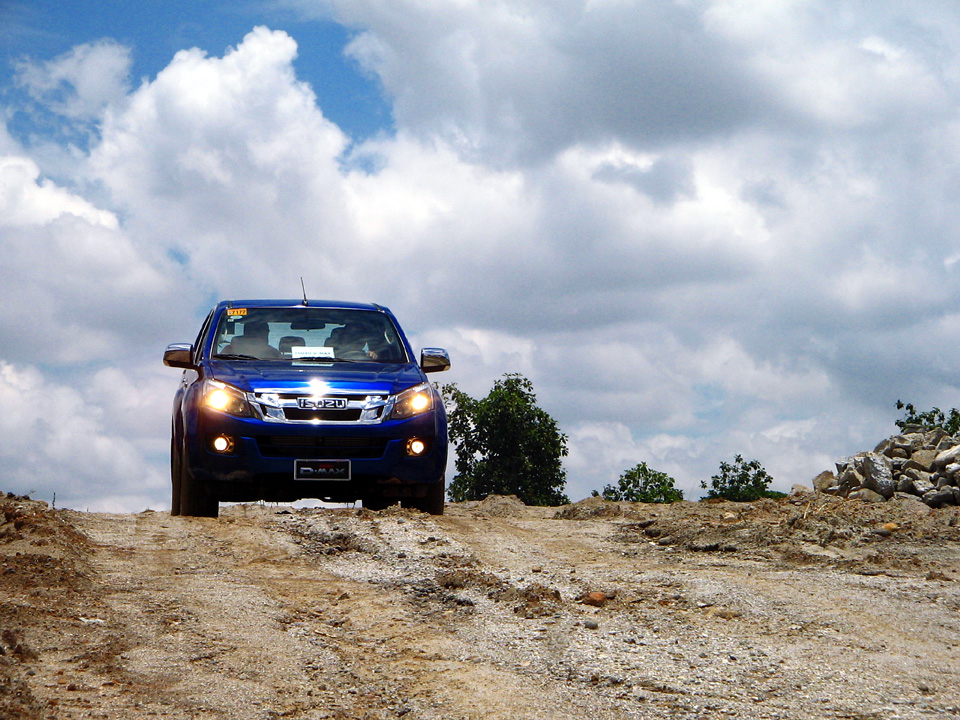
2015 Isuzu D-Max Line Up Features New Variant, New Top-End Engine

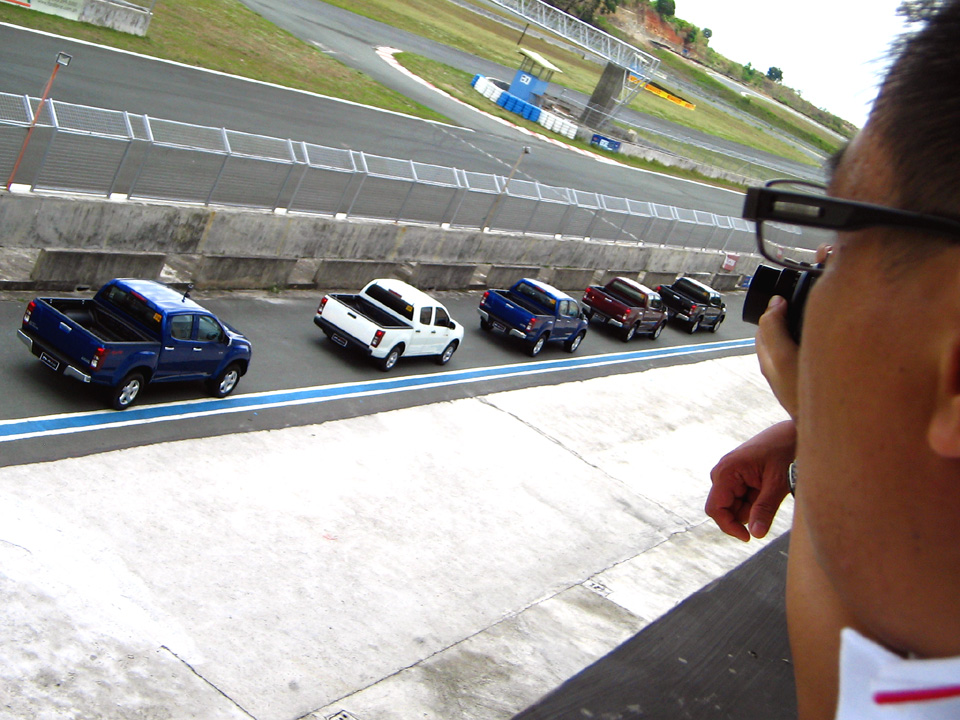
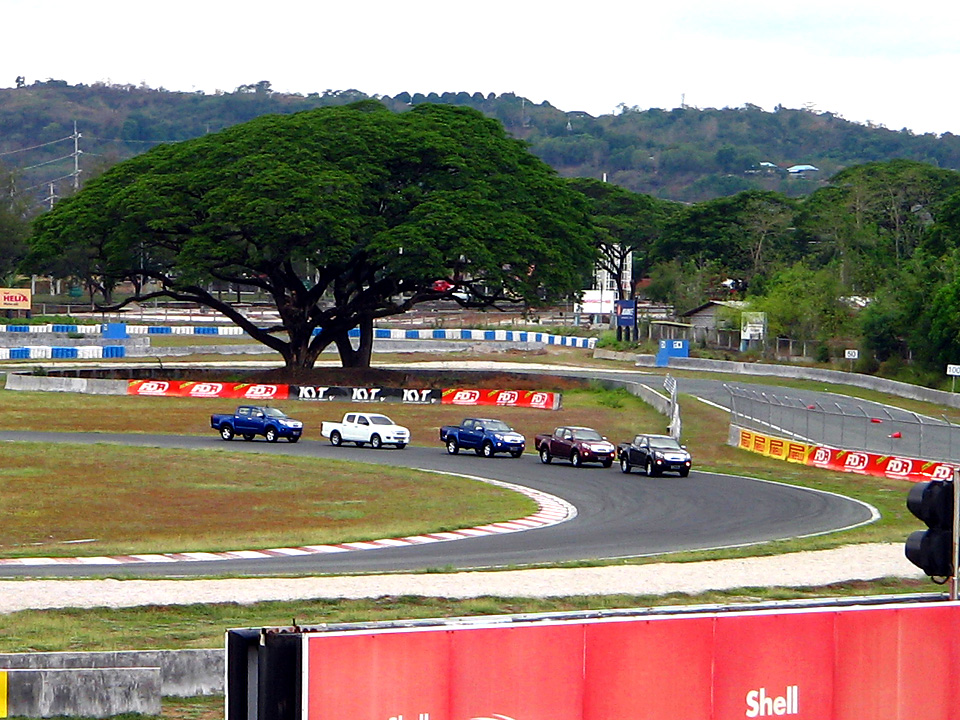
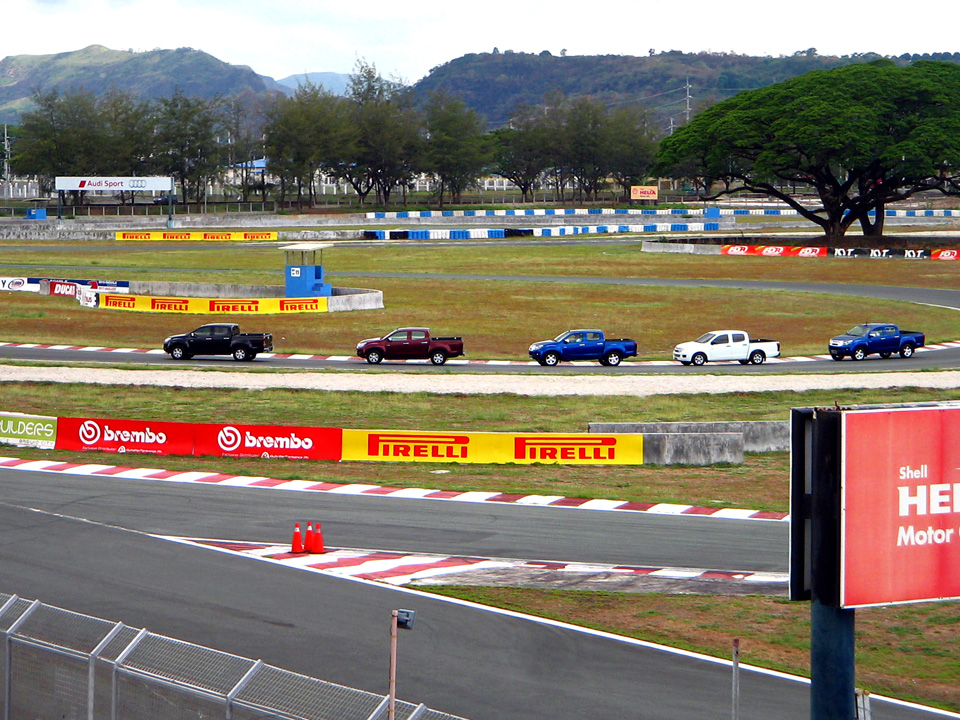
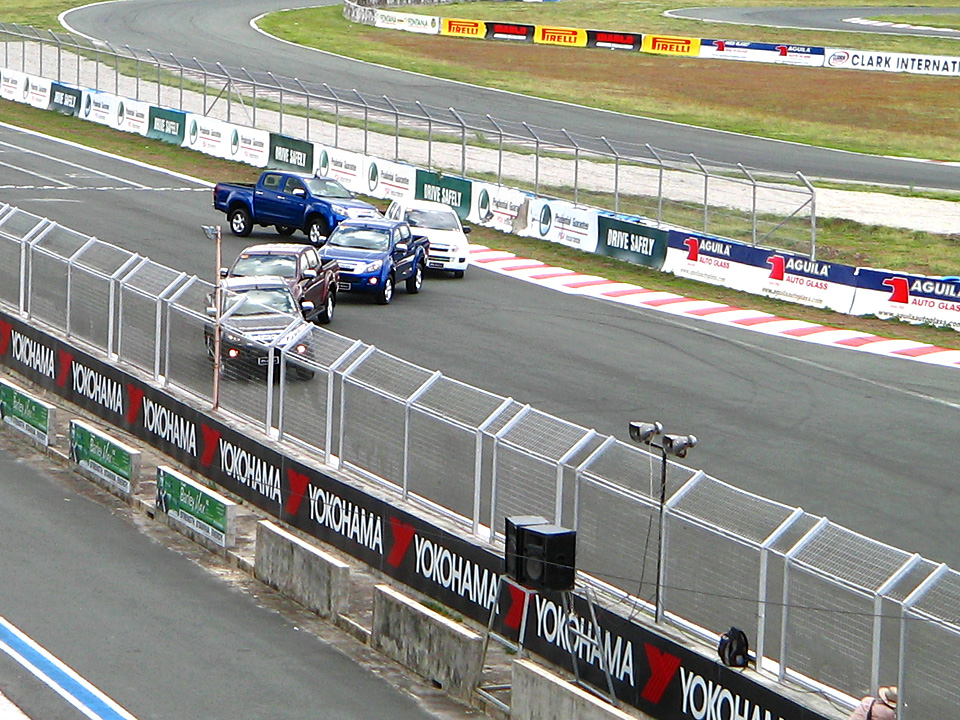
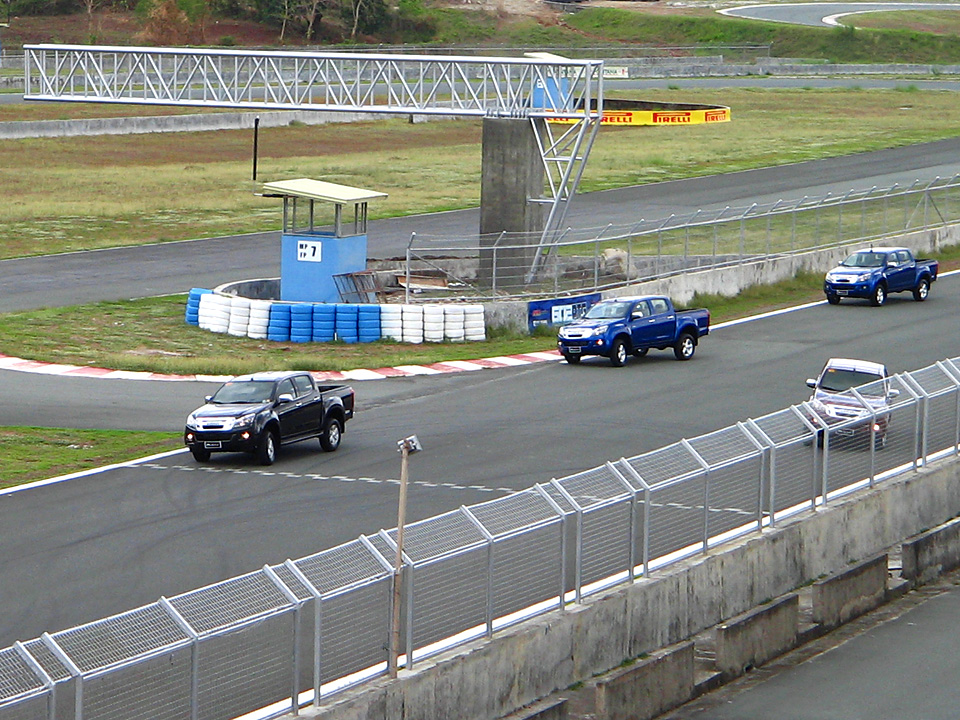
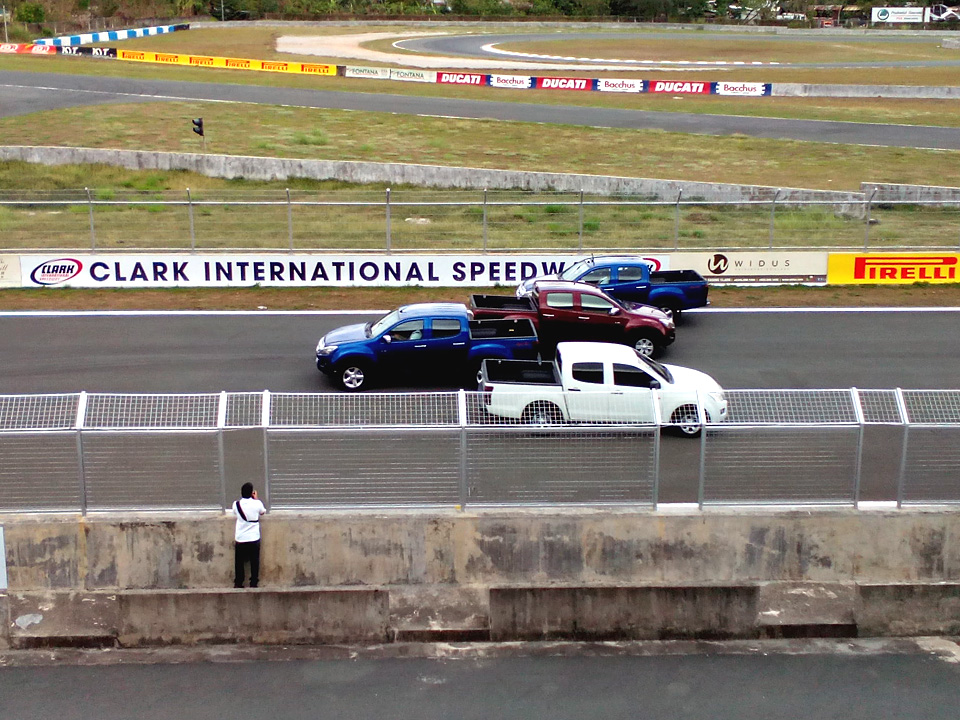
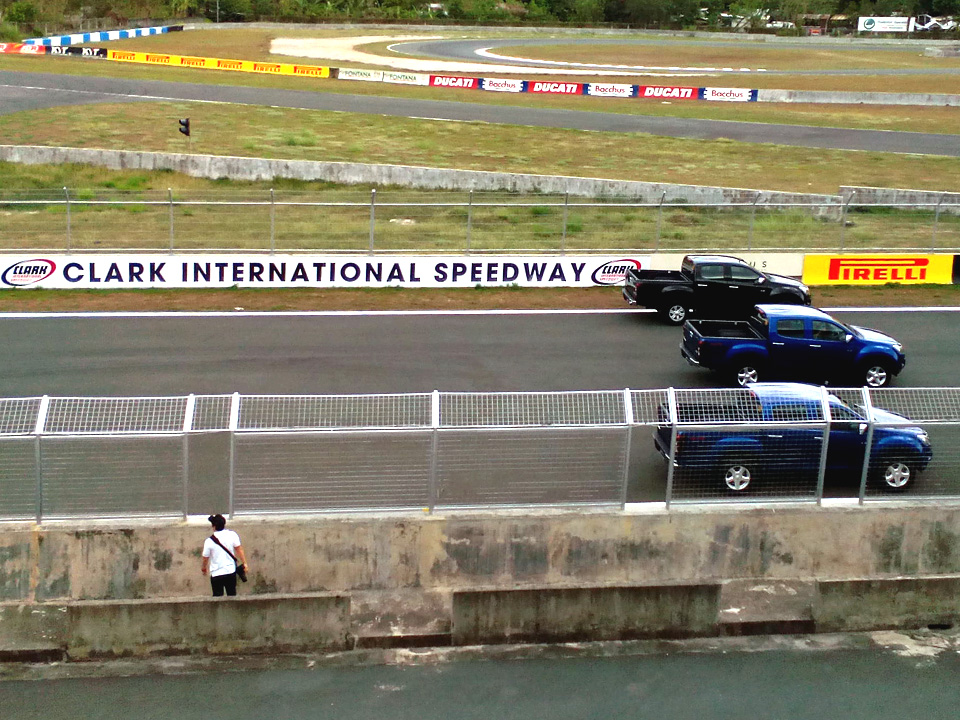
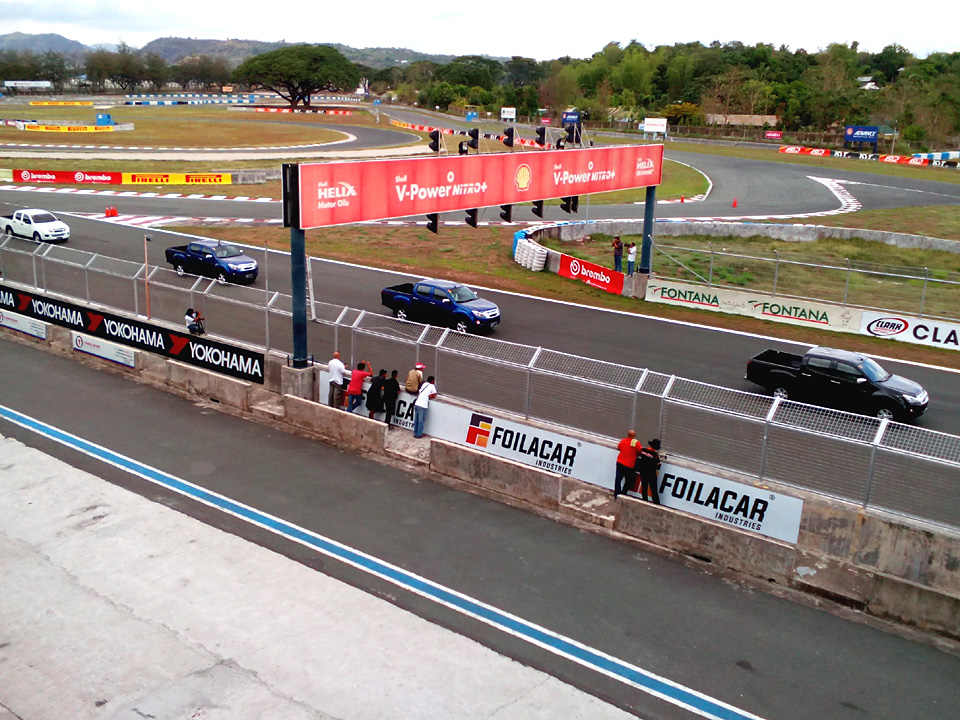
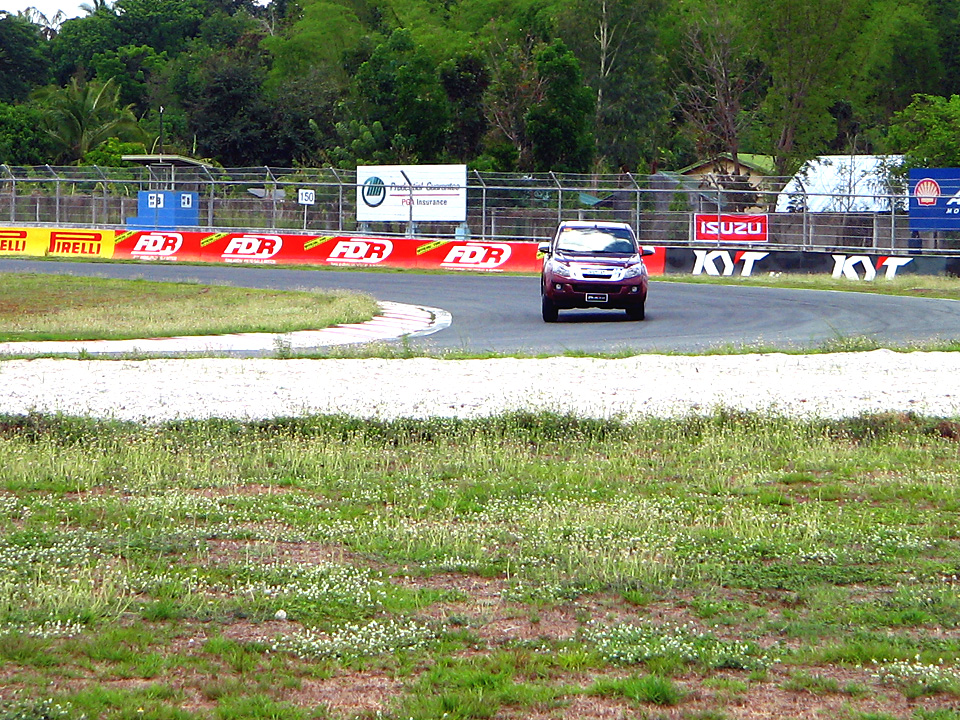
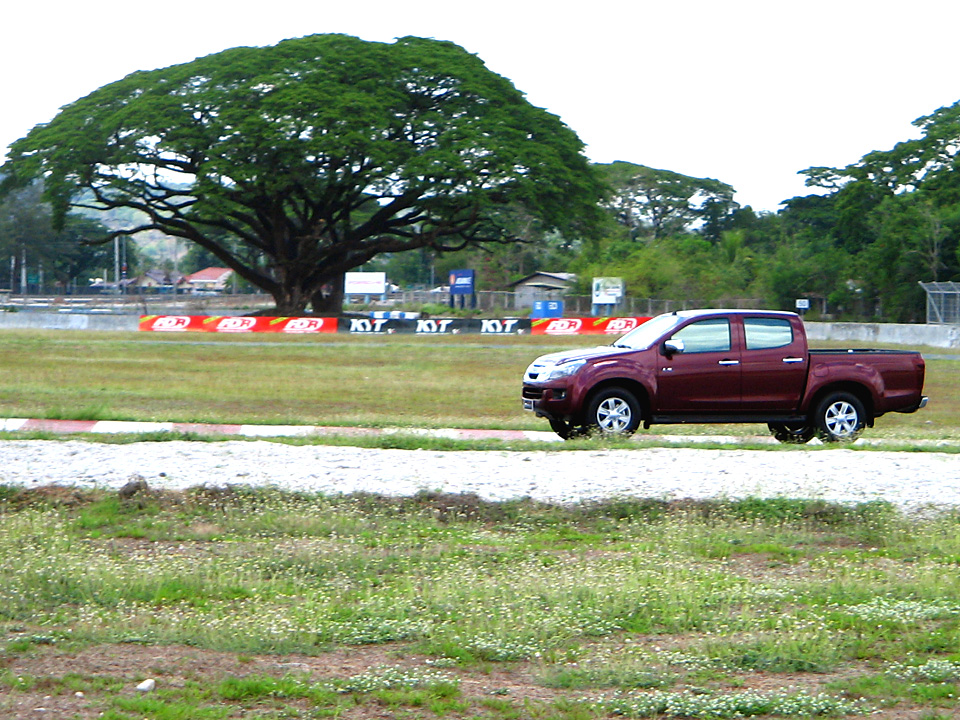
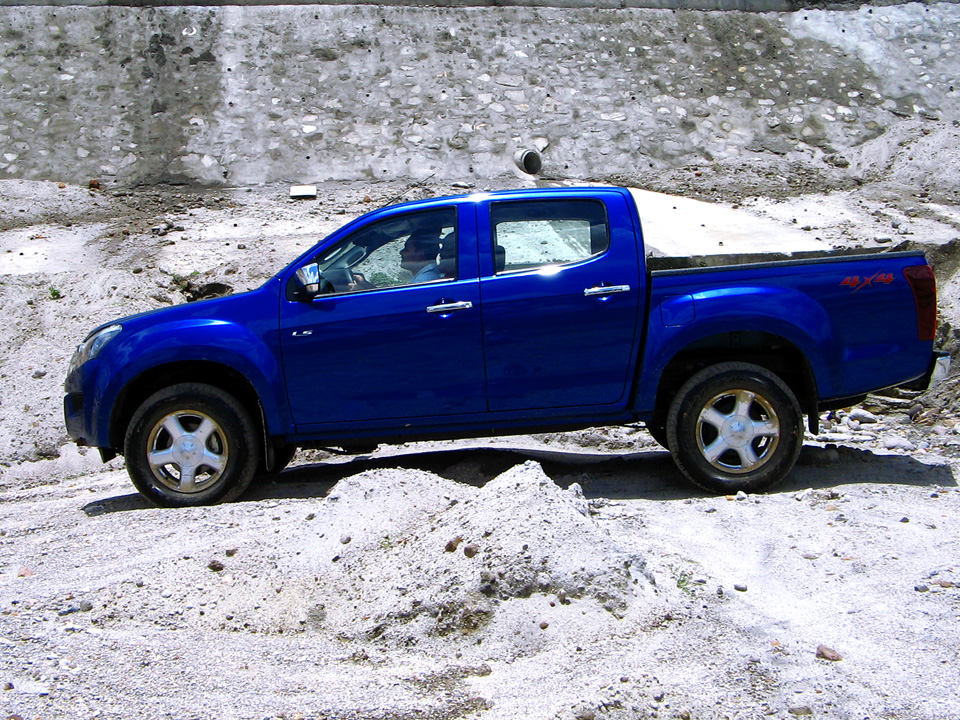
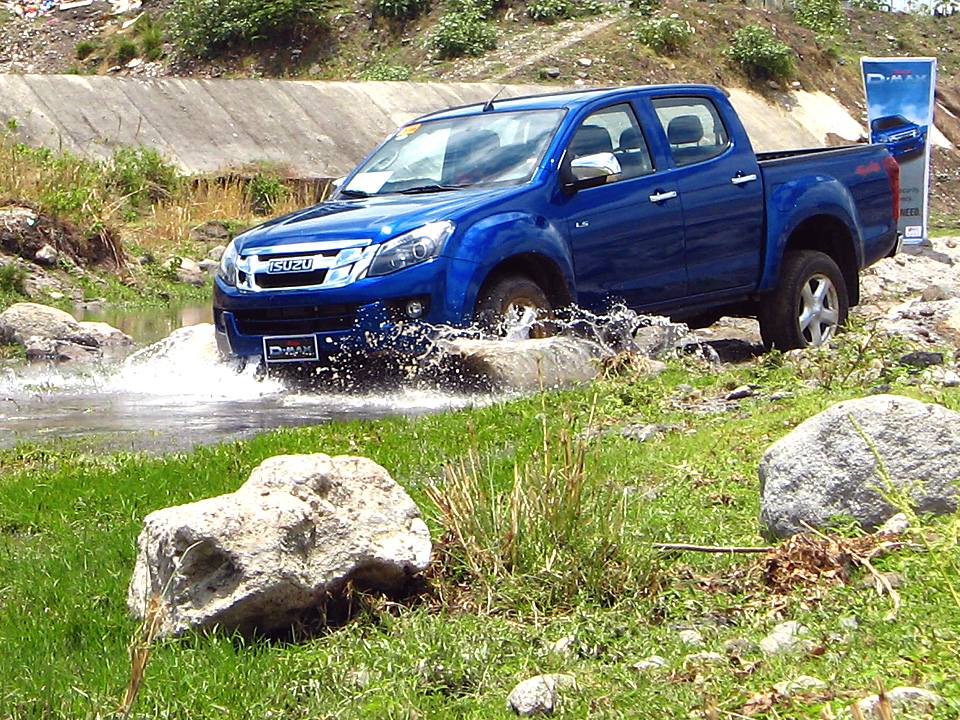
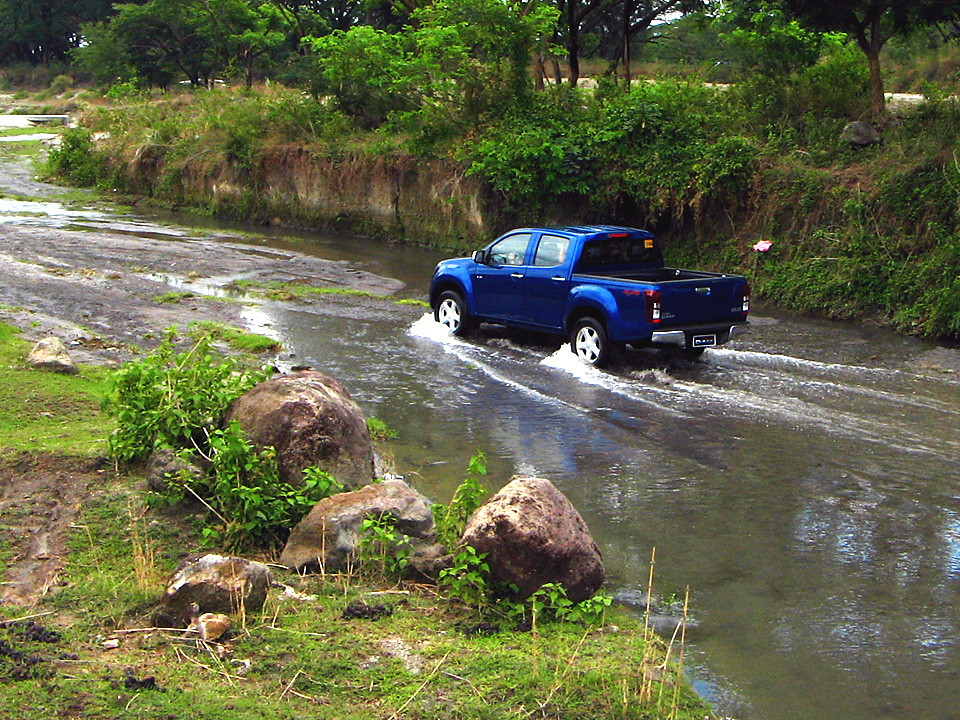
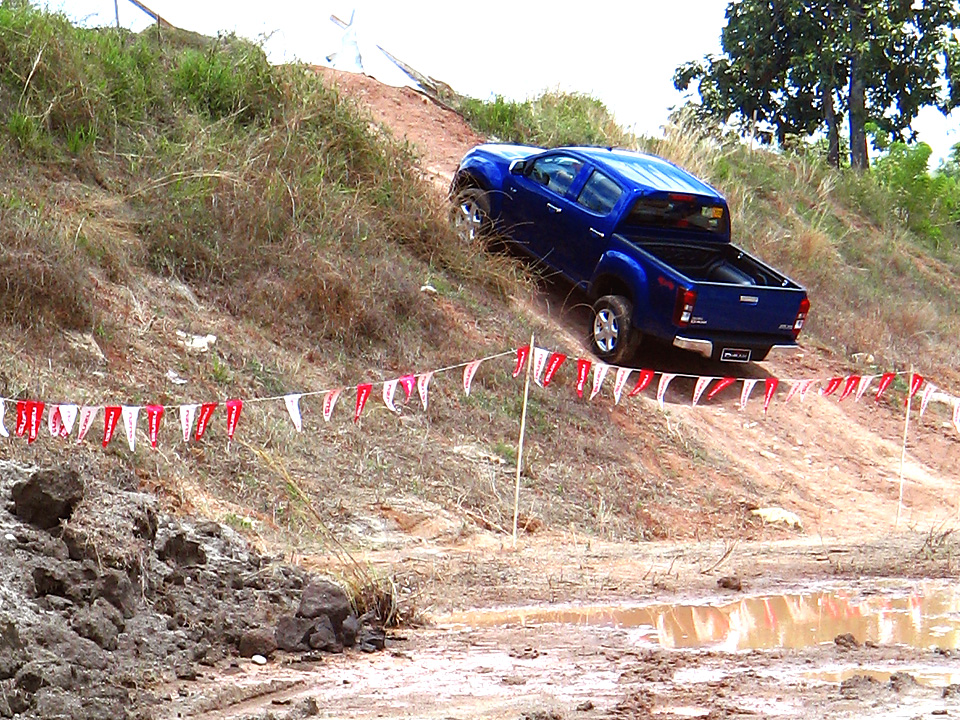
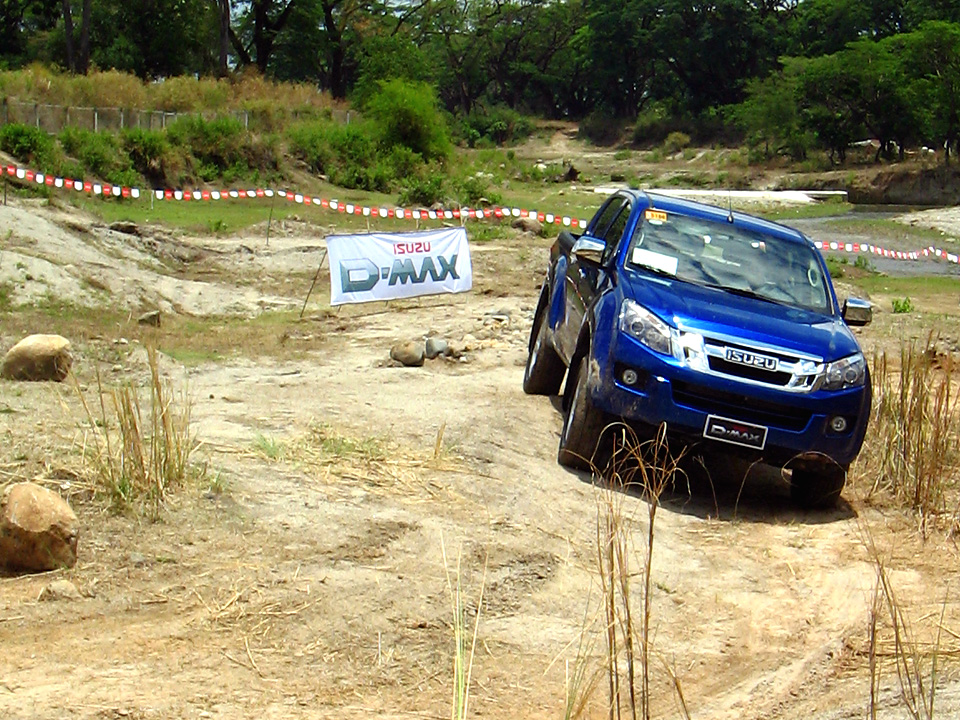
Manila, 18 April 2015–Isuzu Philippines Corporation (IPC) has launched the D-Max line-up for 2015 at the Clark International Speedway with events that ran yesterday to today featuring a precision driving exhibition and on-track and rough-trail test drives to demonstrate the truck’s selling points both on and off the road. A team of precision drivers thrilled on-lookers with spirited formation driving on the main speedway’s turns and straightaways—an impressive sight when done in high-riding trucks. Afterwards, dealer and media representatives were given the chance to get behind the wheel on all four variants (4×2 or 4×4, AT or MT) in the D-Max’s top LS range.

New Pricing, New Mid-Range Variant

Model 4×2 Drivetrain 4×4 Drivetrain
Line MT variant AT variant MT variant AT variant
LS P1,154,000 * P1,206,000 * P1,428,000 * P1,487,000 *
LT-X P935,000 **
LT P872,000 ** P1,178,000 *
Single cab P712,000

*   Features new top-spec 133hp 2.5L 4JK1-TCX with CRDi and VGS turbo
** Features standard 107hp 2.5L 4JK1-TC direct injection turbo-diesel

The 4x2 Single Cab variant introduced last year as a bare chassis option for numerous truck applications.
The 4×2 Single Cab variant introduced last year as a bare chassis option for numerous truck applications.

IPC’s 2015 pricelist widens the difference between their 4×2 and 4×4 offerings. While list prices increased by P10,000 to P15,000 on the 4×2 LS, LT and Single Cab, there were greater P25,000 to P30,000 increases on the 4×4 LT and LS variants, respectively. The pricing shows Isuzu as defending its position more in the 4×2 truck segment—a sensible move in a market where the demand for pick-ups rides more on their high ground clearance and robust diesels than on their all-terrain capabilities. And a move that goes hand-in-hand with Isuzu’s again adding another variant to its 4×2 line up, bringing their total selection up to eight variants—five 4×2’s and three 4×4’s.

Last year they introduced the base 4×2 single cab and chassis variant, this year they add the upper mid-range 4×2 LT-X that features the custom bedliner like that on the top-end LS, and 15” alloy wheels. IPC President Nobuo Izumina said of the new variant: “Our new Isuzu D-MAX LT-X MT 2.5L variant is fit not just to withstand the usual capabilities of the current pick-up trucks in the market but to go beyond the borders of stereotypes.”

New Top-End Engine

New 4JK1-TCX top-end engine with VGS turbo and CRDi feed.
New 133hp 4JK1-TCX top-end engine with VGS turbo and CRDi feed.
Standard 107hp 4JK1-TC turbodiesel with direct injection.

On the 4×4 LT and all four LS variants, the top-spec 4JJI-TC 3.0L diesel with turbocharger and CRDi fuel feed, has been replaced with the more economical but harder pulling 4JK1-TCX 2.5L diesel with its VGS turbocharger and CRDi fuel feed.   Though specs show the 2.5L VGS and CRDi turbodiesel to have nominally less horsepower than the 3.0L CRDi turbo (133hp versus 146hp), the new engine delivers higher torque at lower RPMs (236lb-ft@2,200rpm versus 217lb-ft@3,400rpm) and at much improved fuel economy.

Worth noting is the fact that the new 4JK1-TCX is built on the same engine core as the standard 2.5L 4JK1-TC still used on the 4×2 Single Cab, LT and new LT-X variants. The 14% gain in torque of the TCX comes mainly from its CRDi fuel feed and the VGS turbine on its turbocharger—both of which replace modular counterparts on the base TC engine which has a direct injection feed and a conventional turbo.

Strategic Moves

While the D-Max’s engine choices still offer distinctly different performance options, these now have more parts in common, possibly easing the logistics behind the spare parts inventories that need to be carried by Isuzu and their service centers—a definite advantage after the parts crunch that motorists and vehicle maintenance providers experienced under the recent Port Crisis. And, with the D-Max’s line up that both widens and deepens its intended market with numerous variants, this could prove to be sublimely strategic for bolstering the truck’s strong reputation as an ever reliable workhorse.

18 IMG_5467

An Outreach Drive to Dueg with BAIC’s MZ40 WeVan

On the first Saturday of March, with the season heading seriously into summer but with the air still cool and dry in the hours before the sun came out, I rolled off with a van full of teaching volunteers intent on bringing early literacy to a community in need. With the assistance of BAIC Philippines, I had the chance to test drive their MZ40 WeVan while helping bring volunteers 180 kilometers north to the municipal hall of San Clemente town in Tarlac. There we switched to a 6×6 surplus military truck that is the municipality’s sole means of heavy transport to our final destination: the Dueg resettlement area on the mountain ridge west of the town proper and right on the border with Pangasinan.

Literacy Drive

The volunteers were out on their latest mission under the Barangay Early Literacy Program (BELP) of Adarna Group Foundation, Inc. (AGFI). This one was to the Aeta resettlement community at Sitio Dueg, Barangay Maasin, Municipality of San Clemente, Tarlac. Back in 1991, the eruption of Mt. Pinatubo in Zambales forced the relocation of hundreds of thousands of Aeta tribesmen that had lived near the volcano. Some of them were brought to Dueg. Of the 2,000 families originally resettled at the mountaintop location, just around 200 families now remain.

Singing up those who could be helped in Dueg (photo by Camille Quiambao)
Singing up those they could help in Dueg (photo, compliments of Camille Quiambao)

The Dueg Resettlement Elementary and High Schools have a combined population of some 300 students, with teachers who trek up weekly from San Clemente’s seat of government, 9 kilometers as the crow flies though twice that distance on a winding road going up the mountain with about half its length already paved. The mountaintop can be tough on its residents. The days are hot and arid, the nights chill if not freezing, and the surrounding foliage is sparse in comparison to the lush jungle that the hunting-gathering Aetas had once had down in Zambales.

The volunteers brought to the community a morning of storytelling, arts and crafts, and nutritional training for 80 children and their mothers.   In the words of Ruth Martin, AGFI Executive Director: “We carry out BELP as a one-day activity in small and deserving communities … we distribute age-appropriate books to children and engage their parents in learning sessions. We also involve volunteers mostly from college organizations and institutions to facilitate storytelling, music and movement, and art activities for the children of the community. We have done BELP in communities like Payatas in Quezon City and Bayan ni Juan in Calauan, Laguna … and we are set to do more in Barangays Sacred Heart and Sangandaan in Quezon City.”

A singular transport

I joined the drive to Dueg to transport 18 volunteers, that’s 19 including me, turning it into it into a convoy of two vans, one the usual people mover provided by a charter service, a big current-model Toyota HiAce, and the second, my ride, BAIC’s new and unusual MZ40 WeVan. Appropriately, the vehicle we we’re lent for this mission, this worthy cause, is itself an award winner. Introduced just last year by Bayan Automotive Industries Corporation (yes, with the initials BAIC), an affiliate of Nissan distributor Universal Motors Corporation, the MZ40 WeVan is a sub-compact passenger van that’s already garnered industry recognition both here and in China, its country of manufacture.

00

Last November, the MZ40 was named the 2014-2015 Sub-Compact Van of the Year by the country’s Car Awards Group. In the same month, J.D. Power Asia Pacific released its 2014 China Automotive Performance, Execution and Layout (APEAL) Study which showed that while Chinese customers now expect more in terms of design and technology, the MZ40 (badged the Weiwang 306 internationally) came as the highest ranked in the face of such expectations and was thus named the winner of the APEAL’s mini-van segment.

Not a micro-van but maybe one for old Europe

The WeVan’s proportions fit those of what some have called “bread vans,” those compact though oddly proportioned people movers that look unusually tall and thin, like a loaf of bread you’d find bundled with a second one on the grocery shelf. In obvious deference to tight city spaces, on the WeVan’s larger size and heft, the proportions speak of something else.

DSCF9206Seen in images without passengers to put it in scale, it’s easy to mistake the WeVan to be as small as the Suzuki SuperCarrry and the Daihatsu HiJet, both popular micro-vans characterized by small wheels and just a second seating row, no third. The WeVan might look to have the same proportions but is significantly larger, though with curiously narrow shoulders.

With LxWxH dimensions of 4030x1636x1907mm, the WeVan is slightly shorter and narrower but also taller than vehicles of similar role such as the Toyota Avanza compact MPV with its 4140x1660x1695mm measurements, and the Suzuki APV compact van with its 4155x1655x1860mm. But, while the Avanza and APV both project a distinct Asian lineage, the WeVan seems to ironically fit a European ethos instead.

With its generously proportioned interior, the WeVan is the sort of cargo and people carrier I’d expect to see in Europe where old world roads in towns and the countryside are just wide enough for horse carriages and very, very polite motorists going in opposite directions. Not that I’ve been on any of these roads. I’ve just seen the small tracks on the big screen, often times with big-boned masterless spies and furtive fugitives behind the wheel of small getaway cars.

A full-blown people carrier

Weighing just over a ton, the WeVan is a sub-compact, a smaller interpretation of the conventional passenger van that could weigh twice as much, but with proportions and ingenious space touches that let it take on a respectable load of passengers with its three seating rows. On our trip, with eight reasonably fit individuals (that’s on a bell curve average with me on the wrong end, of course) each with light day-trip baggage, we had tipped the scales at just over half a ton, leaving a large part of the WeVan’s impressive 700kg carrying capacity for several more persons to squeeze in if needed, or for all of us to bring overnight bags if it had been a longer trip.

IMG_20150309_105022The seating layout, though on thin but adequate padding, is generously spaced with deep leg areas as well as expansive seat cushions deeper than the average person’s thighbone is long. These dimensions made for a comfortable slouch if and when the drone of the road lulls you to sleep, as it did for my passenger volunteers both on the trip out and the one back.

Because the seats are generously spaced, the last couch nearly touches the tailgate, yes, but with the floor laid flat atop the running gear, there’s a lot of under-seat space to complement the shrunken rear cargo area. Have your passengers pack duffels instead of rigid carry-ons and everyone will have enough nooks and crannies for stuffing in their, well, stuff.

IMG_20150309_104903The floor covering is of vinyl, cheesy to some but a real plus for charter service operators and harried heads of families who have to give in to their passengers wanting to take meals on the road. And, of course, there’s always the option of throwing in some rugs for that cozy touch, and for improving the acoustics.

Spartan but comfortable

I mention acoustics because the variant we had was big on utilitarian elegance—lots of exposed body metal on the inside that could reverberate with road noise as well as the engine’s throaty exclamations. This said, the interior noise, though noticeable, was not oppressive, at least not in the rear passenger cabin where, as I mentioned, each one of them had managed to doze off during the trip, and twice too.

IMG_20150309_104818And, on the hot day that the Saturday had turned out to be, the air-conditioning also made it easy to nod off. The WeVan’s relatively small engine was matched with an A/C compressor impressively strong enough to cool down the large cabin space, particularly with air being circulated through ducted vents with their own blower and controls for the rear.

There’re no repeater controls up front for the rear blower but a stretch up and back to iron out the kinks in tired shoulders put those in back within easy reach of the driver. But I’d have to say that the cooling capacity on that A/C seemed to come at the price of a rather noisy compressor. Still, the rhythmic thumping whenever the compressor engaged could’ve been due to excessive refrigerant charging. Just a balancing issue, is what I’m saying.

A svelte, stable platform

Somewhat unique in chassis layout, the compact WeVan seems engineered to be a stable bulk carrier (with significant people and cargo carrying capacity) capable of long haul intercity drives. Although the WeVan is shorter than either an Avanza or an APV, its 1,150kg curb weight makes it slightly heavier than the former with its 1,090kg, and almost as heavy as the latter with its 1,165kg. And that grounding weight is set on a wheelbase that’s longest among the group with the WeVan’s 2,700mm versus the Toyota MPV’s 2,655mm and the Suzuki van’s 2,625mm.

IMG_5381

With the WeVan’s front wheels almost flush up against the fascia, the front engine, rear wheel drive vehicle benefits from an engine mounting that’s actually more of a mid-front arrangement. Instead of sitting atop both, the driver rides behind the front wheels and on top of the engine compartment. While this explains the higher than usual engine noise heard up front, with the driver’s bum weighing down the engine cover, it makes for excellent steering with significant rear weight bias (a front-rear weight distribution of 44:56 judging by recommended tire pressure variances) to keep the drive wheels well planted even if the driver makes the mistake of braking in a curve and foolishly flirting with lift-off oversteer.

IMG_20150306_170415
220kpas on the front tires converts to 32psi, 280kpas on the rear to 40psi

Put together, the long wheelbase and the mid-front engine location puts the compact, city-friendly WeVan on a stable platform that steadfastly refuses to seesaw left and right, that stays rigidly upright when weaving through city traffic or even when going out and quickly back into lane when overtaking on the highway. The unusually long wheelbase with full-sized sedan-grade 170/70R14 tires on a sub-compact van chassis, puts passengers on a long span bed that packs enough leverage to dampen road shocks at speed, and atop large high profile tires that have the diameter to glide over small potholes.

Put under the front hood for easy access are the fluid reservoirs, but the engine is elsewhere

Although the long wheelbase does make for a slightly bigger turning radius (5.2m versus the Avanza’s 4.7m and the APV’s 4.9m), it’s still tight enough to negotiate u-turns on main roads. And, frankly, the marginally less sensitive steering, makes for a heavier feel that doesn’t tie the driver’s shoulder muscles into tight knots on a long drive … it didn’t stiffen up my upper back on the hours-long drive to San Clemente, and that was mighty nice.

An efficient engine at the right speed

After the drive to ferry the MZ40 WeVan north from BAIC’s Makati office to Quezon City in off-hours traffic on a Friday, then to the assembly point near Tomas Morato for a before-dawn roll-out on Saturday, and finally to the Petron station on NLEX at Marilao Bulacan to top off, the van’s tank took all of 2.66liters of petrol to refill. I was dumbfounded. That’s a total of 61km in light to moderate traffic at a consumption rate of just 22.9km/l (definitely worth an exclamation point)!

IMG_20150309_110128
The compact 1.2l inline-four underneath the front seats

A remarkable number and one that’s explained by the WeVan’s 1.2L multipoint-injected inline-four engine having Continuous Variable Valve Timing (CVVT) technology with solenoid actuators constantly adjusting engine tune through changes in load and commanded revolutions. There’s a caveat though. The fuel-saving settings appear to compensate only while the engine is revving at or below 3000rpm.

And, with those turns pushing a full passenger load, the WeVan can cruise only at 80km/h, maybe 85, tops. Good enough for a relaxed, diligently steady drive at your own pace. Not so when you need to stay in trail position behind a big diesel Toyota HiAce that cruises efficiently at or even above 100km/h. Pushed up to a 100km/h cruise in fifth gear, the WeVan’s engine has to spool up to around 3,500rpm bringing it closer to its peak 85hp at 6,000rpm and making fuel consumption shoot up dramatically to a typical 13km/l on the highway.

Fast enough if you can spare the fuel

It didn’t help when, on a particular stretch of multi-lane highway, an overtake attempt put me abreast with another HiAce (not the one I was in convoy with) that chose to speed up and prevent me from pulling ahead and tucking back into the outer lane. The road ahead was open with my convoy lead nowhere in sight so I floored the accelerator to see if we can pull ahead of our curious neighbour.

DSCF9075And we did! Even with eight people on board, the WeVan gradually accelerated to its published top speed of 130km/h, the engine revving to just over 4,000rpm, sounding throaty but not strained. The fully loaded van remained firm on pavement, no shimmies to alarm or even indicate that we were topped out, and with the wind noise from the outside not at all becoming intrusive.

The WeVan can definitely speed up in a pinch, with a power curve that has substantial reserve at the top end, though it sure throws your fuel plan out the door.

A drivetrain meant for full loads

When we were several car lengths ahead of the challenging HiAce, I put the WeVan into neutral to get a feel for how well its transmission was matched to the engine. Lo and behold, putting the van in a coast didn’t result in a feeling of letting up but rather caused this sensation of being released into momentary, momentum-charged acceleration. It seemed like the top gear wasn’t even getting the most out of the engine’s peak torque of 80lb-ft at 4,000rpm.

IMG_20150309_104710

It turns out that this is par for the course given the WeVan’s specs. Its 5-speed manual transmission has gears that are all shorter than on typical petrol engines with reduction ratios that average 15% more across all speeds, and a fifth gear that’s not an overdrive but instead has a 1:1 direct drive ratio. With the shorter gears and relatively high rev shiftpoints at around 3,000rpm, up-shifts are typical at 10, 30, 50 and then at 65km/h to finally hit fifth gear–shift points more typical of small to medium diesels than on small petrol-fuelled fours, albeit at twice the rpm’s.

Obviously, the WeVan is conservatively geared to be a full-time hauler with some engineering choices deliberately made to keep a constant power reserve for carrying its full rated capacity. My advice is to keep things steady and middlin’ fast with any load and at any gear. The WeVan is more of a little van that could, not something to be hot-rodded into a low-riding hipster.

All in all

The compact WeVan was an ideal transport even for that semi-long drive out to San Clemente. It felt like it could handle even more in terms of load and distance. It can be miserly with the petrol if your timetable allows it. And, though its appointments aren’t plush, it’s comfortable enough for my passengers who surely needed to save their energy, and then regain it, on that hot excellent day when us city slickers visited the no longer nomadic but still noble Aeta of Dueg.

—o00—

A field note

From the wikipedia entry on the Aeta people: “The life expectancy at birth of the Aeta is just 16.5 years, with only a third of children surviving to adulthood at 15 years at which point life expectancy is still only 27.3 years. Young women reach full adult height (average 140 cm (4 ft 7 in)) at age 12 or 13. The most thorough longitudinal study done of any Aeta group (or any ethnic community) is available on the Web.”

A final note

This time the Adarna Group Foundation helped 80 kids and their folks, would that it had been more with the simplest of items—a book, some cookies, maybe some pencils and paper to help out—making an immeasurable difference for each and every child.

If you can help, the Adarna Group Foundation is on Facebook at https://www.facebook.com/adarnagroupfoundation, and on the Web at large at http://www.agfi.com.ph/.

From Megapixels To Inches

It seems that we rarely get the details we really need from photolab and printing specialists whenever we ask if our image files are big enough for large-format or high-quality prints.  For example, ask what size image would look good on 8r prints and most  technicians will say 8 megapixels (MPs)—as if there was a correspondence between 4r prints and 4mp images, 5r and 5mp files, and so on.  The actual minimum for an image to look as fine as it could on 8r print is 7.2mp and the math for figuring out this number is simple enough that we don’t have to settle for mere estimates.

When reproducing images, resolutions are expressed in dot pitch—72 pixels per inch or PPI for default screens at a low 640×480 setting, 96ppi for sharper 1024×678 displays, 180ppi for print publication minimums, and 300ppi for photographic reproduction. On the other hand, resolutions in digital cameras are expressed in mega-pixel or MP counts—like the 5mp that got digital SLRs to first be considered seriously, and the 12mp that is now common on point-and-shoot compacts.

Let’s look at the numbers behind these different takes on the resolution count.  An 8 by 10 inch portrait photograph taken on your camera and printed for you by a photo-lab would have to be at least 2,400 pixels (8in. x 300ppi) wide and 3,000 (10in. x 300ppi) pixels high. And, a 2,400 by 3,000 pixel image measures 7.2mp in digicam resolution. It really is that simple—multiply 2,400 by 3,000 to get 7,200,000 or 7.2 million pixels.

Turning the equation around, a 12mp image with the typical aspect ratio of 4:3 (for every 4 units of length for one side, there are 3 units on the one perpendicular to it), would have side lengths of 4,000 and 3,000 pixels …

4a x 3a = 12,000,000

12a2 = 12,000,000

a2 = 12,000,000 / 12

a = square root of 1,000,000

a = 1,000

where 4a = 4,000 pixels

and 3a = 3,000 pixels

If you plan to reproduce a large 6 by 8 inch picture in a glossy magazine layout with sharp 300ppi images, how do you check if your JPEG file has enough resolution? Yes, it is as simple as it seems. Just multiply 6 inches by 300 and you have your width, multiply 8 by 300 again to get your height. So, you’ll need an image that is at least 1,800 pixels wide and 2,400 pixels high.  In this case, even a 7.2mp image will be sufficient. All you have to do is down-size or crop it down from its 2,400 by 3,000 original.  What you wouldn’t want to do is upsize a small, say 3.6mp, image and stretch it into the layout.  Then, you’ll lose the one dot one pixel correspondence and your image will look all “pixelated” as they say—pixelated because the picture elements will be much larger than the ink-dots meant to reproduce each one of them.

Stop to think about it and you’ll realize that the resolution information stored with image files is just a vestigial convenience. Right-click the icon of your image file, click on “properties” in the pop-up menu, select the “details” tab, and finally scroll down to the “image” panel and you’ll find horizontal and vertical resolutions expressed in ppi, while image dimension is measured in pixels.  What the resolution setting does is give your system the necessary variable to compute the dimension in inches if your file is outputted into various media. But, inches or any other real-world units for length hold little meaning while the image remains in digital form.

image-size-window

But in case you do need to tweak ppi resolutions (to have complete control of your photo-prints, or simply to help out your overworked team-mates) just do the following in Photoshop:

  • Click on “Image” in the main menu and select “Image Size” in the drop-down list.
  • In the “Image Size” window, look at the “Pixel Dimensions” panel in the top half of the window and note the pixel width and height of your image.  For example, with a 7.2mp image, you’d note that it is 2,400 pixels wide and 3,000 pixels high.
  • Then, look at the “Document Size” panel at the lower half of the window. Here, find the image’s width and height in inches, and the “Resolution” setting that yielded these measurements.  Change the resolution from its camera default of 72ppi to a print-ready 300ppi.
  • Don’t be surprised when the your change in resolution also changes numbers in the “Pixel Dimensions” panel up top, but not in the inch dimension for “Document Size” at the bottom of the window.  For example, again with a 7.2mp image, the dimensions will have inflated to 12,500 x 10,000 pixels.
  • Now, go back to the “Pixel Dimensions” panel and change back the pixel measurements to what they were before you changed resolution from 72 to 300ppi. Again with the 7.2mp image example, just change the dimensions back to 2,400 by 3,000 pixels.
  • At the end of the exercise, you’ll have an image file that is essentially unchanged, without any kind of up-scaling or down-sizing, but with “Document Size” settings that are tailored for print reproduction, and that show you its actual size in inches if it is printed out.

At the end of the day though, these resolution settings are arbitrary, and your options for getting your images into fine and faithful hard-copies will always be determined by the pixel count.

—o0o—

This story, originally posted at www.mediumelectric.com on October 1, 2012.

Quality Reporting From the Old Guard

moleskinesPeople’s appetites for stories are at their highest, and yet circulation numbers are dropping across the board. Picture a magazine with all the pages torn out and grabbed at by millions. Now stay focused on that image as you once again hear the platitude “it’s all about content.” What it means is that people are simply burning through the cover and seeing the stories. These can be long ones, short ones, the length made relative by cyberage attention spans.

What they seek, find, or more often than not stumble upon, are stories that can come from anywhere. They prefer it this way even if they don’t know it. They prefer to get wind of stories that other people are reading, and not admit that that’s why they’re reading them. It’s crowd-sourced relevance at its core.

Very seldom do they look first at the name of the publication. Not unless they’re nailed to it because of some regular need, being hooked to a daily fix, as in for news dailies. Everything else is catch as catch can. The publisher is looked at only after the headline called their attention, and looked to keenly for credibility.

If the story is such a scoop that it has to hurdle some scepticism, then the publisher’s reputation comes into play. And that’s when a story’s value gets away from crowd caused relevance and gets back to the brass tacks of having a brick-and-mortar entity stand by its news reports.

So, ironically, the better the content, the more informative it is or the more groundbreaking its revelations, the more it depends on the publisher’s traditional media reputation. Good investigative or exclusive content need to be attributed to the old guard to be distinguished from the more common citizen content that now saturates the ‘Net. Those old grey ladies of print and broadcast media still have a lot to contribute, and if they really get it, they’ll be marking new territory with the quality of their reporting.

Colored Powder for Airbags

DSC_1372

There I was, riding shotgun in a car that had entered a terminal skid. When the trees and brush were flashing sideways in our headlights, just when we felt the front tires hit the ditch and explode, I remember thinking, “oh crap, this is gonna hurt!” The next instant, someone slapped my face, and that was that. I never lost consciousness but with that airbag suddenly billowing out at blinding speed, I never saw it coming, thought someone had reached in through the window to give me a firm smack.

The airbags deflate immediately, part of the cushioning process, good for mitigating trauma, not so good for situational awareness. Because the bags retreat so quickly, it takes a moment to realize they had deployed, and that realization may not come in time because in the aftermath of that airbag action, a white cloud smelling of hot plastic fills the car.

Of course, if you realize that the airbags had deployed, you might put two and two together and figure out that it’s the white talcum powder they sprinkle onto the bags when these are packed into tight-fitting compartments, to prevent the fabric from sticking together. If you don’t connect things to the airbags, if you see the white cloud as some other thing caused by the accident you’ve just survived, you’ll likely think of something lethal.

“It’s a fire! We’re on fire!” your mind may very well scream, right before you scramble out in panic. And that’s not always a smart move. What if you’re on a highway with other vehicles zipping past trying to avoid your wreck. You’d be jumping out of the frying pan and into the fire, figuratively speaking of course. But with everything you’ll be handling in superfast time—that white cloud, a hot plastic smell, and of course, a wrecked car—who could blame you?

Matcha_No1_aluSo how about one simple change that could make things go very differently … how about a color for that talcum powder that doesn’t cause notions of smoke or of blunt force trauma? A white cloud looks like smoke, a red cloud, maybe like blood splatter. So, not white, not red, and not even pink for that matter. But what about green then, even blue? Point is, carmakers can look at coloring that talcum powder, making it look harmless, maybe even funny, when it billows and lingers in that cloud after the airbags deflate.

Baguio Again

I’ve been taught by my dad to feel out each car I drive, how to test it for the first few kilometers of a hundred kilometer trip. Seat-of-the-pants kind of drivers, that’s me and my Pop.

It was an open road back then, gas prices were low enough to make present numbers look science-fiction astronomical, and Pop even managed to get us curfew passes for those traffic-free night drives under Martial Law.

kennonroad-1918
There was a year when it seemed we were in Baguio every month. We had the good old Renault 5 back then, the LeCar under American marketing guise. It had a 1.1 liter back when 1600s and 1800s were the preferred displacements for going up Kennon.

That little old car was a delight, but the devil to maintain: no parts. So we’d go on the highway with everyone admonished not to move suddenly and cause the car to drift left or right, that’s how soft the aging shocks were. I remember being all stiff with hands staying at 10 and 2 o’clock on an imaginary steering wheel long after having arrived.

I was always apprehensive at the La Union gas station, before the approaches to the climb. Will he let me drive on? Or pull over, ostensibly for a pit-stop but really for a switch up, let him take the wheel for the half hour of hair-raising turns? On those occasions when he felt I passed muster, I’d drive, and drive like the mushy springed car was on rails.

Hug the curb, he’d always say, mind your revs–the banks on Kennon Road were always good enough to let me keep that precious momentum. And my Pop’s watchful gaze? You can’t imagine the satisfaction when he finally would relax, coming back alert only when we got to the Lion and then again when we were finally on the deceptively gentle but oh too long uphill road at the outskirts of the city.

On another trip, a later trip with me older, I went up in an old Ford Escort that had no fuel gauge, a temperamental carb, and no speedometer. The fuel thing I got around by sinking a dip-stick in the tank in Tarlac. The bad carb (which made the car guzzle fuel like it was water) I fixed by simply taking off the air filter. And the speedometer? My college buddies and I solved that by signing to the lead car in the convoy (no cell phones back then). “How fast are we going?” we signed to them in front. “Pretty fast!” they’d sign back.

So you see, after decades of all that, I never thought I’d be studying a car manual for a road-trip. But I am now. Two things to nail down for the trip: max-conserve parameters and forced downshifting on an automatic transmission.

The thing about fuel efficiency is obvious. With gas now ten times what it cost back then, I’ll be looking to save each liter of the green stuff (red back then), maybe not carry too much in the tank it’d be tantamount to hauling cargo instead of being fuelled up. Good thing Pop already has me trained in mileage marks. Allow 250 kilometers each way for Baguio, he’d always say. And he’d drill me on how much fuel I’ve bought, in liters, not pesos. Off the Internet I got the car’s specs (a loaner SUV from a good soul), and with Excel I’ll do my trip and load-out plan.

The downshifting is also obvious, at least to anyone who’s had to drive down from Baguio. You can’t ride the brakes going down, not unless you want them to overheat and turn into useless glowing discs. Half the burden you have to pass to friction from an engaged but throttled down engine. I’ve always driven a manual on those Baguio trips, got the down-shifting locked in muscle memory. But this trip is with a ‘matic and I have to understand the transmission’s analogue for my instinctive stick work. So now I finally understand the mechanics of D, D3, D2 and D1.

A bit much maybe for a weekend drive up to Baguio. But it’s been a while. The last time I was up there was before our first daughter … that would make it more than a decade. And, there’re the kids—three now—who’ll be making the trip for the first time. In fact, when I was last up there, Pop was still alive.

I know that my dad, that hardy one-legged driver of anything on wheels, would approve. “Those are my granddaughters you’ll be driving son, you damned well better be careful,” I can hear him saying. “Yes Pop,” I’d say, “and hey, happy birthday by the way, sorry I forgot to call … give my regards to Ayrton Senna up there when you get the chance.”

—o0o—

This story, originally posted at www.mediumelectric.com on April 2, 2014

For Generations to Come

With several major stage-plays now showing in the metropolis, which one should you watch if you can see only one? Ask me and I’d say the more exclusive one, the one that demands knowledge of rarer context, the one that costs the most to comprehend and cherish. So yes, I’d say Rak of Aegis is the one you can’t miss.

I mean, to suffer a calamity that submerges entire lives in the waist-deep excrement of sprawling squalid cities, and then to persevere with smiles, laughter and turns at the karaoke mike, well that’s something very few in the whole world can claim doing—something you wouldn’t wish on just anybody, as a matter of fact. A narrative punctuated with the soaring emotions possible only through song, you know you’re getting the most out of the show when you tear up, often because of laughter, and so many times because of remembered anguish.

You know you’re getting the most out of the show when you hear both despair and hope in the phrase, “tayo na lang ang magtulungan.” So, like I told the good folks performing at PETA today, this the last day of their regular run, the show simply can’t end, not yet, and not for a very long time. It has to be seen on-stage by my kids, and then by their kids after that.

—o0o—

This story, originally posted at www.mediumelectric.com on March 9, 2014

Of Pencils and Old Familiar Places

“A bouquet of sharpened pencils,” a line from a good movie, yes, but also something I would always see on my father’s desk. It’s what I imagine whenever I sharpen a pencil, releasing that earthy varnish scent that reminds me of his office, complete with drafting table and T-squares.

With these images and scents, I start a story.

I was at a bookstore with the family, browsing supplies for summer craft, and I found myself being drawn to the pen and pencils rack. There were these pencils, in packs of three, all blue and labeled with officious gold–Lyra Robinson 1220’s from Germany it said. It’s not a make I can readily recall, not like Staedtler, Faber or even good old Mongol, but I kept looking at it, drawn to it.

pencil_desktop1280Cheap they were, even cheaper than the black-yellow staples we’ve put in schoolbags, both our own and now of our kids. So I purchased a pack, took it home and when I had the chance, sat down to carefully sharpen the tips into smooth grey-pointed cones. Yet I still could not say why these pencils, these blue sticks from an unknown maker, asked to be brought home, to my desk already crowded with laptop, clicker ball-points and favored fountain pens.

A few days passed, I used the pencils that turned out be a delight, telegraphing the texture of paper up their shafts as their tips rasped their bold dark marks, siphoning out the contents of mind, making these visible to my tired eyes.

Then came an impulse I thought I had outgrown. I put a pencil in my mouth and chomped. Ooops, shouldn’t do that. What was it our folks always told us, “you want to get lead poisoning?” I stopped after the first chew, not because of fear of misrepresented graphite, but because of vanity. Brandishing a pencil with teeth marks is unseemly for someone my age after all. Thinking to check if the pencil was too visibly defaced, I examined the mark, stared at the cratered wood. Then it all came back to me.

I had inherited my father’s desk box. It’s a box we’ve both taken to having, it could be an old cigar box, or a biscuit tin. Anything into which we can throw our desk’s odds and ends, ballpoint pens in want of refills, ink-pots empty and ready for cleaning, erasers gone hard and brittle, and yes, those pencils made short by use or broken off eraser tips. And in my father’s box I had found an oddity.

My father was an architect you see, and damned brilliant if you ask me. He’d doodle into the wee hours, sketching ingenuous new ways to solve problems of space and occupancy. He’d use drawing pencils with their technical looking codes denoting the darkness of their mark, the softness of their core. Old Staedtler 2 and 3B’s, or Faber HBs, those were his tools, all professional looking with glossy rounded ends, not a single one with convenient but inadequate pink erasers on their rears. But there was one exception.

I’ll have to go digging in the attic to check, to hopefully find, that I didn’t discard it outright. But in my father’s desk box there was one ratty old pencil, whittled down to half its original length, but still with that intruding eraser on its rear tip, and with bite marks on both wood and brass. In my heart looking through memory’s eyes I know it was blue and labeled in gold: a Lyra.

And with this recollection, a revelation.

sunrise-desk1280My wife knows the signs very well. If I am down or looking for a lever big enough to move a stubborn world, I go to a bookstore and just linger. I look at notebooks, paper clips, fasteners, Bic look-alikes, Bic originals, styrofoam globes, clicker Sharpies, black-white illustration boards, even the greenish stuff they now call yellow pads, and yes, at all those pencils. It’s an impulse that doesn’t always end with impulsive purchases. Oftentimes I just leave, making sure I look frustrated enough, telegraphing a failure to find the elusive lest the guards think that an hour’s visit had ended with me leaving with something I did not pay for. I can even tell you how to spot the plainclothes guards. They try to look casual, browsing the stuff on the other end of the shelf, but keeping you in their peripheral, and wearing patent leather shoes that look better under blue uniforms.

The guards might not understand, not how anybody can simply linger without any thought of larceny, but I think I do, now, finally. My father always made it a point to see what a country’s stationers can offer. I remember spending hours with him at Swindon in nearby Hong Kong, still in the store when closing time came near. And at Borders in Washington DC–I looked at the paperbacks, he looked at design and architecture heavies. It was a sweltering summer in DC but I don’t think the heat and humidity outside were what kept us in the store for hours.

Good books are nice to be around, even better if they are skirted by the stuff for creating new things with paint, glue, or even those typewriter ribbons of old. And my reason for being in these places is not so complicated. It’s where I would be with my father, simply looking, enjoying it’s offerings—all free unless you want to bring something home—and keeping each other company. With everything in the place having a purpose, a use, a function, you can’t help but eventually find something that would suit your own.

My father passed away almost a decade ago, but I still go to the old familiar places, for the same unspoken reasons, but also with one more. Its where I go to regroup, to find my center by simply wandering, in a convenient inner city setting. And it’s where I now go to answer the question, “what would Pop do?”

—o0o—

This story, originally published in www.mediumelectric.com on March 24, 2013