Driving the BAIC A115 hatchback built on the Z-Platform of DaimlerChrysler and Mitsubishi

We drive the top-spec BAIC A1 hatchback (called the E1 in some markets).  Built on the Z platform developed jointly by DaimlerChrysler and Mitsubishi, and powered by a Mitsubishi MIVEC made by a DaimlerChrysler subsidiary, the engineering of the defunct American-German and Japanese alliance still shines through on the China-made sub-compact.

On the Honda Brio, Sport and Eco modes without the switches

Honda Brio variants with automatic transmissions don’t have those familiar Eco or Sport modes, nor that semi-auto Manual mode for selecting a particular gear on the 5-speed gearbox. Even so, fine throttle control to put it in particular RPM ranges and working the electronic shifter for timely downshifts can put the Brio in those different performance modes without flipping a switch or pushing an E, S or M button.

DSC_6348

When it was launched at the Philippine International Motor Show last year, the Brio was portrayed as something more than an economy model. Honda emphasized that the new line’s primary distinction would be the marque’s trademark performance, with efficiency as a close second. Said Honda Cars Philippines President Toshio Kuwahara, “it’s small, but it’s a Honda.”

IMG20150711121604The Brio is the smallest Honda currently on offer, the smallest vehicle you can get with the carmaker’s much vaunted VTEC variable valve lift and timing technology that turns efficient, low-emission powerplants into high-performance engines, and vice-versa. And here, all Brio variants feature the larger 98hp 1.3liter engine that was introduced in the RS variant for Indonesia back in 2013.

The smallest Honda with a VTEC, the biggest VTEC engine available on it–that the Brio is sporty is a forgone conclusion.  But, since it is a city car, you’d think there must be a way to turn the Brio into a full-on economy model when you need it to be.  And you’d be right.

Packaged performance

” this micro-hatch feels like a go-kart going through turns … hence the impulse to pull G’s … all the time “

IMG20150712113900The Brio is small but it’s a micro on a mission. With its mass packed into a rigid shape atop a squat wheelbase, the Brio corners like it’s on rails. No mincing words here: this micro-hatch feels like a go-kart going through turns … hence the impulse to pull G’s, going all Sport, all the time.

The unibody feels rigid, period. Though the stylized strakes are nice eye-candy, the underlying metallurgy isn’t exceptional. But scan the body lines from the bottom up and you’ll spot how these run from a squat base to a tapered top, hinting at strength that is structural. The whole thing suggests a chopped-off pyramid. Instead of a conventional cube with angular corner supports, the coachwork’s geometry turns the whole thing into a rigid structure of angled columns and beams.

Just 3.61m long with 65% or 2.34m of that astride a relatively long wheelbase, and spread out laterally into a wide 1.68m of breadth, the Brio rides low on a wide platform with virtually no overhang in front or back, it’s width impressively at 71.6% of its wheelbase. That’s even better than on the 4.1m long Jazz, the bigger sub-compact Honda hatchback that handles excellently on a width-to-wheelbase ratio of just 67.8%.IMG20150711131156

Twin peaks

” the i-VTEC’s real distinction is how the … valvetrain creates two torque profiles “

A next generation VTEC for Honda’s “global small platform” vehicles, the Brio’s L-series 1.3 liter i-VTEC engine features a novel SOHC cylinder head design combining the axles of the intake and exhaust rocker arms of the valvetrain. The head layout’s cross-section arc has been trimmed from 46° down to 30° and the entire engine has been made 118mm narrower and 69mm shorter. And, with the trim-down, the current L-series weighs around 10% less than the preceding D-series.

IMG20150713083419The new engine design is so compact that, quite predictably, they thought of putting the 1.3 liter engine that had been an option on bigger past-generation Jazz and City sub-compacts, into the engine compartment of the micro Brio. So, instead of the 87hp 1198cc L12B i-VTEC with CVT automatic that came out on the Brio when it was first launched in 2011, we get the 98hp 1339cc L13Z1 i-VTEC engine (a plus 1.3 liter that sometimes gets tagged as a 1.4 lin other markets) with a conventional, and sturdier, torque converter AT.

The L13Z1 delivers 98hp at 6000rpm, 94lb-ft at 4800. Impressive as these numbers are, the i-VTEC’s real distinction is how the variable lift and timing package on the valvetrain creates two torque profiles, the top profile peaking at 4800rpm complimented with a secondary “pre-peak” at the lower-end. From idle to 2400rpm, the torque climbs steeply to 90% of peak torque, then plateaus until 4000rpm where it goes up sharply again to reach 100% at 4800rpm.

IMG20150709145648This means that a lion’s share of that impressive torque is already available even when the car is just rolling out. In fact, at its 800rpm idle, the engine already delivers around 70lb-ft or 75% of peak torque. Pop the selector into D on level ground and quickly taking your foot completely off the brake pedal will make the Brio 1.3 AT fairly lunge off its marks. There’s enough push to accelerate the Brio, foot off the gas pedal, to the 15km/h that triggers an upshift that shallows up the gear reduction on the drivetrain, increasing torque demand, and slows down the car—elegantly governing the speed of what otherwise could’ve become a runaway vehicle.

Smart ‘matic

” the abundance of torque … allowed them to go with a fairly tall set of ratios “

IMG20150714115730By all indications, Honda also kept the same automatic transmission that had been mounted on the previous generation 1.3liter Jazz. The Brio has an electronically-controlled 5-speed gearbox with lock-up clutch. And the abundance of torque as well as the reduction introduced by slippage in the torque converter allowed them to go with a fairly tall set of ratios. Gearing starts at 2.995 in first gear, 1.678 in second, a near direct drive 1.066 in third, and an overdrive 0.760 in fourth complimented by an even taller 0.551 in fifth.

As a result, though the AT’s torque converter comes with the slippage and pumping losses that are the common cost of an automatic’s convenience, the torque is well harnessed by an intelligent algorithm working off a big set of tall, close ratio gears. So well, in fact, that clutch lock-up to put a hard link between engine and transmission gears (bypassing the hydraulics of the torque converter) could be triggered even while driving in city traffic.

De-facto Eco

” be aware of that 2400rpm hump, and work in the zone under it “

Not surprisingly on the powerful VTEC engine, pegging the tachymeter at the common 3000rpm from roll out to cruise results in acceleration that’s definitely aggressive. Plus which, at 3000rpm the engine has already reached and gone past the 2400rpm low-end peak after which it levels off with 90% of maximum torque.

So, for the economy driving that the Brio is sized for, be aware of that 2400rpm hump, and work in the zone under it. If you go over it, rolling out and off at the old-school 3000rpm for small engines, you’d accelerate strongly and trigger up-shifts with typical 20km/h increments at 20, 40, 60 and finally 80km/h for that shift up to fifth, with clutch lock-up happening at around 90km/h.IMG20150713081421

But do the same at around 2000rpm (with the gas pedal pressed in just about half a centimetre) and the Brio turns into a city savvy short-shifter, triggering up-shifts in stages 15km/h apart at 15, 30, 45 and 60km/h. Keep the needle at or around 2000rpm and you’d hold slippage to a minimum, allowing clutch lock-up to happen at 65km/h, soon after you hit fifth gear. If you need additional incentive, the VTEC engine turns throaty only beyond that 2400rpm marker for its low-end peak. Staying at or below 2000rpm keeps the engine so quiet, very little of its purr will get past the road noise.

And, for feedback, you’ll find that the Eco indicator will start lighting up, giving you that LED pat on the back, when you’re cruising along at 1600 to 2000rpm—the revs ceiling gets higher as the transmission shifts up to higher gears for a faster cruise.

Sport mode, if you must

For those situations when you need to overtake–or are overtaken by a need, a need for, well, you know how that line goes—anything from 4000rpm to flooring it will get you what you want. The harder you press, the longer the automatic keeps you in each gear to milk it for all the acceleration it’s worth, staying in each relatively tall gear way beyond even the 20km/h increments for conventional shift timing.

IMG20150711134604On a full burn, you’ll notice the Brio staying in its nearly-direct-drive third gear as you zoom past 100km/h. It’ll stay in third as long as it can before hitting redline at 6500rpm when it’ll then up-shift and shallow up the reduction with a tall fourth gear overdrive.

For flatland twisties or hard turns on a small track, I’d consider making D3 the default drive mode since the resulting top gear, the third gear, already has that 1.033 near direct-drive ratio and you can then toggle down to D2 when entering a turn and click it back up again after powering out the back-end. Going all the way up to D, which opens up the fourth and fifth gears, would remain an option for blazing through intervening straights.

For overtaking on the open road, just keep the selector in D and do everything with throttle inputs. The automatic promptly downshifts when you stomp on the pedal, anticipating you’re need for a torque boost as you pour on the gas. But, if your overtake window is tight and you want the car already in the energy state of a lower gear before pulling out into the opposing traffic lane, go ahead and downshift on the fly.IMG20150711131803

If you’re overtaking after coming off an easy driving stretch, you’ll likely be already in fourth or fifth gear even with your speed having bled down to under 60km/h. That’s when you’d want to pop the selector down from D to D3 to trigger a quick revs boost of 40 to 90% (depending on whether you were in fourth or fifth gear, respectively). At the start of the overtake, with the engine revs bled low, click down to D3 to spike these up, putting you just a short burst below the 2400rpm low-end peak (and possibly beyond that to the 4800 main torque peak) when you step on the gas. After getting past and tucking back in, pop the selector back into D to get back to cruise conditions.

In hill country

[youtube=http://www.youtube.com/watch?v=bn7NYVUfEVk&w=480&align=right]

On uphill drives, the automatic is right on the ball, anticipating when momentum is finally borderline on the selected gear and kicking things down to give the engine it’s second (or first gear) wind for continuing a steep climb. Stay in D and the automatic’s algorithm promptly decides when to downshift, and does it faster than you ever could hunting down for the proper gear while pressing the unlock button on the stick.

[youtube=http://www.youtube.com/watch?v=gZdkYXvVmic&w=480&align=right]

It’s for the downhill runs that you’ll want those quickfire downshifting skills working for you. While a quick firm tap on the brakes does seem to cause the clutches on the automatic’s planetary gears to clamp down and offer some engine-braking resistance, it doesn’t seem to trigger a shift to a lower gear for more insistent drag.

On steep downhill drives, particularly through twisting turns, you can avoid riding and overheating the brakes, while also taking care not to overspeed and wreck your transmission, by the judicious use of both. Use firm to hard braking to get your speed down to where you want it, then down-shift and apply engine drag to sustain it.

IMG20150711140615What works out well on the Brio is how much its D3, D2 and D1 drive modes are analogous to third, second and first gears on a manual transmission. If your stick instincts are good, simply watch your revs, make sure these are between 1000 and 2000rpm after your firm braking, and you’re okay to shift down a click for that turning descent.

Having your cake, and eating it

” working with the VTEC engine’s strengths … could bring out the Brio’s economy car alter-ego “

It’s predictable enough that the Honda Brio can be slotted into a Sport profile simply with a heavier foot on the gas pedal, no need for that button to put it in a spirited groove. Though sized down and lightened up for city car duty, the Brio has that phenomenal VTEC powerplant and squat wheelbase handling that make the discovery inevitable. Don’t be coy on the accelerator and it’ll quickly become apparent that the Brio can turn and burn with the best of them.

IMG20150711140938

IMG20150711204417The revelation is that working with the VTEC engine’s strengths, even while it’s paired with a conventional automatic transmission, could bring out the Brio’s economy car alter-ego. If driven right, the Brio automatic is a credibly efficient city commuter, saving on both driver and fossil fuel energy during those weekdays between out-of-town weekend drives to stretch the legs both, again, of driver and of hatchback.

During my week with the Brio, whenever I imposed my own “Eco mode” and kept revs at or around 2000rpm all the way up to city and highway cruising speeds, I racked up mileage numbers of 11km/l in weekday city traffic, 12.2km/l on a weekend, and all the way up to 20.2km/l when I took her on the highway and out of town. The fact that all these were measured with a full passenger load makes the numbers real and not just impressive, particularly on the Brio, Honda’s new pocket rocket.IMG20150711203713

Taking the Honda Brio DOWN and back UP the Tagaytay-Talisay Road

HARD BRAKE, DOWNSHIFT, TURN IN:  We took a Brio AT variant down the winding Tagaytay-Talisay Road to see how well it could take the twisties with its D, D3, D2 and D1 drive modes.

SHIFT INTO D AND KEEP IT THERE:  Then we took the back UP to Tagaytay and found that the electronic shifter responds promptly to punching the gas pedal when in D, triggering a quick downshift for a timely torque boost on steep climbs.

Cabbing it to a sunrise: taking the BYD F3 to the Pacific Coast

We were in the thick of the Marifanta twisties, the turns of the Marikina-Infanta Highway, already heading back to Manila when the truth of it struck me: instead of a De Niro Taxi Driver vibe romancing the road trip, we were talking Ackroyd and Belushi, the Blues Brothers, the vision of an outlaw black and white cruiser charming our drive.

Just before dawn at Real, Quezon (collaborative work of Jo Avila, javila.com, and James Enriquez, knifebox.lens.ph, using a Pixel Stick)
Just before dawn at Real, Quezon (collaborative work of Jo Avila, javila.com, and James Enriquez, knifebox.lens.ph, using the Pixelstick light painter exclusively distributed by Shutter Master Pro, shuttermaster.com.ph)

Heading back on the Marifanta Highway

The sun was high in a noon sky as we topped yet another rise, and there in plain sight ahead of us were the dips, curves and eventual turning climb of the next kilometer. A “woohoo!” echoed through the car, coming from my passengers, and me too. You could feel the smiles behind the expletive. The anticipation was palpable, and shared. On the BYD F3 taxi sedan we had that day, we were in for a rollin’ coastin’ glide, a groovy smooth slalom on a beautiful mountain drive. The car ate up the miles, and in style.

The BYD F3, a big sedan despite its “compact” label, is a model meant for taxi service, from the outset intended to be a cab on the transport grid. So imagine our surprise when we found it to be a sublimely strong, solid, smooth, and yes, even sporty, ride.

Night run to meet the sunrise

“ … a thing people do … leave the city after midnight … reach Real, Quezon before dawn to photograph the sunrise “

We had been on the road for ten hours by then, homeward bound and loaded with treasure. It’s a thing people do, apparently. Leave the city after midnight to reach Real, Quezon before dawn and then photograph the sunrise.route-map

Outward bound on the Siniloan-Famy-Real road (photo by James Enriquez, Knifebox Images, knifebox.lens.ph)
Outward bound on the Siniloan-Famy-Real-Infanta Road (photo by James Enriquez, Knifebox Images, knifebox.lens.ph)

The route can be dizzying, more so in the dark. First, head east out of the city, through Ortigas Avenue, and up to Antipolo. Then it’s beyond onto the new diversion road to get onto the Manila East Road for the leg to Banaba where you’d turn onto the famous Siniloan-Famy-Real-Infanta zigzags that’d take you up over the mountains and down to Luzon’s coast on the big Pacific side.

So, on what eventually became a bright Saturday, we had rolled out from our meeting point in Cainta at the dark 2AM witching hour, four of us seated on leather and our gear snug in the cavernous trunk, and drove to Real.


Long and stable

“ Its long 2600mm wheelbase always felt like it anchored the car upright while the front end bit into a turn.”

Most of the route on the outward trip was through moderate to intense road twists, both up and downhill. And, on the dark twisting transit, the F3 would handle turns with aplomb, maybe not sporty in the cornering but definitely stately, always poised.

JA-11715038_101558033166805
(photo by Jo Avila, joavila.com)

Heavy with a curb weight of 1200kg, the F3 uses that heft to its advantage with gravity and vehicle dynamics putting strong traction on its big 195/60 R15 tires front and back. Its long 2600mm wheelbase always felt like it anchored the car upright while the front end bit into a turn.

And the brakes! With discs all-around and on all fours, I could confidently do firm braking before the turn-in on each and every curve, they were that assertive and consistent.

There was some body roll, but always less than what you’d expect in the face of the G’s we loaded up on the turns. The car was grippy and stable enough that the passengers in back might feel their behinds slipping sideways because of the centrifugal force, but not due to any heavy listing away from the turn.

Strong, subtle suspension

“ the tires feeling like they’d just conform around any irregularity in the road “

Certainly, the suspension’s stiffness contributed much to the F3’s stability, but the percussiveness of road bumps is readily dampened by keeping the tires supple.

(photo by James Enriquez, Knifebox Images, knifebox.lens.ph)

The door sticker specifies 210kpa or 30psi on all tires, front and back. But on a pre-drive shakedown run I found that this stock spec made the tires dribble and drum, clearly too hard and doing less shock absorption than they could.

So I settled for 28psi and seemed to hit the jackpot. Steering control felt positive while the ride softened up considerably, the tires feeling like they’d just conform around any irregularity on the road.

High-riding soft-roader

“ ground clearance of 170mm—equal … to that of the 2015 Honda CR-V “

IMG20150629085530The decision to keep the tires at 28psi proved fortunate when, at Real and already on the seaside road, the concrete pavement gave way to a long stretch undergoing upgrade. The bare ground still being tamped down had apparently been reshaped by heavy rain, the terrain turned into mounds and valleys.

The F3 taxi sedan, bare of any fairings that’d be more for aesthetic rather than aerodynamic value at city commuting speeds, has high ground clearance of 170mm—equal, in fact, to that of the 2015 Honda CR-V crossover softroader. So, even with a long wheelbase span and typical sedan overhangs in front and in back, that 170mm kept the car’s bottom from scraping any of the mounds on the undulating surface. This high ground clearance and the traction of the big tires at 28psi worked together to let us roll gently over the worst of it.

Leather amidst utility

“ while the lack of powered features may sound unappealing, the manually operated controls are all simpler to maintain … “

The driver and passenger seats are all of firm foam with pillowed cushioning on the sides that center the rider. The dark interior finish makes the plush leather upholstery blend in nicely even among the F3 taxi sedan’s spartan appointments.IMG20150701093331

Windows, locks and side mirrors are all worked manually—none of the servos common on late-model sedans that replace muscle work with button-pushing. For all that, the feel of the car is still somehow premium. The windows are seldom rolled down or up anyway since the AC does its work so well. We had it at 2 (in a set going up to 4) even during the hottest part of the trip.

IMG20150701093126While the lack of powered features may sound unappealing, the manually operated controls are all simpler to maintain and keep expensive motors, wiring and switches off the list of parts that’ll probably need replacing during the useful life of the taxi sedan. Good news for fleet operators.

The one cost-cutting thing that was really inconvenient was in the locksets. There’s no centralized locking, as mentioned, and the only door with a keylock is that of the driver (not counting the trunk which also has one). This becomes an issue when unlocking doors for multiple passengers. The driver would have to unlock all the doors from the inside. While this may work for taxis, might even be an excellent security feature, private users will certainly find it worrisome.

Superb short-shifter

” I could kick things up to second gear at 15, third at 30, fourth at 45, and finally up to fifth at 60km/h “

IMG20150701094004On the return trip, after the Marifanta Highway (labelled “Marcos Highway” on some maps), we eventually hit traffic where I strove to conserve fuel by short-shifting, emulating what veteran cabbies do whenever they can get away with it, and I discovered that the F3 could short-shift with the best of them.

With up-shifts coming in when the tachymeter was at 1600 to 1800rpm, I could kick things up to second gear at 15, third at 30, fourth at 45, and finally up to fifth at 60km/h. The last up-shift point is significant because it meant that the F3 can hit and stay in fifth gear at typical city cruising speeds whenever there’s an open patch of road. And at no point did the engine shudder or approach stall. In fact, it kept sounding its aggressive throaty self throughout the climb to cruising speed.

Tall gears, excellent torque

” While the engine’s 107hp at 5600rpm and 107lb-ft at 4800rpm seem unimpressive, its power contour is another thing altogether. “

The reason the F3 short-shifts so well is not a short gearbox. All gears are relatively tall, with reduction ratios that are just 88%, on average, of those for typical transmissions. In fact, its fourth gear, the typical direct drive gear with a 1.000 ratio, is actually an overdrive gear made tall at 0.939.

IMG20150629084926The answer is in the engine’s output. While the engine’s 107hp at 5600rpm and 107lb-ft at 4800rpm seem unimpressive, its power contour is another thing altogether. The F3’s 1.5liter inline-4 already produces 70% of peak torque while still just idling at 800rpm . That’s 72lb-ft of torque coming off the engine even before you step on the gas.   (In fact, you can roll-out with the engine at idle. Put her in first gear and then slowly let up on the clutch pedal without stepping on the gas. You’ll roll out past a slight engine shudder and accelerate to 8km/h—enough speed to gently roll over speed bumps—even with a full passenger load.)

Segmented power band

” The effect of the two torque ‘peaks’ is this astonishing performance from a diminutive and otherwise efficient 1.5 liter powerplant. “

The F3’s torque climbs rapidly at two points, one at the low end, the other one at high.

Step on the gas and the engine quickly reaches 84lb-ft, or 82% of peak torque, at just 1200rpm, and surges up to 93% at 2400. Beyond that, torque levels off while horsepower keeps climbing due mainly to the increased revolutions. Then, torque  resurges to 97% at 4000, goes through 99.6% at 4400, and reaches peak at 4800rpm.

The effect of the two torque “peaks” is this astonishing performance from a diminutive and otherwise efficient 1.5 liter powerplant. Going full burn in first gear up to and beyond 3000rpm would see you going through the lower peak while getting speed up quickly to 30km/h. The subsequent shift into second gear puts the big sedan in its sweet spot, the gearing ready to bring it to 90km/h and the revs reaching the second and higher torque peak at 4800rpm. Then shifting up through the taller gears would bring the lower torque peak back into play, the engine revs finally settling down to 2000rpm for a 100km/h cruise, or 2400rpm for 120km/h, in fifth gear.

Variable valve lift (VVL)

” It took a second look at the F3’s technology package to discover that it has the equivalent of Honda’s legendary VTEC system under the hood. “

Through all these, particularly with the cabbie’s short-shifting tactic, fuel efficiency stays respectable at 12 to 16km/l in the city, depending on passenger load, and up to 18km/l on the highway. Clearly, the 1.5liter acted in one instance like it was tuned for power, and in another like it was holding back for efficiency. How was it doing that?

IMG20150701074008It took a second look at the F3’s technology package to discover that it has the equivalent of Honda’s legendary VTEC system under the hood. The F3’s BYD473QE engine features VVL, not just VVT, that last letter signifying it could vary not only valve timing but valve lift as well. On the fly adjustment of both lift and timing gives the F3 a wide range of settings to optimize either power or efficiency depending on the car’s load and speed. It’s like having two kinds of powerplants doing the pushing—a booster for lift-off and an endurance engine for cruise, so to speak.

Big, comfortable and a great drive

” looking familiar but dated is an excellent way of communicating a car’s focus on utility “

The BYD F3 looks a lot like the Toyota Altis from two generations back, back when it still had the small “Corolla” prefix. And, by revisiting left-behind sensibilities, it brings back the old feel of things being big inside simply because they’re big on the outside. The F3’s coachwork harks back to the times when you could really squeeze in four people on the rear bench, and when you can put a wheelchair in the full-sized trunk.IMG20150627115521-1024

As it turns out, looking familiar but dated is an excellent way of communicating a car’s focus on utility, on articulating how it’s supposed to blend into entire fleets of identical clones. And, call me Amish, but I find that the F3 looking unremarkable and plain actually works, particularly since it obscures the big sedan’s notable strengths, its handling, its versatility, and most of all, its power.

That trip to Real to greet a VIP star, literally a star, saw us getting back at our meeting point after 12 long hours on the road, back at our homes after 14, and after travelling nearly 300 kilometers. Although our adventure took less time, it did make us travel about the same distance that a taxicab would during a typical 24-hour tour. Enough butt-numbing distance to report that the BYD F3 is so big and comfortable that my fellow travellers couldn’t help but nod off at several times during the trip, and to admit that the sedan is such an enjoyable drive, I really didn’t mind being their cabbie, at times alone with only the sound of the throaty engine as company.

Gaming the Mirage CVT

That twisting road connecting the high Tagaytay ridge to the Taal lakeside town of Talisay is a favorite of mine, the many tight turns going down or back up all concentrated into a short and intense few minutes of absolute focus.  And the ride I had that weekend was proving to be an excellent match.

IMG20150613144531

We had a microhatch that balanced handling and riding comfort so well, my kids in back didn’t mind the roller coaster I had turned it into, steering the car through the twisties as if it were on rails. The whole family was with me so there was no messing around with making the tires squeal when coasting in and then powering out of turns. Ironically, I kept the speed well inside the safe zone with some race track tactics I’ve picked up along the way.

IMG20150613132416Cruise into the approach of a tight downhill turn, brake strong before the turn-in point to get the speed down smartly, downshift for engine braking (and for keeping revs spooled up), then ease-off the brakes at the turn in. Foot off the gas until the apex, then power out the back end of the turn. Give it a few shakes, wait till we’re back on a bit of a straight, then shift back up to ease off on the gearbox. The balance between braking and downshifting was good enough that when I checked the wheels at a rest stop, the brakes were just normal hot, never coming close to overheating into uselessness.

On the climb back up to the Tagaytay ridge, I used both momentum and torque to retake the twisties, keeping approach speeds moderate and downshifting at the moment when I felt the engine just touch that pre-stall shudder. Surprisingly, the torque boost I got with the downshifts saw me overtaking not just big slower vehicles but even compact and mid-size sedans that, on paper, had the power to keep me in their rear-view mirror all day long.

All in all, an intense 30 minutes of driving on a surprising ride that was familiar in strange ways. All that shifting for engine drag or torque boosting? Routine on any manual transmission, yes, maybe slightly less natural on a semiautomatic with its overrides, okay, but not something you’d expect doing at all on a continuously variable transmission, not on a CVT. But this particular ride was the Mirage CVT, the award-winning high efficiency microhatch that has an ace up its sleeve with some surprising performance perks.

Not your usual CVT

jatco-cvt-7-slides-400The Mirage CVT variants are equipped with the JATCO CVT7 transmission. First introduced in 2012 and now standard as well on other makes, the CVT7 is the first continuously variable transmission with an auxiliary gearbox.

Connecting the CVT to the engine crankshaft is a torque converter that uses fluid pumping to transfer force from the engine’s impeller to the transmission’s rotor. On conventional automatic transmissions, that torque converter would “lock-up” when the vehicle reaches cruising speed—meaning a clutch would press in to make a solid connection and eliminate “slippage” between the rotating impeller and rotor. But on CVT’s that don’t have to shift from one discrete gear to another, that solid link-up kicks in soon after roll-out.

” the JATCO CVT7 introduced a planetary gearbox that now adds a second, lower forward speed range labelled B “

IMG20150615134009What defines a CVT are those variable-diameter pulleys with slope-sided grooves that widen to let the steel belt sink in lower or gradually narrow to lift the belt up and out—the wider the groove (the further apart the walls), the smaller the pulley diameter, the narrower, the bigger. At roll-out, the driving pulley is set small with a widened groove, the driven pulley set big with a narrower one. Driving a bigger pulley deepens the gear reduction (making more engine revolutions go into each turn of the wheels), driving a smaller pulley makes it shallow. As the car accelerates, gear reduction is made shallower, the driver pulley becomes bigger with a narrowing groove, the driven pulley gets smaller with a widening one.

Where before the only mechanism between the pulleys and the driveshaft was a clutch assembly for going into forward or reverse, the JATCO CVT7 introduced a planetary gearbox that now adds a second, lower forward speed range labelled B. Putting it in B would deepen the gear reduction on the transmission’s output, resulting in higher torque though at a lower operating speed range.

maxresdefault

With the auxiliary gearbox, the CVT7’s ratios range from the exceptionally deep 1:4.07 on its low B starting ratio, to the exceedingly tall 1:0.55 of its top overdrive ratio in standard D (compare these to the 1st gear 1:3.54 and 5th gear 1: 0.80 ratios on the Mirage’s MT variant). To deliver this wide a ratio spread with a typical CVT would’ve entailed much larger and heavier pulleys with a deeper oil bath. Instead, the CVT7 works with a lighter, more compact pulley set and a smaller and tighter-wrapping steel belt, elegantly making these deliver the requisite ratios by splitting these into overlapping standard D and low B ranges.

D and B

The differences in torque delivery are obvious. To go uphill with a fully loaded car, putting it in B would be the natural choice to not strain (or even stall) the engine. But, once you hit the flats, you’d want to be in D to be able to accelerate all the way to cruise speed and maybe beyond.

For the B drive, I’d guess the CVT7 uses the biggest and heaviest components in the planetary gearbox—with the ring-gear engaged and turning the driveshaft through the multiple planetary gears on the carrier set.

Equally obvious is the difference in engine drag you’d be getting if you took your foot off the gas when in D or B. In D, very little engine braking comes in when you let off the gas. Though it’s still there, the drag is light, hinting at a direct connection between pulleys and driveshaft without much in the way of intervening gears. In B, the story is very different: letting off the gas results in instant drag from an idled engine.

I’d speculate that the gear sets for B are left to free-wheel and be drawn along with the spinning driveshaft when D is selected, to minimize the difference in their rotational speeds. This would explain why toggling between D and B on the fly is so fast. As far as I can tell, un-clutching the D set from the driveshaft happens simultaneously with clutches pressing in to engage the ring and carrier gears of the B set, and vice-versa. Such simultaneous sequences, and so confidently executed, can only be done if the target gear is already spun up, ready to be clutched in and primed to take on torque.

These said, when and how would you shift on the fly between D and B? Choosing which gear to roll-out on is simple enough. With the car still stationary, your foot on the brake, simply choose which gear to roll-out with. But once you’re rolling, could you, would you, shift down to B? You’re instincts serve you well if you hesitate. After all, this is a CVT with its Achilles Heel of a drive belt.

There are some important caveats to discuss, things never done on a CVT, but shifting on the fly from D to B, and vice versa, is not only possible, the auxiliary gearbox on the CVT7 even seems tuned to some spirited D/B toggling. With the car already rolling, shifting between D and B is so fast that it reminds me of the sequence on a good dual-clutch transmission, a DCT. As a matter of fact, toggling between drive modes is much faster than the initial roll-out shift from N to D which will see you waiting a full second before feeling the torque converter kick in and start to push against the brakes.

Gradual is good

First off, you roll-out a CVT, never launch it. That old trick of popping the selector from N to D while already redlining the engine is a sure recipe for a wreck.

” Attempt a launch and you’ll likely hear the racket of a linked metal belt disintegrating in the confines of the CVT box. So don’t do it. “

The JATCO CVT7 is rated for maximum torque of 133lb-ft, a figure determined by the strength of the steel belt driving and being driven by the pulleys, and a maximum that gives a 79% margin to the 74lb-ft of peak torque at 4000rpm produced by the Mirage’s 1.2L 3-cylinder MIVEC engine. Now factor in shift-shock forces that can spike torque to ten times normal with the sudden engagement of the converter and you’ll get the picture. Attempt a launch and you’ll likely hear the racket of a linked metal belt disintegrating in the confines of the CVT box. So don’t do it.

IMG20150613145916

And, on a more subtle note, always roll out a CVT from a stop, don’t stomp on the gas pedal to recover it from rolling back down a slope (nor even from a reverse run after going through neutral, if that needs mentioning at all). Step on the brakes before putting her in D, then wait for the torque converter to eventually kick in and push against the brakes. Release the brakes and step gently on the gas only after the car has rolled a little on idle power. If you are on an uphill slope and the grade proves too much for D (you’ll feel the car slipping back), step on the brakes again, pop it in B, then do your roll-out sequence once more, and from the top.

That part about always waiting for the torque converter to kick in and push against the brakes before rolling off and only lastly stepping on the gas will, for one thing, give the CVT a chance to wring out all the slack from the drive belt before you accelerate, and more importantly, with practice, will burn something critical into muscle memory.

” Light, flexible and intricate components like … CVT belts will remain intact so long as changes in tension remain gradual … Burn that into doctrine and you’ll be fine. “

Here’s an old school analogy for you: the legendary UH-1 “Huey” medium-lift chopper of Vietnam War vintage was flown with the rotors always having enough pitch to give them positive lift in flight, even when the chopper is descending, the lift still there though not enough to counter the craft’s weight. Rotary-wing pilots had it trained into them that the main rotor should never be allowed to go into neutral lift until the chopper is back on the ground.

Why? When you eventually need to recover from the descent, pulling on the collective to put more pitch on the blades will likely cause too sudden an increase in opposing forces (lift versus momentum) and result in rotor separation. Yup, that means the spin-blurred rotor disc will go one way while the suddenly quiet fuselage you’re in goes another. Light, flexible and intricate components like rotor assemblies and CVT belts will remain intact so long as changes in tension remain gradual, not percussive (or traumatic, if you like things sensory). Burn that into doctrine and you’ll be fine.

Smart acceleration

Coming out of a gentle roll-out with engine revs under 2000rpm, you’ll notice a weak tug and a slight dip in rpm when you reach 20km/h. That’d be the lock-up clutch on the torque converter clamping down and making a solid link between the impeller and the rotor. And that’s when I think the CVT’s control unit hits its zone and starts active adjustments to the pulleys. In other words, when lock-up gives it something solid to work with, the CVT goes into full dynamic control of the pulleys, adjusting these in realtime to keep them at the best diameters.

” Popping into B on the fly to accelerate faster is like shifting on a semiautomatic, you don’t take your foot off the gas. “

IMG20150616093356With the selector in standard D, try pegging your RPM after passing 20km/h and you’ll find that it’s easy to stay at say 2000 (for a gentle climb to cruising speed) or 3000rpm (for a slightly more spirited approach) with very little trimming on your accelerator while your speed climbs steady and smooth. It’s a strangely satisfying sensation seeing the revs exactly where you intend these to be while watching the speedometer needle sweep smoothly up … you just know your milking that MIVEC engine for every bit of torque it squeezes out of each drop of fuel.

With your gear ratios already managed by the CVT, there are a lot more reasons to manage your RPMs and smooth out your acceleration. With a full car on flat terrain, staying at 2000rpm will slowly bring you to a cruising speed of around 85km/h, trim up to 2250rpm and you’ll reach the 100km/h mark. Go higher, say up to 3000rpm on the climb up to a 100km/h cruise and you’ll find yourself not only throttling back as you reach the high 90’s but also realizing that you’ve just rushed something that maybe you didn’t really need to.

Toggling for a boost

IMG20150615083214Now, finally: “downshifting” into B on the fly.

Popping into B on the fly to accelerate faster is like shifting on a semiautomatic, you don’t take your foot off the gas. In fact, you can even start throttling up right before going to B.

Keep your cruising revs between 2000 and 3000rpm at any speed and the Mirage will be in the ideal energy state for dropping into B when you need a torque boost (either for an overtake or an uphill climb). That pop into B will make the revs quickly climb by 1000rpm even if you don’t increase throttle, and by about 2000rpm if you do step harder on the gas just before shifting. Since the engine’s peak torque happens at 4000rpm, keeping your cruising revs between 2000 and 3000rpm gives you enough elbow room to reach and hover at the peak torque mark during a B sprint.

” B actually puts you in a lower speed range and there are rpm/speed levels you could be at in D when you shouldn’t even think of downshifting into B. “

IMG20150616094013You don’t even have to look at your instrument cluster to know when you’re in the zone for a downshift. If you’re cruising while pressing down on the gas pedal by just a fraction and nowhere near the mid-point, you’re good to go. If you had to do a sprint in D to settle in behind a car you plan on overtaking, just ease off the gas first, pause for a moment to bank more momentum with time instead of throttle, and that should settle the revs back down to the vicinity of 2000rpm. And, just like that, you’re ready to pop into B for the overtake.

It’s also a good idea to stay in B until you complete the overtake and re-enter you’re lane. A premature return to D will have the effect of an upshift, of course, and could rob you of the torque that got you out and ahead in the first place. Besides, staying in B is a good way to have some engine braking potential in case oncoming traffic forces you to re-enter your lane behind another slow vehicle. At the end of the exercise, the overtake or sprint all done, shifting back into D could also be without ever letting up on the gas … like I said, toggling between D and B is like shifting on a semiautomatic.

An important point: recall that B actually puts you in a lower speed range and there are rpm/speed levels you could be at in D when you shouldn’t even think of downshifting into B. Say you’re already going pedal to the metal in D with revs reaching 5000rpm as you approach 100km/h in a sprint. This is definitely not the time to pop into B since doing so will immediately spike engine revs into the red zone which starts at 6500rpm. That rpm spike won’t just put the CVT belt at risk but could harm the engine as well.

Toggling to brake

” Brake first, get the speed down closer to where you want it, then pop into B to get the drag that’ll let you ease off and not ride the brakes. “

IMG20150613144550On the flipside of things, don’t ever brake by just idling the engine and downshifting into B. If you’re coming off a speed run, the effect would be the equivalent of that hot-rod launch we’ve already covered. Engine braking with a pop into B should only be done to sustain drag, not initiate it. Brake first, get the speed down closer to where you want it, then pop into B to get the drag that’ll let you ease off and not ride the brakes.

When dealing with sharp curves, especially on a winding descent down hilly terrain, it’s best to use some watered down racetrack braking techniques. Brake firmly before the turn-in point, not a hard race brake, just a firm one to get your speed down to where you can safely take the turn, then pop the selector into B just before easing up and not coming entirely off the brakes.

The point of all these is to slow down first and mitigate the RPM spike that’ll suddenly follow the downshift, keep it as low as possible, keep it, again, gradual. Turn the process into a mantra: “hard brake, pop into B, ease off the brakes, turn.” Then, as you come out of the turn, accelerate a bit in B before popping back into D. Though, maybe you’ll want to stay in B if the roads are winding, turns following right after the other.

Braking or sport … or power

The draw of CVTs has been their greater efficiency over conventional automatic transmissions. Fixed, multiple gears simply can’t beat the physics of having dynamic ones that are constantly kept in their ideal ratios given the car’s speed and load. Mitsubishi Philippines’ assertion of 21km/l on an EUR combined cycle test is not only credible, you’d wonder why it isn’t higher.

IMG20150615134044Even the JATCO innovation of an auxiliary gearbox on the Mirage’s CVT7 transmission was meant to gain engineering efficiencies in terms of size, weight, temperature and noise. But this self-same innovation had added a dimension that elevates the CVT controls above a pop car’s elementary forward and reverse, adding a low speed range with higher torque and engine drag potential that even Mitsubishi has been challenged in labelling properly.

In some markets, the low range is labelled B, for “braking,” in other markets its marked S, for “sport.” The B accurately describes one effect, but just one effect of the low range. The S could be more appropriate, though it invites the misperception that it simply changes the algorithms controlling the gearbox, like how sport mode lengthens the stay on each gear in an automatic transmission.

Clearly, the control set on the CVT7 is entirely new, but I can think of one similar innovation in the past that’s similar. Remember that very first Mirage from the 1980s, the one badged here as the Mitsubishi Colt? It had a curious second stick for shifting between E and P. E for economy, P for power. Toggling between either one simply changed the final ratio on the drivetrain. E shallowed up the reduction, P kept it somewhat deep to deliver higher torque.

The D on a CVT is fine, it’s the typical label for standard drive on an automatic, no need to think of it as E, or as the economical setting. But that B, or S, well, think of it instead as the Power gear and you’ll get a more complete picture of how and when to use it. All the better for making the most of the CVT7 which definitely has game, and which can be gamed. The overall weight that they saved with the auxiliary gearbox might as well be measured at the per ounce price of gold, that’s how much it enhances the driving experience on the Mirage CVT.

IMG20150613145348

Riding the Elephant: Tata’s surprising Ace micro-truck

The Tata Ace was first introduced in 2005 as an upgrade replacement to the three-wheeled auto-rickshaws common in India as well as other countries in Asia. Since then, its market has grown to over 20 countries, including the Philippines just last year. And it’s here that the Ace chassis was first fitted with those all-metal jeepney-style rear bodies that turn it into a multi-cab contender.

Bigger than it looks

The most striking thing about the Tata Ace Bata micro-truck, particularly its jeepney-style variant, is its size. Photos that show only the vehicle make it appear as if it’s as small as the Daihatsu and Suzuki-based multi-cab renditions that ply the city’s streets.IMG20150531144630It isn’t, it’s perceptibly bigger with dimensions that are between those of kei trucks  and of popular Mitsubishi L300 FB’s with rear passenger bodies. And the Ace’s size is doubly impressive considering it’s powered by the Tata 275 IDI NA engine–a 702cc 2-cylinder diesel, naturally aspirated and with simple indirect injection, that delivers peak torque and power of just 16hp at 3200rpm and 27.6lb-ft at 2000rpm, respectively.

Sixteen horses

Can the Ace that has a maximum laden weight of more than a ton and a half really move with just a 16hp putter? Yes, apparently so, and it gets things done with deep ratios on its GBS G65-4/6.31 4-speed manual transmission with reduction rates from 6 to 45% more than on other, more conventional diesel engine gearboxes.

Gear Ratios (1: x.xxx)
Mitsubishi L300 Tata Ace
1st 4.330 6.310
2nd 2.355 3.150
3rd 1.509 1.600
4th 1.000 1.000
5th 0.827 n.a.
Reverse 4.142 5.080

The engine tops out quickly—you’d have to be patient, investing time instead of throttle—but yes, the Ace can crawl up to its 60km/h top speed in about a minute or so, though only on level ground and not on an uphill slope, not even a slight one. Even with a heavy load on board, you can roll-out with little throttle. Then, bringing it up to 50% throttle (with the gas pedal depressed halfway down) would quickly see you reaching 10km/h and needing to shift into 2nd gear. Things happen fast at low speed, you’d often find yourself needing to shift in mid-turn if you’re rolling out into a u-turn.

IMG20150603145409If you’re on level ground, you’d stay in 2nd gear for just a few shakes, just until you reach 25km/h when the mounting revs would tell you its time to shift to 3rd. Reaching 3rd is when you’d settle in and wait half a minute or more for about 75% throttle (yes, this would be the time for a little more gas) to get you up to just under 50km/h. That’s when you’d finally shift into 4th and settle in again, though having to wait less time for the speedometer to reach 60km/h and, yes, even beyond. Opening up the throttle and pushing the pedal to its stops in 4th won’t make the engine revs sound much different but it can accelerate you enough to reach 70km/h on the speedometer, although that’s with you and just one passenger on board, and on flat ground … though I wouldn’t recommend it, more on this later.

If, while accelerating, an otherwise imperceptible uphill grade makes it difficult to reach 50km/h (which happened to me on several occasions in the city), what do you do? Simply stay in 3rd, of course. In fact, even if it’s a noticeable but still gentle slope, expect to remain or go back down to 2nd.   And, in turn, taking a slope in 2nd gear is likely only if you approach it while you’re already in that gear. So, you’re best friends in hilly terrain are momentum and that 2nd gear.

When going up a slope from a dead stop, plan on staying in 1st gear until you get to the top. Although the Ace can certainly roll out on grades of as much as 22% (around 12 degrees from horizontal), red-lining the engine won’t ever get you fast enough to shift into 2nd.   So, if you have to stop on a climb and go back to 1st, be patient and stay there until you reach the top where you can regain momentum.

Fuel economy of a sub-compact

The 702cc 2-cylinder Tata 275 IDI NA diesel (as seen through the trapdoor under the driver's seat)
The 702cc 2-cylinder Tata 275 IDI NA diesel (as seen through the trapdoor under the driver’s seat)

Why put up with a low powered diesel engine in the first place? Well, because it is a small diesel, and it promises better economy.  The 702cc diesel definitely delivers:  an online customer survey site shows crowd-sourced numbers of 18.4km/l in the city and 20.4km/l on the highway.  The figures are consistent with the 20km/l that the Automotive Research Association of India (ARAI) certifies as best mileage on the Tata Ace.

On my test drive, fuel consumption for 100km traveled in the city was 17km/l, and this with frequent heavy loads and bumper-to-bumper traffic. And, that 17km/l I measured is predictably lower than previous measurements because of the fact that the Ace variant I drove puts the biggest passenger/cargo carrying body on the chassis, bigger than they’ve done in any other market before coming here.

Ace jeepney

The “jeepney-style” Ace I tested had a utility passenger body fabricated by popular truck-body builder, Centro. Typical Centro construction sees it with heavy gauge steel all around—in fact, it sounded thicker (when I plinked it with my knuckles) than the already thick steel of the India-original cab. Based on published weights for the other vehicles on which Centro constructs this type of body (namely the Mitsubishi L300 PET passenger/cargo body), I estimate that it puts an additional 250kg on top of the 750kg of the Ace’s cab and chassis, bringing its empty weight to 1000kg, a full metric ton.  (In comparison, the drop-side flatbed configuration of the Ace adds just 65kg to the base 750kg for a significantly lighter curb weight of 815kg.)IMG20150531144658

Tata Ace Magic passenger variant

In itself, the weight of the jeepney-style Ace isn’t groundbreaking. The Ace Magic, Tata’s passenger carrying variant which hasn’t been brought here yet, also weighs a whole ton. However, the Ace Magic with its 1000kg curb weight is configured for the global market just as an 8-seater, while the jeepney-style Philippine Ace offers ample seating space for at least 12 in the back and 2 in the cabin—at 14 seats total, that’s 6 more than the seating capacity of the India-spec passenger-focused Magic.  (See our subsequent and related story, A safari truck in the city: Tata’s Ace Magic variant.)

Based on the up-sized wheels on the jeepney-style Ace (155 tires on 13” rims, instead of the 145 on 12” wheels that’s standard in other markets) and the addition of a full-length leaf spring to the three that are standard for each rear-wheel, I’d estimate that this variant has had its maximum loaded weight up-rated by 200kg, bringing the total to 1750kg with 750kg of that as maximum passenger or cargo payload. However, note that Tata hasn’t gotten around to updating the Ace’s official gross vehicle weight (“up-plating” it, in trade jargon) from the standard 1550kg, and that these up-rated numbers are just my own unofficial estimates.

Managing the load

On my test drive, the most I loaded onto the Ace were seven adults, three kids, and the bushels of veggies we purchased at a popular wet market—a load of 600kg, I’d estimate. This put us at 1600kg, a little over but still within the margins of the official, not yet up-rated, 1550kg max loaded rating.

IMG20150603081223Driving around with this load, I could tell that the Ace could’ve taken on two more adults, bringing total load to the full dozen people that would’ve brought us very close to the up-rated 750kg of payload and 1750kg max loaded weight I’ve estimated. Although that ¾ ton payload would’ve meant longer stints at 2nd gear to get us up to cruise while favoring flatter routes, the modified suspension felt beefy enough to take the added weight … in fact, it might’ve even ridden better with a heavier load.

So, although the jeepney-style Ace offers seating for 14 (2 in front and 12 in back), I’d stay close to Tata’s official recommended weights and routinely load 10 people at most, while knowing that I can bring total load up to 12 when needed, and up to the 14 max capacity when absolutely necessary. And, on loading the vehicle, I’d put the heaviest load as close to the front as possible, to keep the vehicle as stable as it can be on its stiff suspension.

If you have a mixed load of passengers and cargo, have the people slide up on the benches, have them fill up the front-most seats first, and relegate the rear vacant seats and legroom to cargo. This way, the folks would be sitting in the middle of the Ace’s long 2100mm wheelbase. They’d be in the most comfortable spot while their weight effectively increases the stability of the vehicle.

Best when heavy

I mentioned earlier that the jeepney-style Ace can reach 70km/h on its speedometer with just 2 people on board, and that I wouldn’t recommend doing it. The Ace’s vehicle dynamics with an empty rear cabin seems to loosen the steering, gives it some play at relatively high speeds.

IMG20150602133926The rudimentary mechanical steering system is positive enough, doesn’t show any slack, but the stiffened rear suspension makes the back end bounce a lot, a bump not having much effect up front but causing these multiple bounces in the rear that artificially make it weightless at repetitive instants. Factor in that jeepney-style body that necessitated the stiffer suspension in the first place and you have a steel box that has a relatively high center of gravity when it is empty (note that the India-spec Ace Magic passenger variant keeps its center of gravity low by using a fabric roof). You can imagine just how unpredictable all that inertia would be at high speed when the empty steel box goes up, becomes momentarily weightless, and then comes back down with the rear tires again biting into the pavement. Any unevenness in the regained traction of the rear wheels could slightly torque the vehicle right or left. It’s like an airplane doing touch-and-go landings all day long.

The jeepney-style Ace is a versatile configuration, offering all-around metal protection for a large passenger and cargo load, and it’s something that makes this new micro-truck from India a little more familiar on Philippine roads. But this particular configuration which deviates from India-spec variants also, ironically and appropriately, commits it to the jeepney stereotype of being a stop-and-go commuter that you’d only see cruising the highway when it has a full load destined for or coming in from other townships.

Rough-road capable

Looking at the Ace chassis itself, the robust steering mechanism and all-around leaf-spring suspension do work as advertised, giving the micro-truck a credible rough-road capability. I took the jeepney Ace through and beyond LITEX Northeast of Manila, out onto gravel roads that degenerated into rutted tracks, and the micro-truck just kept shrugging off the bumps.IMG20150601110241

IMG20150601112645The driver’s position on the truck’s cab-over layout provides an excellent vantage point, the angle of view making it easy to spot potholes and road ruts either in sunlight or in the headlight wash. The short front overhang kept the truck from digging its nose into sudden slopes, like the ones on the far side of big potholes, while its high 175mm ground clearance kept its transmission and differential clear of mid-line obstacles, particularly those high mounds unearthed by deep ruts on either side.

If you plan on routinely bringing the Ace out on the rough, I’d recommend swapping out the stock tires, at least the rear ones, for wider ones with all-terrain threads (say 165s, 175s if possible). The Ace can handle 22% grades and rough roads, sure, but handling both at the same time puts a premium on traction.

These said, I’d much sooner bring the Ace dropside flatbed variant up on rough roads rather than the jeepney. Not fitted with anti-roll bars, the Ace’s suspension seems to barely cope with the high center-of-gravity of the jeepney body.

Deep wader

The Fleetguard air intake stack (easily visible running up the rear of the the cab on the Ace dropside flatbed variant)
The Fleetguard air intake stack (easily visible running up the rear of the cab on the Ace dropside flatbed variant)

The Ace not being a high-riding pickup truck per se, I couldn’t find any official specification for its maximum wading depth. However, with airways kept high and dry by a Fleetguard system complete with a high intake stack, the Ace’s wading depth is sure to be impressive and limited only by the ground clearance of vulnerable engine components.

The lower edge of the engine’s alternator lies flush with the bottom of the ladder frame which stands about 450mm off the ground with the vehicle carrying a medium to heavy load. So, a conservative estimate, giving about 100mm of margin to keep the alternator dry, puts wading depth at 300mm. This means the Ace has a minimum wading depth that’s at par with that of Tata’s high-riding Xenon pickup!

Sidenote: That 300mm wading depth can even be stretched to 400mm if you modify the Ace with a plastic spray shield hanging under the cab on a frame cross-member about 10cm in front of the engine. The spray shield’s function would be to divert waves created by the vehicle’s movement through water. A 400mm depth would leave just about one-fourth of the tires’ height visible above the waterline.

Bottom line

In India, the Ace has joined and now dominates the collection of small vehicles known as “Chota Haathi” or Little Elephants. Now, the Ace’s brand of putting impressive payloads on a diminutive transport has evolved further and undergoes a new round of trials as a jeepney that could seat more people than it ever has in any other market. Here, the Little Elephant is getting bigger, and it’s entering the market in herds.

Because of (and despite) its diminutive diesel, its impressive payload, and its apparent resilience in flood conditions, over a hundred units of the Ace jeepney have already been acquired by Davao to serve as the city’s emergency response fleet. With a sticker price of P420,000 a unit that puts the city’s first responders on twice the number of vehicles than if high-riding pick-up trucks had been acquired, the Davao city government can certainly brandish its Ace jeepney acquisitions as being of smart value, and volume.IMG20150601112656

A variable vehicle: the BAIC MZ45 WeVan

The Philippines is now Uber country. On May 11, the government introduced the Transport Network Vehicle Service (TNVS) category. Covering vehicles that provide pre-arranged transport for compensation using online apps that link up prospective passengers with drivers, the TNVS classification applies to the likes of Uber as well as GrabTaxi, EasyTaxi and Tripda.

This is the first time that an explicit category has been implemented on a national level. All previous implementations elsewhere were done through city and local government regulation. Uber Senior Vice-President David Plouffe says the Philippine government’s move would “advance urban mobility, create new economic opportunity, and put rider safety first.” Economy and enterprise, these are the critical points for legitimizing Uber. Apparently, hopefully, Uber and government are on the same page.

Uber’s crowd-sourced transport fleet is divided into two categories: Uber Black counts SUVs such as the Toyota Fortuner, Mitsubishi Montero and Ford Evererest as part of their virtual inventory, while Uber X, the “low cost Uber” as they call it, singles out the Toyota Vios, Mitsubishi Mirage G4 and Honda City.

Under the new rules, only sedans, Asian utility vehicles (a.k.a. multi-purpose vehicles and minivans), vans, or similar vehicles can qualify, and only those that are seven years old or less. As such, the TNVS category lumps in non-sedans with vehicles in the Uber X economy class that features compact and sub-compact passenger cars, while leaving out the SUVs that are featured under the high-end Uber Black service class.

Uber folk are out to put family cars to work, or to acquire second cars that can pull double-duty as revenue-earners—a predictable outcome of the Uber trend. Now, what if that family or second car can be another thing as well, other than for personal commutes or for metered under-Uber service as it were? Like say something for big family vacations or a point-to-point charter service. Enter the MZ-45 WeVan from BAIC.

IMG20150523151625

A sedan’s footprint under a van’s body

She’s big sister to the MZ40 we tested last March (see the story: BAIC’s MZ40 WeVan on an Outreach Drive to Dueg), adding 465mm in overall length, 220mm in wheelbase length and 90kg in curb weight to the smaller compact van. And yet, given all these, the MZ45 still has the modern and amazingly versatile gasoline engine that’s smaller than on any sub-compact intended for taxi duties, has both dimensions and weight to match the compactness of these fleet-service sedans, and has nearly double the seating capacity of any compact passenger car.

The BAIC MZ45 is almost 4cm shorter than the biggest taxi model on offer right now, the BYD F3 1.5L MT, yet it seats 9 to the compact sedan’s 5, and it costs PhP100k less.   The MZ45 is just 8cm longer (about the width of your palm), albeit 200kg heavier, than the Toyota Vios Base MT, the most popular taxi model in the country, yet is driven by a slightly smaller 1.2L engine that matches the power and economy of the 1.3L on the sub-compact sedan, and costs just PhP6,000 more. And all these, again, with seating capacity that’s nearly double of either taxi model, that’s enough to transport what a pair of sedans would’ve and with only one chauffeur instead of two.

      Toyota BAIC BYD
Aspect Unit VIOS 1.3 Base MT MZ45 Luxury 9 F3 1.5 MT
 
Dimensions and weight
– Length mm 4410 4495 4533
– Width mm 1700 1636 1705
– Height mm 1475 1912 1490
– Wheelbase mm 2550 2920 2600
– Turn radius mm 5.1 5.9 5.1
– Clearance mm 147 150 170
– Seating pax 5 9 5
– Curb weight kg 1060 1275 1200
 
Engine
– Displacement ltr 1.3 1.2 1.5
– Valvetrain VVT-i, 16V DOHC CVVT, 16V DOHC VVL, 16V SOHC
– Peak power hp/rpm 85/6000 86/6000 107/5800
– Peak torque lb-ft/rpm 90/4000 80/4400 107/4800
 
List price PhP 592,000 598,000 698,000

The MZ45 has four rows with 2+2+2+3 seating, front to back. The first row is of bucket seats for driver and front seat passenger, the second and third rows are each a two-seater bench with the aisle running down the right side, and the fourth row is an end-to-end three-seater bench that can be folded up to expand on (actually, create) luggage space. And, like on most any van models, the middle rows offer the most comfortable ride, while the rearmost is the bumpiest—best occupied only when the van is full, all other seats used and the vehicle’s rear springs dampened by a heavy load.

IMG20150523144036

Although, unlike other compact vans with efficiency layouts, the MZ45 has the engine and driver’s seating position well behind the front wheels which are almost flush with the fascia. This makes for a comfortable ride in the front row as well (it being inside the van’s wheelbase span), and for this sedan-like steering and handling experience from the driver’s seat.

Threading the needle

IMG20150523145047With its maxed out wheelbase under an otherwise compact body, the MZ45 is easy to drive and lithe enough to weave through traffic with composure. It’s visibly narrower than most anything else on the road but that long 2,900mm wheelbase does a lot for making the compact van rock-steady in turns and jinks. Even from a driver’s seat that’s about a meter above ground, there’s no pronounced roll when taking a turn at a good clip, not more than would’ve been felt on a lower slung sedan.

That narrow width still gives the MZ45 true three-abreast seating but keeps things tight enough that the whole of the vehicle’s frontage remains squarely in your field of view and its wing heft is predictable enough to make you “feel” its width in your shoulders. There’s a palpable link between your body kinetics and the motion of the van, the front body corners aren’t so remote that it takes a week of driving to start “wearing” the vehicle. All the better for navigating older inner city streets where road space is often encroached on by the likes of elevated train columns and the occasional sidewalk vendor.

IMG20150525120358Once you get your frontage through a gap, that gap that’s smaller than what full-sized vans would need, it’s just a matter of timing to know when the rest of the long body has made it through, when it’s safe to start turning the wheel and not cause the tail-end on its overhang to swing out and sideswipe something. No case of cold sweats even when parking despite that reversing camera not being included as stock equipment.

I took the MZ45 with its 5.9m turn radius through the tight turns of a food-chain’s drivethrough, the kind where you see marks on the wall where lots of wide-bodies apparently missed the turn-in point and smacked the concrete. My transit with the narrow van: piece of cake, easy as pie.

Variable mileage

The MZ45 has a 1.2L petrol engine with continuous variable valve timing (CVVT) technology and a multi-point fuel injection system that deliver peak power and torque of 86hp at 6000rpm and 80lb-ft at 4400rpm, respectively. The specs are on the high end for a 1.2L engine, though on the lean side for a van body with a curb weight of 1275kg.

IMG20150526161334

But they make the arrangement work, and rather elegantly for city driving, with relatively short gear ratios on its 5-speed manual transmission where the top fifth gear (not the fourth) is the one with the 1:1 direct drive ratio. The MZ45 (as observed also on its smaller MZ40 sibling) is conservatively geared to be a full-time hauler with some engineering choices deliberately made to keep a constant power reserve for carrying its full rated capacity.

IMG20150526162552
The versatile 1.2L CVVT 16-valve DOHC engine, tucked under the front seating row

With 5 people on board, roll-out is at 1200rpm and would peak at around 2500rpm before up-shifts at 10, 30, 50 and then at 70km/h to finally hit fifth gear. But with a full load of 9 passengers including the driver, roll-out revs climb up to 1500rpm and those shift-points become more conventional at 20, 40, 60 and then 80km/h to hit fifth, with engine turns peaking at 3000rpm right before the up-shifts. On the open road with a full load, maintaining an 80km/h cruise puts engine revs at 2700rpm, 90km/h at 3000rpm, and 100km/h at 3500rpm.

Keeping revs under 3000rpm seems to hold the variable valve timing on the 1.2L engine at its most efficient setting. But this 3000rpm ceiling is not always practicable in city driving where you’d have to be proactive to keep your place in lane. So, in day-to-day city driving with a light foot on the gas pedal when possible, you can expect fuel mileage of 9km/l with a full 9-passenger load, 12km/l with 5 people on board, and an excellent 15km/l when you’re all alone in the van, ferrying it to where you’ll be picking up passengers. Mileage on the MZ45 definitely varies with passenger load but is good enough, and predicable enough, to manage fuel costs—particularly when trying to keep these at a fraction of whatever revenues that the erstwhile driver/entrepreneur expects to earn from a paid run.

Mastering loads

Back then to the notion of using the MZ45 as an Uber ride, a chartered van, and a private family van: she can emulate the ride, drive and mileage of a sedan while still having the capacity of a business transport, and yes, definitely the legs and body for a fun family van … but how to load it for these different roles?

"Uber ride" for 4 passengers in comfortable, reclinable couches
“Uber ride” for 4 passengers in comfortable, reclinable couches

Generous luggage space created by folding up the rearmost bench

As an Uber ride, the MZ45 actually offers equivalent yet better seating than on a sedan. Fold up the fourth seating row to free up generous “trunk” space for luggage and this leaves the second and third row seating benches for all four passengers to ride in the middle of the wheelbase span—right in the sweet spot for a gliding ride and without the need for anyone to ride shotgun up front with the driver. All passengers even have the option of adjusting their seat backs for a more laid back ride, that’s something they wouldn’t be able to do in the back of a sedan.

In chartered-van configuration, all seats made ready

As a full-on people carrier on those chartered-van jobs, unfold the rearmost bench and dust-off the front passenger seat and you’ll have seating for 8 passengers and their day-trip bags. For an overnight trip or a shuttle run to the airport, keep the rear-most bench folded up to create luggage space and you’d still have room for 5 passengers in addition to the driver.

And finally, for a fun and casual family trip, you’d have the ability to go informal and push the MZ45’s capacity to its limits. Sure, you might want to fold up the rearmost bench for luggage or groceries, but you can also bring the extended family along by deploying all seats, having everyone board the van first, and then piling the other stuff in after them and into the generous aisle space. You’d have to be both driver and loader in that case since everyone else would already be in the van while the luggage or groceries are still on the sidewalk … but what father would mind that job when, in return, he can bring the whole kit and caboodle?

A trip to the supermarket with the extended family, groceries and an oven in the aisle

Add-ons

The only factory-installed option I’d recommend is the step-board that they didn’t make standard since both the MZ40 and MZ45 are so versatile, these could be configured as rather comfortable cargo vans (they have the MZ40 “Comfort” cargo variant with a cavernous rear compartment bare of any benches).

IMG20150526161926Although the MZ45 can be had with factory-installed jump seats on the second and third benches, I find that the lack of these options gives me more, well, options. These could expand seating capacity to 11, yes, but would then entail some anxious load planning. With standard payload maxed out at 675kg, the MZ45 has the capacity to seat 9 people even if all of them are full-grown adults. But, with the 11 seats you’d be able to fill with the optional jump seats installed, you’d then have to worry about the size and weight of each of those 11 passengers so as not to bottom-out the suspension.

For my money, I’d rather have seating at the standard 9, keep the aisle space free for some cowboy luggage loads, and incidentally, leave the ends of the rear benches unobstructed (no folded up jump seats getting in the way) for a classier feel when needed (you don’t see fold-out seats on executive jets now, do you?). Sure, the jump seats would max out its people carrier capacity, but without these I’d have more load options for those family trips that make owning and earning with the MZ45 really worthwhile. If it comes to it, I can have the kids sit all cozy and giggling on futons piled in the aisle.

All-in

IMG20150524160945At this wedding last month, I noticed that several groups arrived in chartered UV Express vans—Toyota HiAces and Nissan Urvans, really big vans that they didn’t seem to be able to fill. And yet, the vans seemed practical for them. Practical even for my bunch because we had also arrived in an unmarked HiAce Commuter that our group had chartered despite not being able to fill all its seats. At the end of the day, it always makes sense to take one van instead of several sedans … it’s even more fun, with all of us being in the same space and able to chat as folks would normally want to.

Now that the Philippines has legitimized Uber as a new mode of public transport, it’s high time for a more creative take on the vehicle types that can be put to task by new entrepreneurs. The market is ready for bigger transports hired under new, legitimized modes. But, at the same time, these don’t have to be the traditional kind of big transports that would burden owners and the country’s road system overmuch.

IMG20150525190053The new, TNVS category that legitimizes Uber also suggests an area for expansion by the popular online service. TNVS vehicles include not only sedans but also multi-purpose vehicles, minivans and full-sized vans. And yet, the economy-class Uber X service features only compact and sub-compact sedans, while the higher end Uber Black service speaks of premium SUVs. The new TNVS category is not explicit on the matter of SUVs and appears to close the door on the luxury Uber Black service, while also seeming to open another one for an intermediate category of oversized transport such as minivans and bigger. Call it Uber XL, a new category for hiring extra-large vehicles that can seat more than what sedans could, and at an appropriately higher rate than on Uber X.

IMG20150525013638However, until Uber XL becomes a reality, the folks who’d want to rent out their vans will just have to do it as before, off-meter and on contracted fees. This isn’t true for a BAIC MZ45 owner. An MZ45 owner can rent out his van as a sedan equivalent under Uber X, taking on 4 passengers at a time and gaining regular customers who may eventually be interested in hiring the vehicle as a full-blown chartered van that’ll carry 8 (excluding the driver). Until another Uber category is introduced for mini and full-sized vans, there’s the BAIC MZ45 that could be useful every day both for business and for the family… a truly variable vehicle.

Bring a Tata to a truck fight

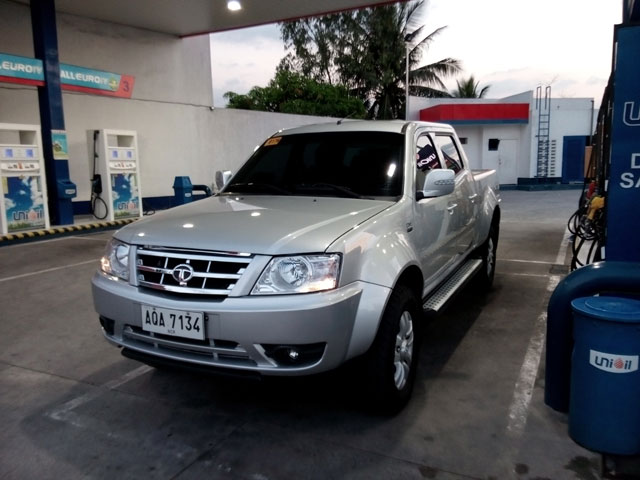
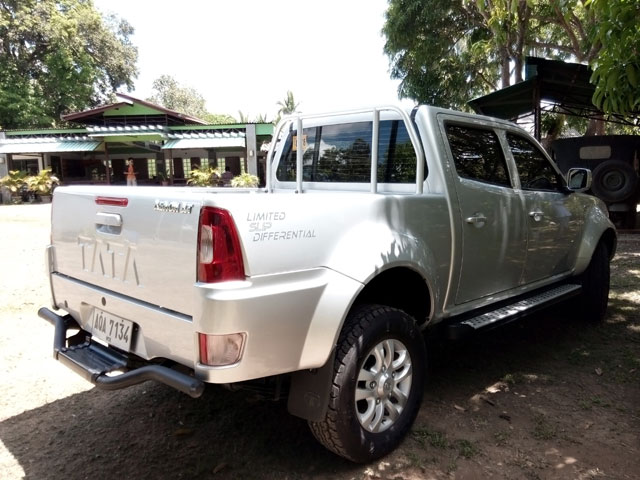
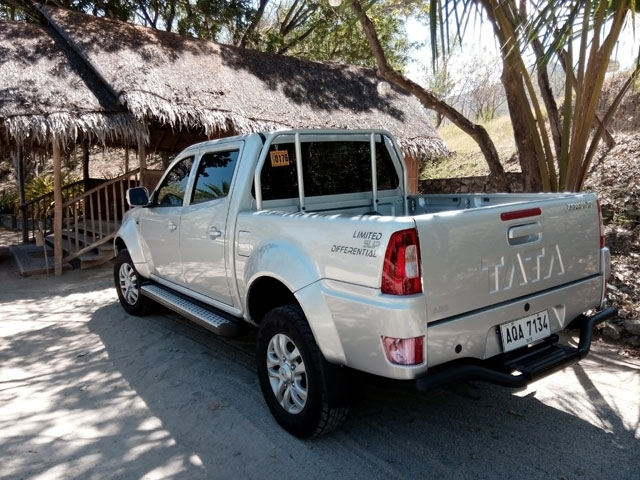
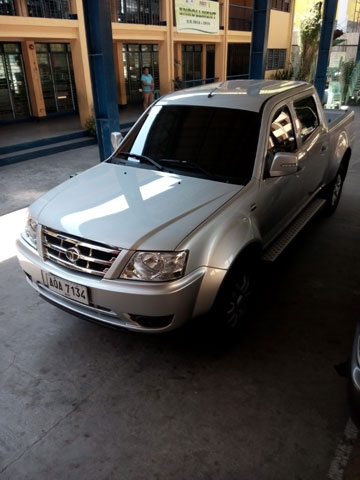
It seems that for every five new vehicles on the road, one is a pickup truck. These city-slicker trucks almost always have twin-row cabs, ride high on raised suspensions, and have roaring diesels under the hood. What’s the draw?

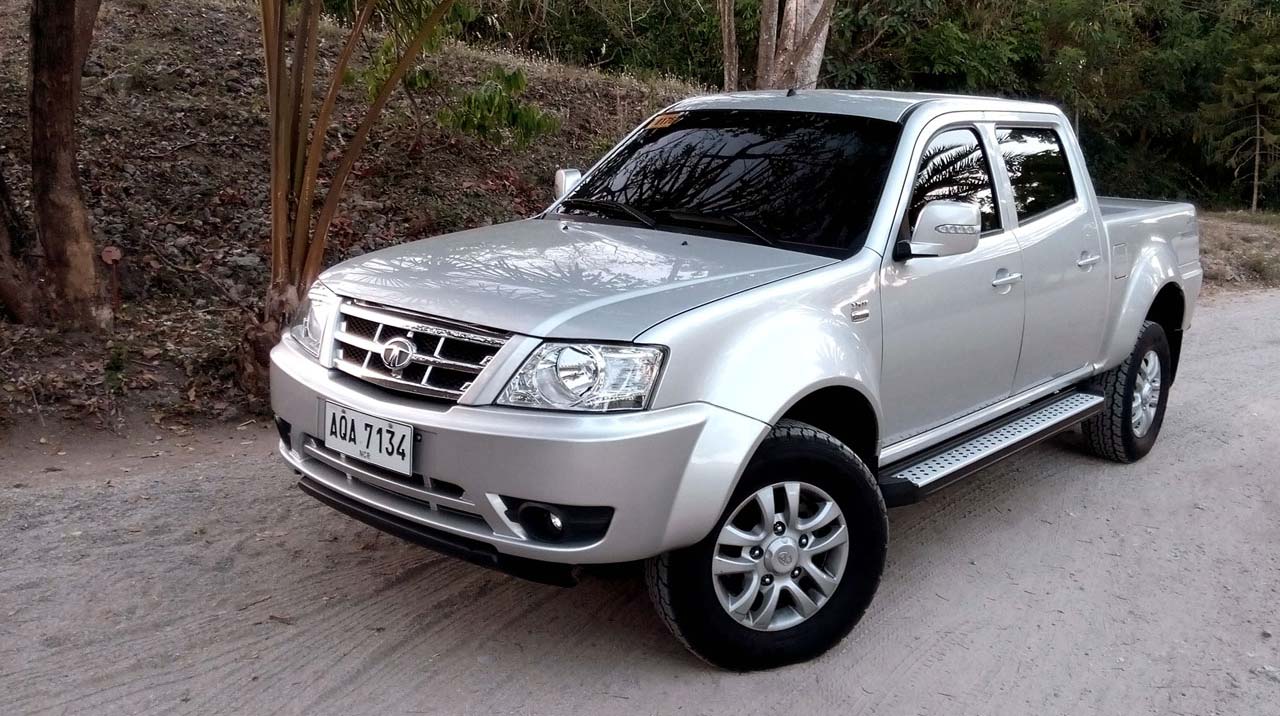
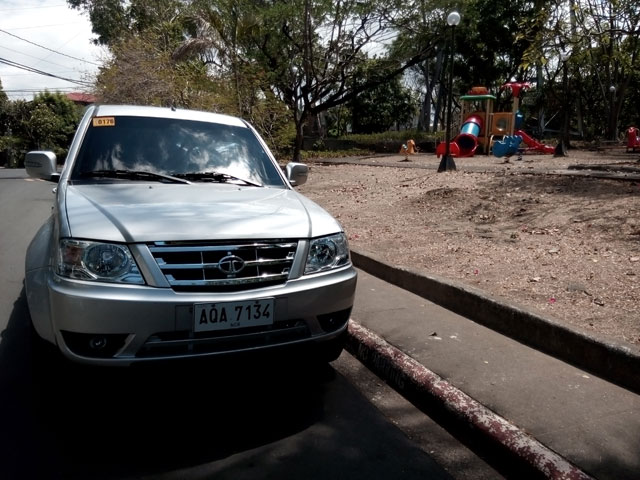
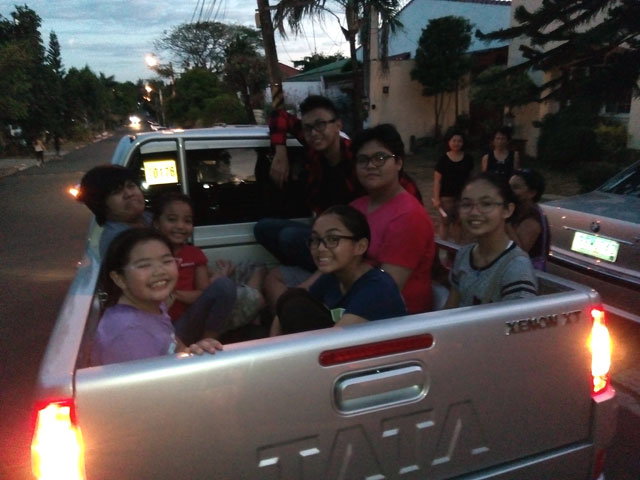
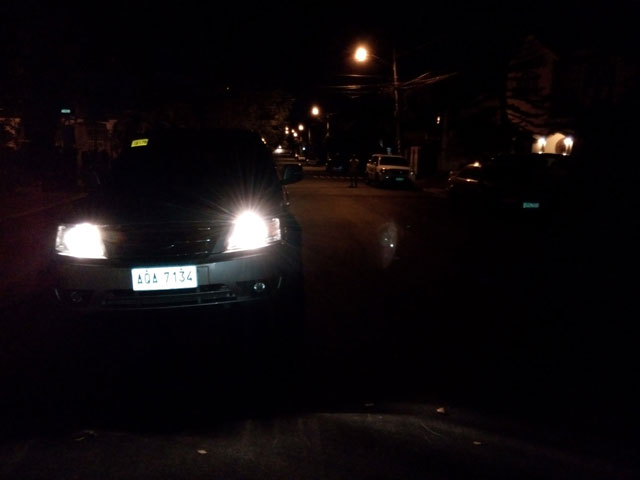
I drove the Tata Xenon XT 4×2 MT exclusively for several days, tested it for all it’s worth, to nail down why the pick-up truck is turning into a passenger vehicle, a passenger truck as it were. I drove it through extra-heavy homeward traffic on a Friday evening, took it on a daytrip to the southern coast of Batangas the next day, made the most of its cargo bed by giving kids a “barn-ride” to church on Sunday, and then filled it to the brim on Monday to haul over a dozen volunteers and their supplies over to a public school where they cleaned and repainted a playground.

CIMG20150516110246onclusion: if it’s a choice between a big brand compact sedan and this particular truck which goes for just PhP830,000 SRP, I’d go for the Tata Xenon any day. Two tons of truck is utterly practical, an expandable and retaskable thing that could carry up to a ton of cargo and/or people, leaving nothing and no one behind when the need occurs.

The expandables

The Xenon’s rear cargo deck is big enough to load oversized cargo with the tailgate up, even bigger and more versatile with the gate down (so long as you’re good at securing stuff with rope). You can opt for a camper shell of course, cover the cargo deck to make it lockable and secure, even more people-friendly, but I suggest that this be a snap-on affair that you can remove by yourself or with little assistance in case there’s tall cargo that needs hauling.

In good weather, an open deck can pinch hit to transport 7 to 8 people in addition to the 5 or 6 in the passenger cabin, that’s as long as the people in back don’t mind having just the big clear sky overhead. Ironically, those folks would mind it even less, God bless ‘em, when the rains bring a deluge, the lack of a roof above a trivial thing as long as there’s a solid truck underneath to get them away from ground zero.

IMG20150516131739

The high-riding chassis might seem like overkill, like a tip of the hat to monster truck fandom, particularly when it’s mated to just a 4×2 drivetrain. But, from the driver’s point of view sitting nearly a meter above ground level, it’s the perfect thing on flaky infrastructure. Riding on the large tires that can be accommodated by a raised and reinforced suspension, it’s exactly what’s needed for a relaxed and confident drive on ill-kept roads where even manhole covers and drain grills are known to go missing. And when those road hazards suddenly get hidden under feet of floodwater, well, you get the picture. A high-riding chassis, it’s a great thing to have if you can get it.

Truck war

Big players have each and collectively declared that a truck war now ensues. There’s still normal rivalry, no hostilities, but with all eyes focused on the market for pickup trucks, the market for vehicles that are no longer the light-duty cargo-carriers they started out to be but what have become yet another type of passenger vehicle. Amidst all this, they’ve distilled the desires of their market and defined both the form and the substance of the modern pickup, the passenger truck.

IMG20150520085827

Pickups as passenger vehicles, you’d spot them as: (1) having two-row passenger cabs that’ll seat five; (2) being high riders, with ground clearance of over 200mm regardless of whether these are 4×4 off-roaders or 4×2 utilities; (3) sporting large tires on rims with diameters of 16” or more; and (4) being powered by diesels made efficient and with powerbands stretched out by the inclusion of some form of modern, high-pressure fuel injection and turbocharger arrangements.

And apparently, those touch points are enough for big brands to each field many variants. In fact, the more variants they have, the more successful they seem to be at gaining ground and getting market share. Top seller Ford has 13 different variants for their Ranger, based on choices of body fairings, engine, drivetrain, gearbox and passenger cabin sizes. Isuzu has 8 variants for their D-Max, up from 7 last year with the introduction of their new LT-X mid-range 4×2. Toyota and Nissan each have 7 variants for the Hilux and the new NP300 Navarra, respectively. Even Mitsubishi which had just introduced its next generation Strada already has 6 variants.

Old world veteran

IMG20150520085947Now, into this melee, comes Tata of India … and with just two variants. Identical in all respects except for the drivetrain, the Tata Xenon XT 4×2 and 4×4 variants both have conventional 5-speed manual gearboxes, large 16” alloy wheels, are trimmed for mid-range privateer tastes, and ride high with 210mm of ground clearance. It seems that instead of spreading their assets to probe and engage the whole breadth of the market, they’re taking aim at the market’s meaty middle.

From the start, ever since they went active last year, Tata’s pitch has been bold yet self-effacing. They build durable vehicles ‘cause they need to. It’s an imperative that their vehicles be robust because their domestic market, India, has road conditions even harsher than ours. The Tata brand has been brandished for decades on vehicles plying skewed tracks cut out of Himalayan mountainsides, low and arid desert trails, and the bustling and bumpy scrabble of broken city pavement where these may exist.

When India’s Ambassador to the Philippines L.D. Ralte spoke at Tata’s “Big 7” launch to introduce their line-up of diesel-powered cars and trucks last year, he punctuated his endorsement of the utter reliability of Tata vehicles with a roundabout compliment to the Philippines. He said that since they find Tata’s seemingly indestructible vehicles reasonably priced in India, then these will surely seem even cheaper to potential buyers in the Philippines. Even if Tata isn’t well known yet in the Philippines, it’s famous, if not notorious, in other markets where they know that the heavy industry group from a former colony of the British Empire now owns the English icons Land Rover and Jaguar.

Nine years old, going on classic

The Xenon in current form was introduced back in 2006 which explains its dated proportions and design. At 5125x1860x1760mm (LxWxH), the Xenon is a full 13cm shorter than the current Nissan NP300 Navarra, 24cm shorter than the big Mazda BT-50. And it has the smallest, shallowest cargo deck in its class at 1430x1410x400mm. That’s 7cm shorter than that of the Navarra and 12cm shorter than the BT-50’s.

IMG20150520102715

The Xenon is sparing on the flourish, has a design language that blares last decade’s practical aesthetics (which is just fine) and now stands among newer builds looking tight, compact and more sporty because of the smaller cargo deck. It really is about bulk management. Why go for a larger cargo deck when the Xenon’s tub can already carry even a king-size stood on its side and with two-thirds of its length supported underneath by the flat bed and the lowered tailgate.

Compact is always cool, particularly in the city. After all, this design from last decade is now in the running with urban-dwelling passenger trucks. A cargo deck big enough for serious hauling and not so small to make the arrangement look like those notchy rears of sport utility intermediates, that’d be fine. The Xenon looks the part: a full fledged truck moonlighting as passenger transport.

MilSpec tough

IMG20150518074046The Xenon’s suspension is old-school tough. Up front are independent double-wishbones sprung by thick torsion bars, in the back, the familiar parabolic leaf spring sets that can be made even stiffer with the addition of more staves (or rendered softer, if that’s your fancy, by taking out some). The coil springs that big brands now use up front, and on the Philippines-spec Navarra even in the back, make no appearance and leave the Xenon’s undercarriage MilSpec durable (torsion bars are the springs of choice on military trucks and main battle tanks).

Of course, the ride is bouncy when the truck is unladen, but this can be mitigated with sensible driving and some tire-pressure tweaking. Recommended unladen tire pressure is 29psi all-around, with those on the rear tires to be blown up to 36psi when hauling a loaded deck. The big but smartly upright and not bulbous 235/70 R16 tires did well at 30psi all-around on SLEX and the Star Tollway for that daytrip to Batangas. In fact, keeping these at the common 30 and not at the 34psi I had found them with, eliminated the side shimmies I’d occasionally feel on hitting small bumps. So take note: the shimmies indicate there’s room for softening, not that the tires are already spongy and flexing a bit to the sides.

The seam between passenger cabin and cargo tub is left unfettered on the Xenon. There are no rubber fillers to trick the eye or absorb vibrations in case the modular bodies flex up against each other. These said, there were no indications, no looseness and no telltale bangs that betrayed any significant flex. The Xenon, despite the torsion bar and parabolic leaf springs and their inherent constant, stiff tension, showed no signs that its frame spans were getting pounded. The whole body on frame assembly stayed firm and square. No surprise that in India the Xenon has been drafted into military service.

Sublime handling

Upstaging the typically bumpy cruise is the Xenon’s handling. The truck grips the road extremely well. Turning into a curve is sublimely predictable, the truck straddling your intended approach line as if it were on rails. While the minimized body roll may be due to the throwback torsion bars up front, these with their constant tension as opposed to the progressive force of coil springs, the exceptional handling is more likely due to the Xenon’s wheelbase geometry.

IMG20150517095305

While its length is shorter than those of current generation big brand models, the Xenon has among the longest wheelbases in its class. While the Xenon is shorter than the Navarra by 13cm, the smaller truck matches the 3150mm wheelbase of the bigger one. The only longer ones are the 3220mm wheelbases on the even bigger Ford Ranger and Mazda BT-50. As such, the Xenon has the greatest wheelbase to length ratio among its big name rivals: at 61.4%, the Xenon even bested the 60% of the Ranger and BT-50. You could imagine how well this counters the centrifugal force on turns, with body overhangs tucked up and kept short.

But it should be noted that the weight distribution is ideal only when the truck is unladen. When hauling cargo, the Xenon will be rear heavy and would be more prone to lift-off oversteer, the rear tires succumbing to momentum’s push away from the turn. Not that it needs mentioning, but … best to leave off the slaloms when you’re truckin’ stuff in the, ah, truck.

Elegant power

The Xenon’s 2.2L VTT DiCor engine is a modern, refined diesel with a variable geometry turbocharger (hence the “VTT” for variable turbine technology) and precise and high-pressured common rail direct injection (as in “DiCor” for direct injection common rail). Already potent enough to deliver 147hp peak power at 4000rpm and peak torque of 236lb-ft at 1500 ~ 3000rpm (ratings that rival those of larger 2.5 and 3.0L diesels), the combination of enhancements are capped by a more recent innovation that manages and levers all that power into something altogether more elegant: smooth, uninterrupted force.

IMG20150517100815

The 2.2L VTT DiCor is also the engine mounted in Tata’s Safari SUV. And in that model’s literature, they remember to mention that engine’s torque is channelled through a high-inertia flywheel. Heavier than conventional ones, a high-inertia flywheel has been made massive enough to dampen the torsional vibrations that usually come when the clutch engages at low revs, and to store the engine’s kinetic energy in the form of the wheel’s rotational inertia, its insistence on turning at the same rate even when there’s no force driving it anymore.

Honeywell Variable Nozzle Turbocharger (VNT)

The advantages in terms of keeping the turbocharger spooled up are obvious, the effect rather elegant. Instead of the near instant gear-changes on fast automatic dual-clutch transmissions to keep the engine turning at the same rate even through an up-shift, the manual transmission on the Xenon can rely on a heavy flywheel to not only linger at the same rpm but even surge up when you disengage the clutch to do a gear change.

Of course, back when I didn’t know about the flywheel, those surges were irritating me no end, making me question shift timing that took years to burn into muscle memory. Don’t despair, it’s just the friendly neighbourhood flywheel at work. Do it right, let up on the gas a heartbeat faster than with your usual timing and a hundred rpm surge when you pop the stick into neutral will be just enough for the engine to settle back down to the rpm you started with when you reengage with a higher gear. In other words, without the need to feather the gas pedal, and with just a little practice, you’ll be able to game the engine into smooth up-shifts with negligible interruptions in force and acceleration.

Even without turning into a speed demon and insisting on a spirited launch with constant, uninterrupted power driving those wheels even through gear changes, the flywheel has the effect of building up and storing enough momentum in the system to make it feel like you have a second, silent power source boosting your torque even at low revs. Roll out can be done with hardly any throttle, adding less than a hundred to the 800rpm you’d have at idle. With a light foot on the gas pedal, the Xenon can be very quiet as you accelerate for the next gear change.

Easy trukin’

IMG20150520081835Matter-of-fact, with the flywheel storing momentum plus the variable nozzles keeping airflow and compression optimal in the turbocharger even at idle or low revs, you can drive the diesel in the smoothest way I know how: by engaging the clutch fully before even stepping on the gas, by throttling up again only when you have load on the engine, when shifting up after your initial roll-out. Don’t mind the engine revs going back down to idle during shifts. Although the engine won’t then have the energy state to leap instantly into full-burn flight, the variable geometry turbo will nevertheless keep things optimal.

Driving the truck this way, calmly and like you have a full payload whether you’re laden or not, will see you shifting up at 15, 30, 50 and finally 70km/h for that last one into fifth gear, and with each shift happening around the time the tachymeter needle hits 1750rpm.   Nice and calm, there’s the benefit of piloting your two-tons of truck while telegraphing both your trajectory and your intentions to other drivers on the road … a great, laid-back way of driving defensively, a good way to remain courteous, unobtrusive and not obnoxious in your big hulking hauler.

If you need additional incentive, there’s always the mileage you’d be getting. While keeping things calm in city traffic, even with a moderate sprinkling of bumper-to-bumper stretches, the two ton truck with its turbocharged 2.2 liter diesel managed 12km/l, and that’s with a full passenger load. On the highway, keeping the Xenon at 100km/h in fifth gear and at around 2100rpm got me 16km/l, again with a full passenger load. I think if stayed at 80km/l in fifth and at 1,750rpm I could’ve gotten as much as 18km/l. All told, I got readings that jived with the official numbers for the 2.2L Xenon in Australia where they put it down as having mixed mileage of 13.5km/l.

Outflanking the competition

All told, if you were in the market for a pickup truck, the Xenon’s durability, handling and powerful engine would be enough to get you interested. While, if you were really looking for a passenger car and just happened to glance at the Xenon, it’s vestigial compactness, utter versatility and that gem of an engine that can be driven calmly, comfortably and economically while holding a lot of power in reserve, all these could make you take a second look … maybe even pull a chair and go over everything one more time before settling for a sedan.

IMG20150516175403

With their mere pair of Xenon variants to go up against the numerous ones from each of their big-brand truck rivals, Tata may appear like it’s vulnerable to being flanked by many and on all sides. But, considering the Xenon and the surprises it has in store for anyone who’s willing to take a gander, it really is more like them going full tilt into the truck war by shooting straight and true at the market’s center mass.

BYD Taxis Hit the Streets

Look for a cab in the city and, if you’re lucky, you could end up choosing between several makes. Though the Toyota Vios from several model years remains the most ubiquitous on the road, you’d sometimes have the option for other sedans such as the Hyundai Accent, and now, the BYD F3.

If it’s a choice between sub-compact sedans like the Vios and Accent, and a slightly bigger compact like the F3, which would you choose? It’s the same metered cost to you, theoretically, so you’d probably go for the bigger, likely more comfortable ride. And that’s what World Transport is banking on as it partners up with STAR Corp., exclusive distributor of BYD vehicles in the country. They’ve just announced the roll out of BYD F3 cabs in World Trasnport livery.

DSCF6295

Other than dimensions, which you’d like bigger, the numbers game would work in reverse for you as a hirer, in contrast to ownership concerns for weight and engine size. With dimensions that closely match those of the Toyota Corolla Altis, the Vios’ bigger brother, from several generations back, the F3 promises larger people as well as cargo space, and a smooth ride on the longer wheelbase (LWH of 4533x1705x1490mm, WB of 2600mm) while riding higher than most other cab choices (and perhaps drier with 170mm of ground clearance).

The F3 is about 100kg heavier than its rivals, not surprising given its size and seemingly thicker skin, and has a bigger petrol engine. If the driver didn’t over-inflate the tires to eke out every possible kilometre per liter of petrol, the weight ought to translate into better handling of frequent potholes and road wrinkles. The 1.5L 16V SOHC engine, while on the very edge of what can still be considered as a utilitarian fuel sipper, could be smoother running, more quiet, than the 1.3L of the Vios, and definitely more than the turbodiesel of the Accent. The inside should be quiet with the A/C making cool and dry the air you’re paying for, even while you’re sweating out the meter’s ticks in bumper-to-bumper traffic.

With this move to put their vehicles on the public transport grid, BYD follows in the footsteps of Toyota and Hyundai, all having embraced the brand-building possibilities, and not shirking away from the utilitarian image, of having taxicab models. In the case of BYD however, the move tends more to the strategic. Although they’ll entertain any inquiries from private buyers, they’ve brought in the F3 specifically for taxicab service, it isn’t a base variant to any of their other models.

The last time any carmaker did this was in the 1990’s when Hyundai rolled the dice with their Excel sub-compact sedan. The Excel didn’t prosper, not while purchases where possible only with taxicab operating licenses, but Hyundai did. BYD could do better with the F3 pushed for fleet service while also quietly making it available to any other interested motorists.