The why’s of OPPO’s new F1

It’s come a long way, that front camera meant for video calls back when MMS was the big thing. For a while there, front cameras packed just enough resolution to make a face recognizable on those tiny candy bar phone screens, pixels numbering in the low hundreds on each side.Selfie-Expert

Throw in the Internet with high-speed data calls and with WiFi hotspots, simmer things with a few more years of social network start-ups and obsessions, and it’s now about stills and videos of them phone owners, of the hands that wield the handsets, as it were. Shot from arm’s reach or at stick’s length, these images now preoccupy both shooters and viewers everywhere, everyday. Now phones have front cameras with resolutions that rival those of rear cameras, even match the main cameras on models down a rung or two on the price-point ladder. We’re talkin’ serious megapixels these days, both in back and at the front. Eventually, things got even more dizzying when some folks finally took those secondary, fixed-focus front cameras out of the equation.

From selfie swinger

OppoN3_0
OPPO’s swivel camera N3

Remember when the OPPO N1, then later the N3, burst onto the scene? Here were camera phones that tipped their hats, literally and figuratively, to the selfie phenomenon. First time ever, that primary rear-facing camera was put on swivels so that it can be pivoted front for some high grade self-portraits. The quirky swivelling autofocus cameras ended up upstaging everything else about those phones, but the thing about those OPPO N’s, what sneaked in amidst the guffaws, was how these objectified, even institutionalized, the selfie impulse, how these legitimized overt acts of self-absorption with blatant, selfie-specific designs.   Call them OPPO’s conspicuous, slow-burn response to what Ellen Degeneres and friends made way cool, hamming it up at the Oscars way back then.

Ultimate selfie phones, those OPPO N’s were dubbed. But that tag line has gotten tired—acknowledged and made hackneyed by, well, by every major brand really. Now, them swivelling, swingin’ selfie guys at OPPO have launched a new line that makes things subtle again, dunks the rabbit back in the hat, and goes back to front camera roots, but bringing along rear camera bells.

Back to sleek slab

OPPO Philippines' official launch of the F1 at Trinoma Mall, February 17
OPPO Philippines’ official launch of the F1 at Trinoma Mall, February 17
The F1's widgets for control of its main, rear camera (note the ones for Expert mode and Raw capture)
The F1’s widgets for control of its main, rear camera (note the ones for Expert mode and Raw capture)

Introduced here just this Wednesday, the F1 is dubbed the “Selfie Expert.” While nursing my old timer’s aversion to that “Selfie” qualifier, I’ll have to admit that the thing has the sophistication an “Expert” would want and need. On this new upper mid-range model, the mainstay rear camera has a 13mp sensor behind a fast f/2.2 aperture in the kind of lens I’ve come to equate with OPPO—you can rely on them for good glass at certain price points. And the controls that get added on as removable widgets on OPPO’s proprietary Color OS, tell the tale of an advanced camera engine. There’s RAW capture and Expert mode, stuff you’d go looking for if you need to do your own post-shoot processing on images done the old way, forcing focus points and pushing f-stops, while dealing with new-fangled white balance settings we never had to bother with on film. And, with phase detecting autofocus (PDAF), half-press to shutter-click on the F1’s main camera could be as fast as on new mirror-less pro cams.

Widgets for the F1's front camera ... you might want to disable the Beautify one
Widgets for the F1’s front camera … you might want to disable the Beauty one to get the most from the sharp autofocus

Now, with the F1, they’ve put that “Expert” halo on the front “Selfie” camera as well. On its front camera, the upper mid-range F1 at its P11,990 SRP has features you’d expect but not really find, not completely, on the rear of rival mid-range offerings. First off, the thing has sharp autofocus, something I verified personally, hands-on intimately, since it wasn’t in the literature. You’ll think twice about using the default Beauty filter for selfies, maybe disable the algorithms that automatically air-brush faces, and keep images uniquely sharp and gritty, particularly for dramatic black and whites.

The F1’s front camera has an even faster f/2.0 aperture and an 84 degree angle-of-view that means it has the equivalent of a wide angle 22mm lens on a film or full frame camera—good for ambient light work that’ll get a handful of folks into a close-up selfie. The 8mp front camera has a 1/4” sensor, a wafer 4mm diagonally across that’s half again as big as the 1/6” or 2.67mm used on most other phones, on either of their front or rear cameras. That 8mp on a 4mm sensor is smaller than the 16mp on the exceptionally large 7mm sensor of their swivel-camera N3, but things are kept nicely proportionate. Half the resolution on a sensor that’s nearly half across compared to those featured by their class-defying top-end phone, you just know OPPO made sure the F1’s mid-range hardware is up to scratch for what the software boasts to deliver.p5-phone-1-b09760164e9bd036a6853d14712b9f25102bba6eWith the conventional looking, two-camera F1, they’ve morphed their best camera tech into a mid-range slab phone that makes things solidly monolithic again, no more fragile sub-assemblies to swivel a single camera, back to looking understated and keenly sharp with the excellent build quality OPPO has become known for. The screen is protected behind hard 2.5D Gorilla Glass 4, while the mirror finish on the caseback of OPPO’s Neo and Mirror models gives way to the F1’s satin metal that’s now de-rigeur on anything premium. You’ll want to find a protective case pronto—if you want hassle-free tosses into pockets and purses—but OPPO has got you covered. Says so in the specs, you’ll find a case in there when you unbox the F1.

Mainstreamed in other ways

Last Wednesday was a real news day about OPPO hitting its stride, creating new elements in the mainstream, joining the old guard in some ways. With the introduction of the F1, OPPO Philippines also announced critical, much awaited telco alliances.

The other shoe we’ve been waiting to drop, OPPO’s finally linking-up with major telcos, has finally hit the ground. The OPPO F1 is now available on Smart’s postpaid All-in Plan 1200, and bundled with Smart prepaid kits offering nice freebies for six months—50MB of free data usage monthly, and P150 bonus load for every P250 of accumulated top-ups each month, with both data and load freebies valid for half a year. OPPO’s lower mid-range Neo 5s is now also available on Sun Cellular’s postpaid Best Value Plan 450 that features unlimited Sun calls and texts, and 250mb of free data usage and 250 free text messages to other networks each month. And we have OPPO Philippines Operations Manager Garrick Hung saying that a tie-up with Globe Telecom is “in the works.”

OPPO Philippines Operations Manager Garrick Hung delivering the much awaited news about Telco tie-ups
OPPO Philippines Operations Manager Garrick Hung delivering the much awaited news about telco tie-ups

OPPO again partners up with global consumer-finance provider Home Credit to offer yet another way to acquire an F1. They partnered up last year to put the OPPO Neo 7 on promo. This time around, from February 19 to March 31 and at 245 partner stores nationwide, consumers can get the F1 on a Home Credit installment plan for as low as P1,299 per month for six months. Not a credit card transaction, just a valid ID could start things rolling on a Home Credit purchasing loan.

p7-struct-6e10a03f991219d4415fe81cab52ba84ed99b9d2Specifications: OPPO F1

  • Display: 5.0” IPS TFT, 1280×720 pixels, protected by 2.5D Gorilla Corning Glass 4
  • Main camera: Autofocus 13MP with PDAF and f/2.2 aperture lens
  • Secondary camera: Autofocus 8MP with 1/4″ or 4mm sensor and f/2.0 aperture lens
  • Operating system: ColorOS 2.1 (based on Android 5.1)
  • Processor: Qualcomm Snapdragon MSM8939 (616) Octa-core at 1.9GHz
  • GPU: Adreno 405
  • Memory:  3GB LPDDR3
  • Storage: 16GB flash storage expandable to 128GB with microSD
  • Power: 2500mAh fixed Li-Po battery

Finessing stick and throttle on the Tata Vista Ini 75PS 1.4L

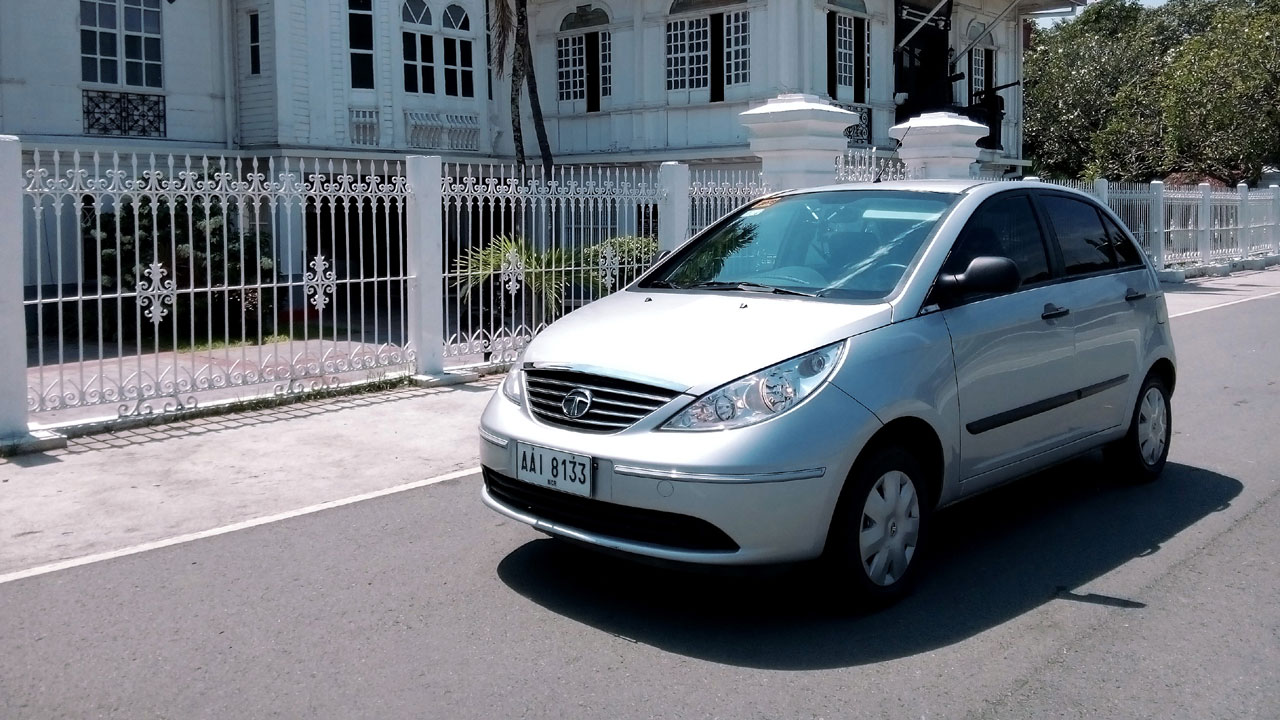
The Tata Vista Ini, gasoline fuelled base-variant of the larger successor to their popular Indica diesel mini-hatch, delivers an interesting torque curve that could be driven diesel-like with fuel-saving short-shifting, or strong and conventional to get it throaty and zippy in city traffic. You just have to decide which way you want to go on roll-out, and stick to it.

Driving the Tata Vista Ini 1.4L, my expectations were not high. For a base variant, the Visa Ini is well appointed: power windows and locks, hydraulic-assist steering, adjustable steering wheel, the usual adjustments on the driver’s seat plus an extra one for lumbar support, and all-important folding rear seats to expand the cargo capacity from 232 liters to over 600 and turn the hatchback into a flexible hauler. But I had misgivings about the engine.

IMG20151011111837

The Vista Ini mounts a 75PS petrol engine (that PS stands for metric horsepower, equivalent to 99% of imperial horsepower, the familiar kind). It seems to have replaced the 65PS 1.2L engine that had been the base variant’s engine in other markets, but the 75PS still delivers 15PS less than does the 90PS engine that’s an option for the hatchback, also in other markets.

The Vista Ini is the most basic of four hatchback and sedan variants, the four Vista and Manza variants available in the Philippine market. Here, there’s the Vista Ini base variant mounting a 75ps 1.4L Safire gasoline burner, and the top-end Vista Ignis with its 75ps 1.3L Quadrajet diesel. The Manza sedan has similar distinctions between a base and a top-end variant: the Manza Ini with 90ps 1.4L Safire gasoline engine, the Manza Aura with 90ps 1.3L Quadrajet diesel. See the table, Vista & Manza Variants, Philippine Market: put together, the four specific variants, combinations of hatchback/sedan types and gasoline/diesel engine options, describe a swinging price ladder (Vista to Manza to Vista to Manza) from P565K all the way up to P738K.

Tata Manza sub-compact sedan

I had driven the Manza Ini and the 90PS 1.4L on the Vista’s sedan counterpart felt just right, pushing it along in fast enough, stately-but-strong fashion. So, on the Vista that’s just 50kg lighter than the Manza sedan, I expected that disproportionately large 17% reduction in power to result in sluggish performance, and this in contrast with the hatchback’s sportier silhouette. I was wrong, should’ve known better.

Enough power, and then some

A conventional shift schedule—up-shifts at 20, 40, 60 and 80 km/h, shifts happening with the engine usually turning at above 2000rpm, to get from 1st to 5th gear—makes the Vista a smart mover. This, even with five people on board. It’ll rev up so easily on a conventional shift schedule, those 3000 will quickly turn into 4000rpm, or even more, when you’re in 1st or 2nd gear.IMG20151011093751

When I tried it, 2nd gear got me to nearly 60km/h, the tachymeter peaking near 5000rpm. Get to a 100km/h cruise and that stint in 5th gear won’t feel like the end of the road. Cruise will be at 2500 to 3000rpm and, if you’re looking to stay under a speed limit, you’d then have to finesse the throttle because there’s enough torque working through the gearbox to still accelerate smartly. So, apparently, there’s more to those 75PS of the Vista Ini.

8-valve Safire

Tata-Vista-Safire-Options,-All engine options are sourced from Fiat. The Vista’s gasoline fuelled Safires and diesel Quadrajets are from Fiat India Automobile, a joint venture between Tata Motors and the Italian company that has been more successful, so far, at supplying car and SUV engines in India rather than marketing the Fiat brand there. The Safire name is a derivative of Fiat’s original FIRE trademark which stands for “Fully Integrated Roboticized Engine.”

See the table, Tata Vista Safire Options, Global. In other markets, Tata’s home market of India included, the Vista’s gasoline powered variants mount a 65ps 1.2L, the 75ps 1.4L, or a 90ps 1.4L Safire engine. These renamed FIRE engines are designed to be modular, configurable for assembly on completely automated assembly lines.   All Vista Safire engines have the same 72mm diameter bore, with the 65ps 1.2L engine having a shorter stroke of 72mm compared to the 84mm of the 75ps and 90ps 1.4L engines. This is how displacement is varied on the different FIRE engine variants, at least from 1172cc on the 1.2L to 1368cc on the 1.4L, by varying stroke lengths through what could be a common sized cylinder block. Modular, as you can see.The 75PS 1.4L shares some characteristics with either the smaller 65PS 1.2L, or the more powerful 90ps 1.4L Safire. It takes the cylinder head with the SOHC 8 valve valvetrain of the 65ps 1.2L and puts it atop the cylinder block and crankcase of the 90ps 1.4L Safire. The effect of using an 8-valve valvetrain on the middle engine is to make torque peak early, and linger there, from 3000 to 3500rpm.

IMG20151013171848So, what Tata did was give the Vista hatchback better city car torque by swapping out the DOHC 16-valve cylinder head and replacing it with an SOHC 8-valve. With peak torque numbers virtually equal at 84lb-ft on the 75PS and 85lb-ft on the 90, the seemingly less powerful engine actually has the better street-going profile with torque peaking much earlier and staying there from 3000 to 3500rpm. Ideal for stop-and-go city driving, even for driving on rough roads between cities, and, ultimately, for cruising with as little revs as possible. It’s an elegant way to tune the Manza sedan’s 1.4L 4-pot engine to be more responsive for the Vista hatchback. But others have thought the 75PS to be underpowered, and I know why.

Drive it like a diesel

The Vista Ini rolls out with hardly any pressure on the throttle. In fact, you could manage to roll off with zero throttle, conserving revs and letting these dip ever so slightly below idle by feathering the clutch to get the car moving. This seemingly abundant torque lets you drive the Vista like a diesel, easing in the clutch before initially stepping on the gas at roll-out, or when again giving it some throttle after an up-shift, and the Vista can be short-shifted at 15, 30, 45 and 60km/h, the engine not even reaching 2000rpm before shifts, to get from 1st all the way up to 5th gear. IMG20151013164815

tata_indica_offers_tata_indica_price_mumbai_tata_indica_discount_4500131421809889447
Tata Indica mini hatchback

It takes practice, timing throttle action an instant after letting in the clutch to put load on the engine before revving up, but this analog of a diesel drive might actually have been intended by Tata since the Vista supersedes their Indica hatchback which gained popularity with its compact size and diesel engine combination. Done right on the Vista Ini’s gasoline engine, short-shifting will deliver a reported 12.5km/l in city traffic or 21.2km/l on the highway.

IMG20151013165250

The tricky part is that your own muscle memory could fool you into mistaking that strong roll-out pull to mean a gasoline engine with over generous low-end torque, enough torque to shift early for aggressive acceleration (instead of that laid-back short shift climb to cruise). There’s so much torque in 1st gear on roll-out that you’ll be tempted to go to 2nd gear too early with the fractional momentum you’ve built up, and then punch the gas. This early up shift, if you’re looking to punch it, it’s what causes the Vista to stumble.

The Vista’s C 549 5-speed gearbox has an unusually deep gear ratio on 1st (4.273 instead of the typical 3.830) but a typical one on 2nd (2.238 which is close enough to the usual 2.200). So, when you shift to 2nd early, counting on that torque to be there to offset momentum not yet built-up, things will go off the rails a bit. There’ll be a shudder, the engine flirting with a stall, the moment you let the clutch back in and step on the gas. There’s just too big a spread between those 1st and 2nd gear ratios.

This or that

[youtube=http://www.youtube.com/watch?v=josJWHHjbUY&w=500&align=right]

Shift early to 2nd, no problem, but stay the course and stay relaxed with diesel-like short shifting with 15km/h increments all the way to 5th gear. Otherwise, if it’s smart acceleration you’re looking to get from the Vista’s gasoline engine, stay on a conventional shift-schedule, 20km/h stages, and fall back on familiar, simultaneous rev-up and clutching as you go through the gears.

IMG20151011121907Just make the decision as you roll-out though. If it’s conventional you want, smart and consistent gas-engine acceleration all the way on a run, there’s this rule of twos you could use as a mantra: don’t hit 2nd gear until you’re at around 20km/h or have about 2000rpm.

I can’t blame you if you’d want to go strong most of the time. Despite excellent fuel-economy with short-shifting, there lingers this compelling reason to still go conventional, after all. Get those revs up near 3000rpm and the 75PS 1.4L Safire will start to show its Fiat origins, sounding satisfying, throaty, and Italian.IMG20151011122647-B

Volkswagen launches Ameo, spotlights India-market notchbacks significant even in the Philippines

Volkswagen has just unveiled the Ameo, a compact sedan designed specifically for the India market. Debuted on February 2 and showcased the day after at Auto Expo 2016 in New Delhi, the Ameo could be a game-changer for Volkswagen in India as well as in other small-car dominated markets.VW-Ameo-2

VW-Polo-Sedan-Philippines1
Volkswagen Polo sedan

Based on their popular Polo sedan but with a notchback trunk to trim overall length down to less than 4 meters, the Ameo features either a 1.2L petrol engine with multi-point injection or a 1.5L TDI diesel. Those key specs put the Ameo, unlike the full sized Polo sedan on which it is based, in India’s small car category for preferential 12% excise tax rates. The sedan is an intuitively up-market form-factor compared to tiny-trunked though sporty-looking hatchbacks that otherwise dominate the roads. And premium brand Volkswagen has managed to put a short sedan in a pricing sweet spot for India where 72% of last year’s over 2 million vehicles sold we’re in the small car category.

Judging by Toyota’s reaction, a game changer

The tax benefits redounding to lower price points are significant since the next bracket, the one in which the longer Polo sedan belongs, jacks excise up drastically to 20%. The wide spread in tax rates is significant enough to have prompted world leader Toyota, as reported by Motorbeam.com last year, to ask the Indian government to remove tax breaks for sub-4 meter vehicles. Their argument: the regulations in India give automakers less opportunity for exports. The claim appears self-serving considering that Toyota itself doesn’t have a sub-4 meter sedan to offer and, observers reckon, is still three years from rolling out a model that they’re currently developing for this category.

suzuki swift dzire
Suzuki DZire notchback sedan

Moreover, Toyota’s justification using the export buzzword is rebutted by the performance of Maruti Suzuki, the Indian-Japanese joint-venture that’s the long-standing market leader in India with 45% market share by year-end 2015 (peaking at 50% mid-year). Their top-selling Swift sub-compact hatchback and Swift DZire sub-4 meter sedan have found good market even here where 1.2L petrol-engine variants subsequently introduced by Suzuki Philippines (thereby quietly introducing India’s sub-4 meter category to the country) contributed to their turning in top growth numbers for 2015. Even while the Philippine market showed growth biased towards light commercial vehicles, Suzuki saw a 52% increase in year-on-year sales with 2015 deliveries coming mainly from their mini and sub-compact passenger cars line up (see our story, “Suzuki Philippines is 2015 growth leader with passenger car sales that defy trend for light commercial vehicles”). The Indian government has not granted Toyota’s request.

Toyota-Etios-Liva
Toyota Etios Liva hatchback

Latest 2015 figures put Volkswagen in close second place to Toyota globally, the former’s 9.93 million in unit sales already at 98% of the latter’s 10.08 million. But the   German brand is a relative newcomer to India where it has just a 2% market share to show against Toyota’s 6.5%. This is the one market where it could tap game-changing growth. Now, with the Ameo set to roll out of showrooms by mid-year 2016, Volkswagen will be fielding both the new sub-4 sedan and their Polo hatchback against the Etios Liva, also a hatch and Toyota’s one and only model in India’s small car category until they roll out their short sedan in 2018. It’s an open field where number two Volkswagen can double team number one Toyota, and in a game that could spill over into other territories.

Indian economies of scale bring de-facto Philippine tax breaks

Unlike the specific taxation behind the 4-meter length and small-engine displacement limits of India for a preferential 12% rate, the Philippines uses an ad valorem structure that levies increasing rates on escalating portions of a vehicle’s import or production cost. For Philippine excise taxes on motor vehicles, 2% is used for the first P600K. If the vehicle costs more than P600K, 20% is used for the next P500K. If the cost is more than the P1.1M of the two lower brackets combined, 40% is used for the next P1.0M. If the cost is even more than the P2.1M of the three brackets combined, 60% is used on the excess. These actually depict a lower tax burden than in India. Excise taxes would hit the 12% equivalent of India’s small car category only when those costs approach P1.2M each.

VW-Ameo-5In the Philippine tax environment, it was Suzuki that pioneered a niche for India-market notchbacks that, at the very least, minimizes excise tax. What Suzuki Philippines broke into was a pricing niche for small hatchbacks and sedans that tops off just above that recurring P600K mark. The Swift hatchback 1.2L and Swift DZire 1.2L notchback they brought in (both with engines curiously downsized from the original 1.4L with which the popular Swift was first launched and is still retained in an up-range variant) are obviously like the Volkswagen Ameo—specially configured to fit India’s small car category.

While these do not benefit from any particular Philippine tax break, the specially configured variants do come from having Indian tax incentives that result in sales volumes which keep prices down by sheer economies of scale. Other words, it’s the pricing that’s kept low by successful India sales that get these vehicles the Philippine equivalent of a tax break. It’s like getting hotcakes at half price because neighbors already got things discounted with a large, wholesale purchase.

Philippine niche for India-market notchbacks

The result: P638K for the Swift 1.2L M/T hatchback with P111K savings off the original variant mounting a 1.4L engine (which doesn’t fit India’s small car profile), and an even lower P568K for the Swift DZire 1.2L M/T short sedan which has no other engine option but the one that keeps it in the sub-4 meter category. At prices that stay near or under the P600K SRP level even after covering ship-in costs and mark-ups, excise tax rates are kept down at the lowest 2%, nearly eliminating the bloat it otherwise could put on the list price.

Honda Brio Amaze notchback sedan

The situation has created an opportunity for other carmakers, later entrants, also willing to engineer products for the sub-4 meter category (instead of lobbying to abolish its tax benefits). Honda’s Brio Amaze notchback sedan was introduced in India with a 1.2L petrol engine, keeping it in the sub-4 meter category and pitting it against the top-selling Swift DZire 1.2L. By most accounts, Honda’s notchback has been showing well.

brio amaze 2Subsequently, in 2014, Honda Philippines brought over the Brio Amaze, although with a larger 1.3L i-VTEC engine, focusing on performance despite causing a departure from the 1.2L engine that had gotten it a tax break in India. Nevertheless, volumes on the components common to the India- and Philippine-spec models appear to let Honda hit that pricing sweetspot with an SRP of just P629K for the basic E variant with manual gearbox. And if they choose to bring in the 1.2L variant later, like Suzuki did, this could introduce another, significantly lower price-point, like it had for Suzuki.

Point is, India-market notchbacks are already in the Philippines, have been here for several years already, even if the market hasn’t perceived these as such but rather as rakish sedans with trunks truncated for sporty aesthetics. And now, with premium German brand Volkswagen having reworked and shortened their popular Polo sedan to become an India-market notchback, the niche has transcended the esoteric, been made overt and apparent by the world’s second largest marque gunning for top spot.

Another notchback for the Philippine mix?

Volkswagen will be pricing the Ameo very competitively for the Indian market. Ex-showroom prices in India ranging from the equivalent of P422K to P562K have been reported.

VW-Ameo-3Philippine-spec vehicles are typically priced at around 150% of the Indian counterpart models, whether sourced from India or off-shore suppliers. This means that if the opportunities prove compelling enough both for Volkswagen global and Volkswagen Philippines alike, they could bring in the Ameo at an offer price starting at P633K.

That’s a surprising notional SRP for an up-market city-sized short-sedan complete with modern staples such as a full-fledged infotainment system, power windows and locks, rearview camera, cruise control, dual airbags, ABS and electronic stability control. A surprising price particularly for a Volkswagen that’s acclimatized for the Philippines with what looks like the same high, 170mm ground clearance of the Suzuki Swift hatchbacks and sedans for negotiating the rough inter-city roads and high speed-bumps in India. A surprising price for Volkswagen with their current lowest priced model, the Polo sedan 1.6L A/T listed P200K higher at P840K. A surprising price for the recently returned European Volkswagen marque that’s premium enough to command a P4.29M price for its SUV top Touareg model. Basically, that notional P633K for the new Ameo is a surprising price for a Volkswagen, period.

Toyota Vios sub-compact sedan

Still, it’s just a notion. But think of how a P633K Volkswagen Ameo can upset the status quo not only in its role evolved for India where driving conditions are apparently worse and more diverse than in the Philippines, but also in a market other than India where arch rival Toyota doesn’t have a counterpart model and instead has the Vios sedan as the closest thing to one.

VW-Ameo-6The Vios, Toyota Philippines’ best-selling model showcased for its track-ready handling in much publicized one-make races, with its near single-minded focus on a ground-hugging ride having committed it to the low, 147mm of ground clearance that causes the occasional underbody scrapes even with just two on board. And lastly, the slightly larger, sub-compact Vios sedan with its less finely trimmed 1.3L J M/T base variant selling for a near-equivalent P630K.

VW-Ameo-4Having spotlighted the India-market notchbacks already in the Philippines and their unique draw amongst region-wide third-world sensibilities, the Ameo should be coming to Volkswagen Philippines showrooms, and coming soon.   This is too good an opportunity, even for Volkswagen global, to pass up.

VW-Ameo-front-quarter-press

Tata Indigo sedan now offered in LX Variant with ABS and dual airbags

Tata Motors Philippines now offers the new LX variant of their Indigo sub-compact sedan which features an anti-lock brake system and dual airbags up front. Apparently, what they first introduced as a possible fleet vehicle contender with their DLE variant is now being trimmed up to take on family car duties with the option for GrabCar and Uber side jobs as well, and for good reason.01-2T5C9702-final-sized

With tall seating in a passenger box with low shoulders, big headspace and lots of visibility through generous window glazing, the Indigo is an easy sedan to drive or ride, board or disembark from. And, the uncompromisingly large trunk space (which could even fit a wheelchair) is enough for long vacations as well as daily carpool commutes to school and office.

Dashboard with dual airbags on new LX variant

The most visible change is in the dashboard where the passenger side airbag goes into a modular enclosure resting atop the deep-sunken dash ledge but which is also kept flush with the windshield line. Not really obtrusive, the enclosure serves as excellent reminder not to let young children, much less infants in booster seats, sit up front.

Unchanged are the model’s unique powertrain, large-rimmed 14” wheels, robust yet supple suspension and, consequently, its surprisingly good handling. The 1.4L 475 TCIC turbodiesel is the newest, most powerful engine offered on this model globally, and is tuned to the same 70ps (69hp) @ 4500rpm and 135nm (100lb-ft) @ 2500rpm power specifications as the engine on Tata’s workhorse Super Ace light truck (see our full story review, The Tata Super Ace passenger prototype on a real world mission).

The 68hp Tata 1.4L 475 TCIC engine--note large scoop duct mounted under the hood to shunt air directly into the turbo intake)
The 68hp Tata 1.4L 475 TCIC engine–note large scoop duct mounted under the hood to shunt air directly into the turbo intake)

Very telling is the engine’s 5.5L oil capacity. The relatively large lubricant store (compared to 3.2L for the FIAT based engines on Tata’s newer sedan model, the Manza) is indicative of the kind of mileage this engine is engineered to endure. All told, this makes the Indigo the only sub-compact sedan in the market powered by a commercial vehicle grade turbodiesel.

The 14” rimmed wheels—large for a utilitarian microsedan—handle potholes and rough roads particularly well as these are sprung on a fully independent suspension system front and back, and which features McPherson struts all-around, on all four wheel assemblies. With firm shock dampeners to mitigate roll, the independent suspension goes a long way towards keeping all wheels firmly planted even on uneven surfaces or through G-pulling turns.

SRP for the Indigo LX is now PhP535,000, up by PhP10,000 or just 2% from last year’s PhP525,000 price tag for the older DLE variant without the new safety features. Evaluated against the new ABS and airbag features, that PhP10,000 price up-tick looks like a bargain.02-2T5C9712-final

The Indigo’s design dates back to when its hatchback basis, the Indica, was introduced in 1998. Looked at another way, with a history going that far back, its elegant mix of robust engine, dynamic suspension and extremely rigid body construction does explain its longevity. And this, along with the addition of modern safety features, certainly gives it the substance to overshadow the aging look of its design aesthetics.

RWD Note: Check in next week when we update this story with a video of our Indigo test drive, and again next month for our full review story where we report how to make this fuel-efficient sub-compact sedan zoom through overtakes.

BAIC offers free comprehensive check-up over the holiday season

BAIC Philippines is mounting their Christmas Service Campaign for yearend 2015, a free 21-point inspection check for all BAIC vehicle owners at the height of the holiday season from December 18, 2015 to January 17, 2016.  Qualified for the free check up are all vehicles acquired from BAIC Philippines, namely:  MZ40 and MZ45 compact vans; A113 and A115 compact hatchbacks and sedans; and their X424 sport utility vehicle.

BAIC Christmas Service Campaign details

  1. All current BAIC vehicles owners (MZ40/45, A1 series, X424) are eligible to join the Christmas Service Campaign
  2. The campaign will be a free “21 point” inspection check on the customer vehicle.
  3. After the free “21 point” inspection, the Service Advisor will inform the vehicle owner the result of the inspection. Any maintenance concerns will be raised to the owner and appropriate repairs will be suggested by the service advisor.
  4. If any maintenance concern will fall under warranty coverage of the vehicle, appropriate repairs will be done free of charge.
  5. Any maintenance concerns which will not fall under the warranty will be for the vehicle owners’ decision to repair subject to appropriate repair charges.
  6. Promo period is from Dec 18, 2015 to Jan 17, 2016

The 21-point check-up includes:  engine checks (6 items); instruments, lights and tire pressure checks (7); underbody checks (4); airconditioning checks (4); and general computerized diagnostics. If inspection turns up anything, recommendations for addressing maintenance concerns will include work both among and beyond those covered under warranty.

While a major selling point of rival brands is the widespread availability of replacement parts in the event of breakdown, BAIC of China appears to be going all Sun Tzu on us, putting the spotlight on their strengths and not on those of the competition.  BAIC’s 21-point check up is a comprehensive procedure intended to isolate issues before these become likely points of failure, keeping their vehicles as durable as these were engineered to be.  In other words, while the BAIC brand builds presence in the country, they appear to be invested in making sure their vehicles don’t break down in the first place—think of it as the vehicles coming with veritable SLA’s, or service level agreements, like for the high availabilities promised by mission-critical Internet servers.

Aside from earning the brand some major good will in the market, the free 21-point inspection check should go a long way in defending BAIC’s image as a manufacturer of durable vehicles.  Although the stigma suffered by China-made products is really due to shoddy quality in contract-manufactured and cheap consumer products (contexts far removed from those of state-owned carmakers like BAIC that are as much a part of national pride as are flag-carrying airline operators), the Chinese carmaker still has to contend with this in addition to being a newcomer in, surprisingly, one of the most sophisticated automotive markets in the world.  Nevertheless, such dynamic competition is good (compared to the stagnation of oligopolies or monopolies) and manifests itself not only in price-point rivalries but also in how much further new entrants like BAIC are willing to go to ensure customer safety and satisfaction.

Christmas cargo

“While APEC happened …” I bet a lot of stories out there start with this phrase now. Well, this is our story and it’s one for December—because it was while APEC happened last month that Christmas came early. We had gone to BAIC again, and with their help, we helped some folks who are helping some really special kids. Roundabout you say? Bear with us, read on, you’ll get the drift of why this one’s special.

Them, Santa’s actual helpers

As it’s done for the past two years, Adonais Mercy House again spearheaded efforts to hold a Christmas party for exceptional children. Since organizing into a charitable community in 2013, Adonais has been doing their bit to bring holiday cheer to children on the Munting Panaginip program of Undying Wishes of Pinoys, Inc. (UWPI)—children with cancer relying on the charitable support of the UWPI foundation for their medication and laboratory expenses. Adonais is a non-profit organization that had sprung up to give form to the charitable intent of friends, a community grounded in their christian faith. Hailing from countries across the globe, Adonais members have a simple goal: to help children stricken with—and impoverished by—cancer. Eventually, they hope to start a midway house for them.

The parties in 2013 and 2014 we’re simple affairs, little more than what you’d expect a kiddie party would be, assembled from a fastfood chain’s cookie-cutter selections, and on a tight budget. But the occasions always came with donated gifts—the apparent draw, that bit of Christmas the kids and their families could take home.

This year, the party had grown bigger. The venue was the Fun Ranch at Tiendesitas in Pasig City, the volunteers came from all walks, from diverse groups including Kiwanis and the Global Pilipino organization of professional chefs. Even bonafide educators and actual in-the-flesh entertainers lent a hand. And the gifts! Those came from all over and promised to swamp the bottom of Christmas trees and spread across supper tables.

On mission

The mission then: collect big precious parcels, get all of these to the party and to the kids and their families who could certainly put these to good use. All these, at the height of APEC week with motorists funneled away from reserved lanes and even entire roads. All these, while carmaggedon threatened.IMG20151117144546

Enter the BAIC MZ40 cargo van. We had driven the MZ40, the passenger van variant, on our very first real world drive back in March (see the story: An Outreach Drive to Dueg with BAIC’s MZ40 WeVan ) and it proved handy in getting some volunteers for an early literacy program up north. So, this time out, we thought, cargo van! And the nice folks at BAIC Philippines obliged us, again.

IMG20151117140231

These days, closed cargo versions of familiar passenger vans seem to be anachronistic. Why go with a metal-walled, bare, flat-bed cargo bay when you can have a nicely glassed passenger version? After all, with foldable seating now common, you can still turn people movers into haulers of oversized stuff.

Answer: it’s what professionals really ought to use. There’s something eagle-eyed and unflinching about a cargo van. It has purpose, and customers sense this. For instance, there’s no need at all to assert that it’s “for official use only.” It’s clearly on the road for a purpose. And, while APEC happened, we were lucky enough to have purpose, to be out and about hauling precious cargo.

Sleigh bells on a cargo van

Metal walls stamped out of uncut steel sheets makes for excellent security, keeping content discreetly hidden from anyone who has no business knowing … all matter-of-factly too. It’s a closed van, that’s how it rolled off the factor floor, so stuff being hidden from view won’t be seen by the unsavoury sort as a deliberate, anxious act.

2T5C8547

Put it this way: on the job we we’re on, it was prudent to keep stuff from view of the naughty, those of the not nice variety. And, the lack of vestigial windows even kept everything in shade. The MZ40 has AC vents up front and, predictably, it was enough to keep the whole cabin North Pole cool, cargo bay included.

The missing rear windshield could be an issue, making you rely on side mirrors for backing up. But it’s not really a challenge for any pro worth his salt, any guy willing to roll down the window, stick his head out and crane his neck to get some depth perception into play.

Compared to popular multi-cabs that bolt modular rear cabins onto a frame, the MZ40 cargo van’s single-body on a ladder chassis makes for an extremely rigid and robust vessel. Rolling along doesn’t cause a single squeak or creak, the telltales of a rear body flexing separately from the front cabin.

And finally, exactly because closed vans seem anachronistic, there’s this notion of investment in the premium and, well, the ideal. When you see a FedEx cargo plane soaring above, a widebody without windows and devoted entirely to cargo, don’t you get a sense of just how serious they are about the job? The cargo we had, the folks these were meant for, all deserved the best.

Official use

So it was that while the city’s streets turned officious to welcome visiting dignitaries, we were on the job with a cargo van, putting it to uniquely official use.

IMG20151121164601

With the MZ40 cargo van, the good folks at BAIC Philippines rooting us along, we got a hint of that feeling, of being burdened with glorious purpose—as Norse gods might say. Cargo has a multiplier effect, you see. Like it is with those FedEx planes again: “Hoowee! That sure is a lot of Wilsons on their way to some lucky kids.” Sure, it isn’t people they’re carrying, but can you imagine how many more folk are actually going to be touched, to be helped, by the freight.

On that note: go ahead, spread cheer, and have a merry Christmas, one and all.

Tata goes into full production of Super Ace passenger variants

Tata Motors Philippines has rolled out the production variants of their Super Ace light truck with passenger bodies. Prior to this, Super Ace cab and chassis offerings were for cargo vehicles with either a drop side load body or an aluminum cargo van box.

Super-Ace-Big-Boy-sizedNow, Tata adds two passenger van variants with side-seating in the rear, and a school service variant with front-facing seats and a curb-side door. The Super Ace line now includes six variants—a base chassis, two for cargo and three for passengers.  Notably, Super Ace offerings are not limited to these six variants. Tata accepts orders for the light truck chassis fitted out with custom-built rear bodies.

Tata Super Ace Variants SRP
Super Ace cab and chassis Php550,000
Super Ace drop-side cargo flat-bed Php625,000
Super Ace aluminum cargo van box Php632,000
Super Ace “Big Boy” passenger van with single AC Php683,000
Super Ace “Big Boy” passenger van with dual AC Php725,000
Super Ace school service van with dual AC Php834,000

See our review of the pre-production Super Ace “Big Boy” prototype with passenger body that featured a dual AC setup which we reported as blowing amply cooled air through a full-length duct in the rear cabin. We also reported that the small though modern 1.4ltr turbodiesel of the Super Ace stands up well against the larger displacement 2.5ltr conventional diesel of market-leader Mitsubishi’s L300 chassis fitted with passenger bodies.

The Tata Super Ace passenger prototype on a real world mission

I again went to Tata Philippines, to see if they’d help out on an outreach drive. They got back to me within minutes. Sure! How many passengers on this drive did you say?

The mission: get teaching volunteers to a school in the countryside and get them there fresh and ready to show kids the fun, the wonders, the fulfilment of reading. It was another drive for the Barangay Early Literacy Program (BELP) of Adarna Group Foundation, Inc. (AGFI), this one to St. Joseph Elementary School in Macabaklay, Gapan City, Nueva Ecija. For this drive, two AGFI point persons were being joined by 13 members of UP PreP—the University of the Philippines Preschool Practitioners student organization. Add me and this brought the total loadout to sixteen, for a 110km trip each way through NLEX, a stretch of Pan-Philippine Highway, and over kilometers of rough rural roads that would take us to the outskirts of Gapan.

Pre-production transport

For these load, distance and expected road conditions, Tata volunteered a demonstrator, a pre-production unit of their Super Ace light truck with a passenger body built by Centro and featuring its own Cirrus air-conditioning system. The Super Ace is a further development of the small hauler concept that Tata had started with the Ace micro-truck (see our story on the Ace). And, like on the smaller Ace, going into production with a locally fabricated passenger body on the Super Ace would turn this into the light truck’s biggest and heaviest variant in any of its markets to date.

TATA MITSUBISHI
Super Ace L300 Exceed
16-seat body 14-seat body
Dimensions
– Length mm 4640 4640
– Width mm 1565 1695
– Height mm 2090 1965
– Wheelbase mm 2380 2350
– Front tread mm 1340 1440
– Rear tread mm 1320 1380
– Clearance mm 160 190
Weights
– Curb weight kg 1550 1540
– Gross vehicle weight kg 2260 2345
– Nominal payload kg 730 825
Powertrain
– Engine code Tata 475 IDI TCIC Mitsubishi 4D56
– Fuel Diesel Diesel
– Displacement cc 1,405 2,477
– Induction intercooled turbo normal
– Bore x stroke mm x mm 75.0 x 79.5 91.1 x 95
– Compression ratio 21 : 1 21 : 1
– Peak power hp@rpm 70@4500 69@4200
– Peak torque lb-ft@rpm 99.6@2500 103.3@2500
– Emission standard Euro III Euro II
– Transmission type 5-speed manual 5-speed manual
– Gear ratios 1st 5.070 4.330
2nd 2.400 2.355
3rd 1.410 1.509
4th 1.000 1.000
5th 0.790 0.827
Reverse 3.980 4.142
Final 4.110 4.625
Running gear
– Suspension front McPherson struts Independent wishbones
rear semi-ellip.leaf spring semi-ellip.leaf spring
– Brakes front ventilated discs ventilated discs
rear drums with LCRV drums

The passenger body adds about 300kg to the curb weight and 300mm to the overall length of the Super Ace’s flatbed drop-side truck variant. Weighing 1550kg dry as I reckon it and measuring 4,640mm in length, the Super Ace with passenger body is at par with the popular Mitsubishi L300 FB Exceed light truck which weighs in at 1,540kg and measures 4,640mm long with its extended rear passenger body. The Super Ace is more compact, with shoulders narrower by 130mm, and yet has a shallower front cabin that let Centro squeeze in 16 seats in the rear cabin—two more than the L300 Exceed’s 14 while still matching its overall length.

Powertrain punch

The Super Ace truck chassis was developed to go slightly up-market of its small, micro-truck predecessor, the Ace, which makes the most of a surprisingly diminutive 16hp 2-cylinder 702cc diesel engine. In comparison to the Ace’s engine, the Super Ace’s 1,405cc turbodiesel does seem large, but it’s still somewhat downsized compared to the 2.5L conventional and normally aspirated diesel mounted by the iconic Mitsubishi L300 multi-cab. This said, the intercooled turbocharger on the Tata makes it so you wouldn’t notice the difference. The 1,405cc Tata 475 IDI TCIC intercooled turbodiesel delivers peak power and torque of 70hp at 4500rpm and 100lb-ft at 2500rpm, respectively. Those numbers are a near match to the 69hp at 4200rpm and 103lb-ft at 2500rpm of the 2.5liter conventional diesel of the famous Mitsubishi L300.

Unladen, the Super Ace submits easily to the kind of short-shifting possible with a diesel’s trademark low-end torque. The micro-truck rolls easily even with your foot barely touching the gas pedal. Then, while putting moderate pressure on the accelerator, you’ll do up-shifts as the tachymeter hits 2000rpm, at 15km/h for the shift up to 2nd, 30km/h for the one to 3rd, 45km/h for 4th, and 60km/h to get you finally into 5th. This should make for good fuel consumption on ferry trips, the truck empty and en-route to its next pick-up, even while in traffic where 60km/h is the highest speed you can expect to reach on city cruise.

Heavily loaded as it was on the Gapan trip, and with the engine burdened by a big compressor working full bore to feed a dual aircon package, the Super Ace gracefully falls back on a conventional up-shift schedule with 20km/h increments. It’s still possible to roll-out without stepping on the gas—just working with extra-gentle let-off on the clutch pedal to keep the engine from stalling—but the up-shifts are best done when the tachymeter hits 2500rpm, triggering up-shifts at 20km/h for going to 2nd, 40km/h for the shift to 3rd, 60km/h for 4th, and finally 80km/h for settling into 5th.IMG20150907154311

A truck’s transmission

Having been engineered as a compact truck from the start, unlike the L300 which started out as this market’s iconic Versavan people-mover of the 1980’s, the Super Ace has a hauler’s transmission with deeper ratios on 1st (5.070:1) and 2nd (2.400:1) gear. This explains the smooth roll out even with little if any throttle, and indicates that 2nd is the workhorse gear until you approach cruise speed. On the Gapan trip, the Super Ace with heavy load, overtakes through small-town traffic saw us camping out on 2nd gear to accelerate from under to 40km/h up to 60km/h, revs peaking at 3750rpm.

Ratios start getting tall and engine revs settle down once you transition through 3rd (1.410:1) and 4th (as expected, a direct drive 1.000:1). The 5th gear is exceptionally tall (0.790:1), consequently making up for high RPMs during acceleration with a low-rev cruise. Top speed for the dropside flatbed truck variant is reported to be 125km/h. We didn’t go near this figure with the passenger body Super Ace but did achieve a 100km/h cruise on SLEX, 16 souls on board, with the engine in 5th gear and turning at 2750rpm.

The Super Ace passenger prototype, its long 2380mm wheelbase under a heavy load

Surprising handling

The Super Ace feels solid at speed, both on straight highway tarmac and, within reason, through fast curves or turns. The engine is mounted low and mid-front behind the line of the front wheels, delivering better balance nearer to the middle of the long wheelbase that acts like a dense keel. Together, long wheelbase and middle mounted engine add force to keeping the Super Ace upright. There’s body roll, of course, but not as much as you’d expect on a tall, narrow truck.

[youtube=http://www.youtube.com/watch?v=t8srxdgeM7k&w=480&align=right]

And, that long wheelbase again, this time in concert with the independent front suspension sprung on McPherson struts, made for excellent control on rough countryside roads with cracked or non-existent pavement. The exceptional road visibility and space efficiency of a cab-over design typically comes with the trade-off of a jittery driving position atop a front wheel. But on the Super Ace, that wheel top hot seat felt steadier, a good stable position on which to pilot the truck around or over road obstacles. It all really comes together: see the video of the drive through NLEX and over rough-roads at Gapan’s outskirts.

Dual-type A/C

The Super Ace is a comfortable ride made better by cool cabins in front as well as at the back. For its dual-type A/C, the pre-production rear passenger body featured a large novel duct running the full length of the cabin, with return flow taken up by the condenser in a compact housing at the front end of the duct. Cooling with more than a dozen passengers in back was sufficient, even causing condensation on the windows on numerous occasions.

IMG20150912083142Though the airconditioning was challenged by the sun’s glare at high noon on the Gapan trip, this is easily remedied by drapes or medium to dark tinting on the windows. Additionally, while the long duct did much to get some cool air up to the very end of the cabin, some load balancing can be done with the adjustable vents—making openings progressively smaller, restricting air-flow, as these get nearer to the blower. The objective, of course, is to make sure there’s sufficient pressure to push the air up to the furthest point from the blower, up to the very end of the air-duct.

Fuel economy

The 220km round trip for Gapan, though with around 80km of the distance covered on SLEX, turned out to be more of a mixed mode test case with us averaging just 40km/h while negotiating slow traffic in the many towns on the approach to Gapan. The lighter dropside variant of the Super Ace turned in a 14km/l mixed mileage score in India. In comparison, with its heavier passenger body and the additional mechanical load of the a dual A/C’s belt-driven compressor(s), the Super Ace still managed a good showing of 10km/l even with the vehicle tipping the scales at about two and a half tons with 16 people and baggage on board.IMG20150912084307-featured

I’ve no doubt that I could improve on this figure with practice, making the most of the Super Ace’s inclination to a diesel’s trademark short-shifting regimen. Dynamically increasing the engine’s displacement with rammed air, the intercooled turbocharger spools up to high boost at around 2000rpm. So, staying at or under this threshold should result in more acceptable fuel economy in crawling city traffic.

Third-world difference

IMG20150912084449The product of India’s relatively young auto-industry, the Super Ace seems to pitch third-world sensibilities to a global market. It’s a study in doing things a little differently, and making it work—making it work well enough to be adapted into the multi-cab jeepney-style people-carrier / heavy-hauler that’s popular in our market.

Here’s a multi-cab with a smaller turbodiesel, introducing the benefits of variable displacement as it were, and confidently assuming that our veteran drivers will find the right mix of throttle and stick to reap its fuel-eco benefits as they have in India. The traditional cab-over design has been improved, albeit very subtly and by way of a fortunate combination of engineering decisions.

IMG20150906125841
The Super Ace is dwarfed by popular cargo and people carriers

The cockpit offers less extraneous bounce and a better weld to the driver’s back and behind. Instead of obsessing on a tighter turning radius, the light truck goes vertical to keep the truck’s frontage narrow enough to negotiate tightly packed city streets, and with a long stable wheelbase that makes those inevitable and numerous turns easier on the inner ears of driver and passengers alike. High headroom in the passenger body not only compensates for the narrower cabin but makes the people space more hospitable with upright straight-shinned seating.

IMG20150907154342And, while its dimensions make it look like a downsized commuter for the inner city, out in the countryside where multi-cabs roam aplenty is where the Super Ace really comes home. The long and cushiony wheelbase sprung on a rugged suspension makes it an easy drive on rough roads forgotten between election campaigns. The Super Ace seemed easy on the eyes for those hardy motorists we passed, unassuming and small enough to be downright sociable among tricycles that carry more people than a sedan could, and among other multi-cabs expected to ferry entire clans.

Is it good enough to carry precious cargo? After the Gapan trip which ended in smiles all around, we volunteered to drive several grade-school classes on their community visits day. What do the young experts say? Tito, after this, can you be our regular school bus?

Super-Ace-School-Van-sizedEditor’s note, 03Nov15:  The subject of this test drive, done last September, was a pre-production version of the Super Ace “Big Boy” passenger van with dual AC.  This November, Tata Motors Philippines has started producing this and other passenger variants in commercial numbers.  See the related story, Tata Super Ace rolls out production variants with passenger bodies, for a report on their pricing.

The Pump: getting smarter acceleration from a Crosswind A/T

IMG20151113165354We dive deep into the details of the JATCO-sourced automatic transmission on Crosswind XUV and Sportivo variants, and come back up with a notion on how to get acceleration that’s closer to how you’d feel it with a stick-shift.

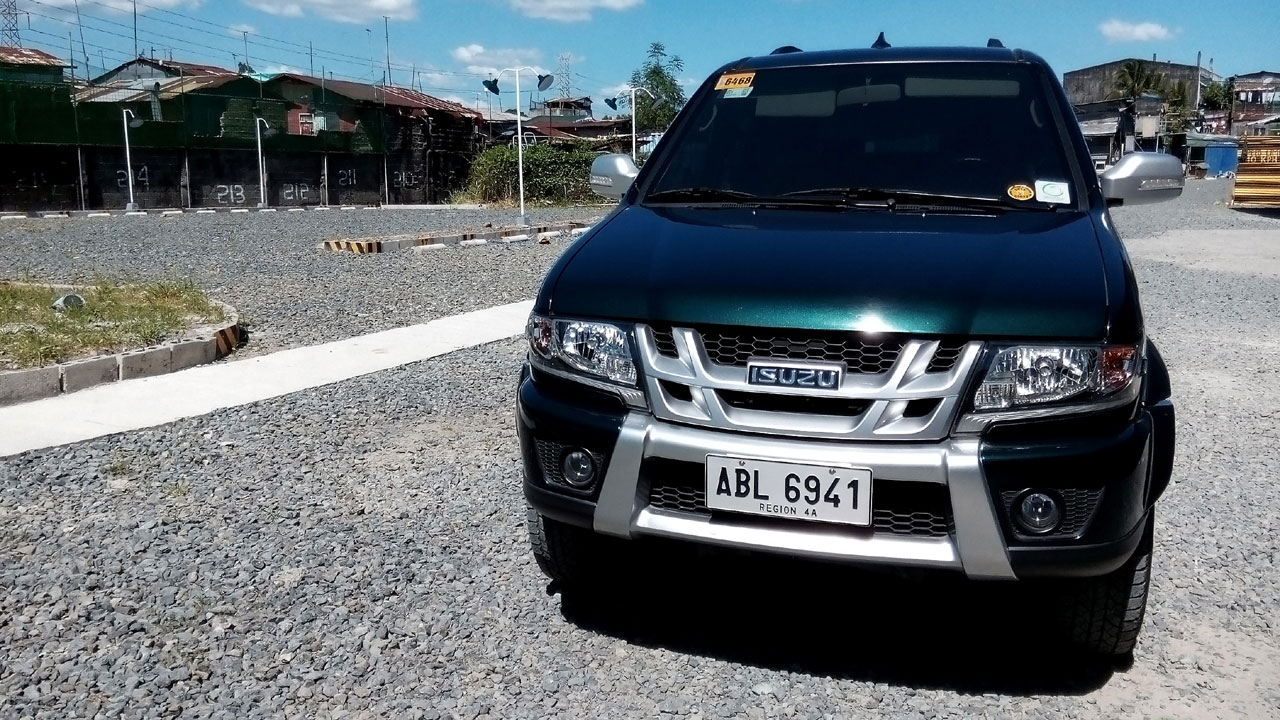
Impressive with its economy, although limited to an 83hp rating because it tops out quickly, the 2499cc 4JA1-L low-boost turbodiesel on the Crosswind packs a big 137lb-ft of peak torque behind that measurement and accelerates quickly enough through a diesel’s typical short-shifting regimen. But that’s with a manual gearbox. The same engine feels very different, sounding more revvy while delivering less acceleration, on the XUV and Sportivo variants with their JATCO-sourced automatic transmissions.

[youtube=http://www.youtube.com/watch?v=kab8OROpKFs&w=450&align=right]

XUV and Sportivo variants of the Crosswind have bigger, heavier tires, of course, but the difference in performance seems to be caused more by the tall gear ratios on the wide-gapped 4-speed automatic, by the high-stall ratio of its torque converter, and of course, by having to delegate shift control to the gearbox. Isolating it to these factors led me to try a technique derived from that of veteran Lancer A/T owners.

Crosswind-power-curve
Power contour of the Crosswind’s 4JA1-L low-boost turbodiesel

On those sporty Mitsubishi sedans with a 1.5L MIVEC engine and its peaky torque curve driving a 4-speed auto, experts have been surging the accelerator to 3000rpm—the lower edge of the engine’s peak powerband—and then promptly letting off on the gas as soon as the car starts accelerating. This charges the powertrain’s flywheel, cranking in momentum that’ll then deliver smarter acceleration—a surge to quickly overcome the car’s inertia coming off a stop or a slow cruise.

Now, on the Crosswind with its diesel-engine torque curve, the powerband’s meat is from 2000 to 3500rpm. Torque starts at 50% of peak at 1000rpm, climbs rapidly to 88% at 1500rpm, then reaches its 100% figure at 2000rpm before tapering down to 95% at 3000rpm and then to 90% at 3500rpm.

Isuzu Crosswind Gear Ratios
 Gear 5-speed M/T 4-speed A/T
1st 4.122 2.784
2nd 2.493 1.544
3rd 1.504 1.000
4th 1.000 0.694
5th 0.855 n.a.
Final 4.100 5.125

Problem is that getting a Crosswind A/T to that 2000rpm threshold takes some doing. Rolling out easy from a 750rpm idle will see you triggering an upshift to 2nd gear very quickly at just 10km/h. When that happens, your revs which had been climbing steadily to 2000rpm will drop back down to 1500rpm and stay there while the engine deals with a fairly tall 2nd (1.544:1) and then with an early direct drive 3rd gear (1.000:1).

Consequently, on a Crosswind with an automatic gearbox, you’ll find that engine revs gravitate to 1500rpm and it takes a fairly deep stomp on the gas pedal to get the tachymeter needle moving again. Now, if you give into the urge and stomp on it, you won’t just reach 2000rpm but will likely overshoot. This makes for a disconcerting, obviously wasteful, rev up with much slippage in the torque converter.

I do suggest that you wait until you’re in 2nd gear or higher before pumping up the revs from the default 1500 up to or above 2000rpm.

That slippage is necessary, tolerance for wide differences between impeller and rotor speeds translates into multiplied torque—indispensable at slow hauling speeds. But it’s not something you always need, and, to be frank, it makes for an inelegant ride, the engine roaring while making acceleration look dismal in comparison. While the Crosswind’s JATCO automatic transmission does have torque converter lockup (creating a hard link between impeller and rotor when the latter’s speed is within 5% of the former), this kicks in only at around 80km/h, late in the acceleration game and only after the upshifts that finally got you to 4th gear.

IMG20151108110233Now, instead of lamenting this state of things in the torque converter, that hitherto black box that makes stop-and-go traffic crawls far more tolerable, the slippage can be exploited to let you stroke the accelerator. This would be the equivalent of feathering the clutch and stroking the gas pedal to surge up revs on a manual gearbox. Instead of stomping on the gas pedal, give it a two or a three-count pump, quickly charging the flywheel with enough inertia to counter and overcome that of a slow-cruising Crosswind.

A two-count pump—one, a short shallow stroke on the gas, followed quickly by two, the sustained, but just slightly deeper press on the pedal than before you started—will get your revs from 1500 rpm to just under 2000rpm very quickly. A three-count pump—two quick and shallow strokes followed by a third, sustained and slightly deeper pedal push—will get you over 2000 and nearer to 2500rpm smartly enough.

IMG20151108154613In geek speak: because the torque converter has a high-stall ratio, because it permits and harnesses a lot of slippage, those shallow throttle pumps will speed up the flywheel and impeller in spurts to cavitate the transmission fluid and not yet incur hydraulic resistance. In other words: the pumps let you “slip” in a rev up in quick stages.

I do suggest that you wait until you’re in 2nd gear or higher before pumping up the revs from the default 1500 up to or above 2000rpm. It’s an easy state to recognize. As long as you’re at 10km/h or higher, you’re out of 1st gear and ready to, well, pump things up. Why? It just works out smoother, without the early shift-bump up from 1st gear knocking you off your game.

Then, after a two or three-count pump has put you quickly in the zone between 2000 and 3500rpm, without the hoopla of a roaring engine driving a torque converter with mounting slippage, that’s when you do the Lancer thing and start thinking of easing off the gas pedal as you feel the momentum come on line. You’ll find that easing off the gas is more responsive, can be done with more precision.

End of it all, on a Crosswind with an automatic gearbox, reaching or going beyond that 2000rpm threshold with this two or three-count pump tactic will get you smarter, surprisingly quieter acceleration. You’ll see.

IMG20151108154653