Versatile Tata Super Ace light truck gets new Euro 4 turbodiesel with better torque and horsepower

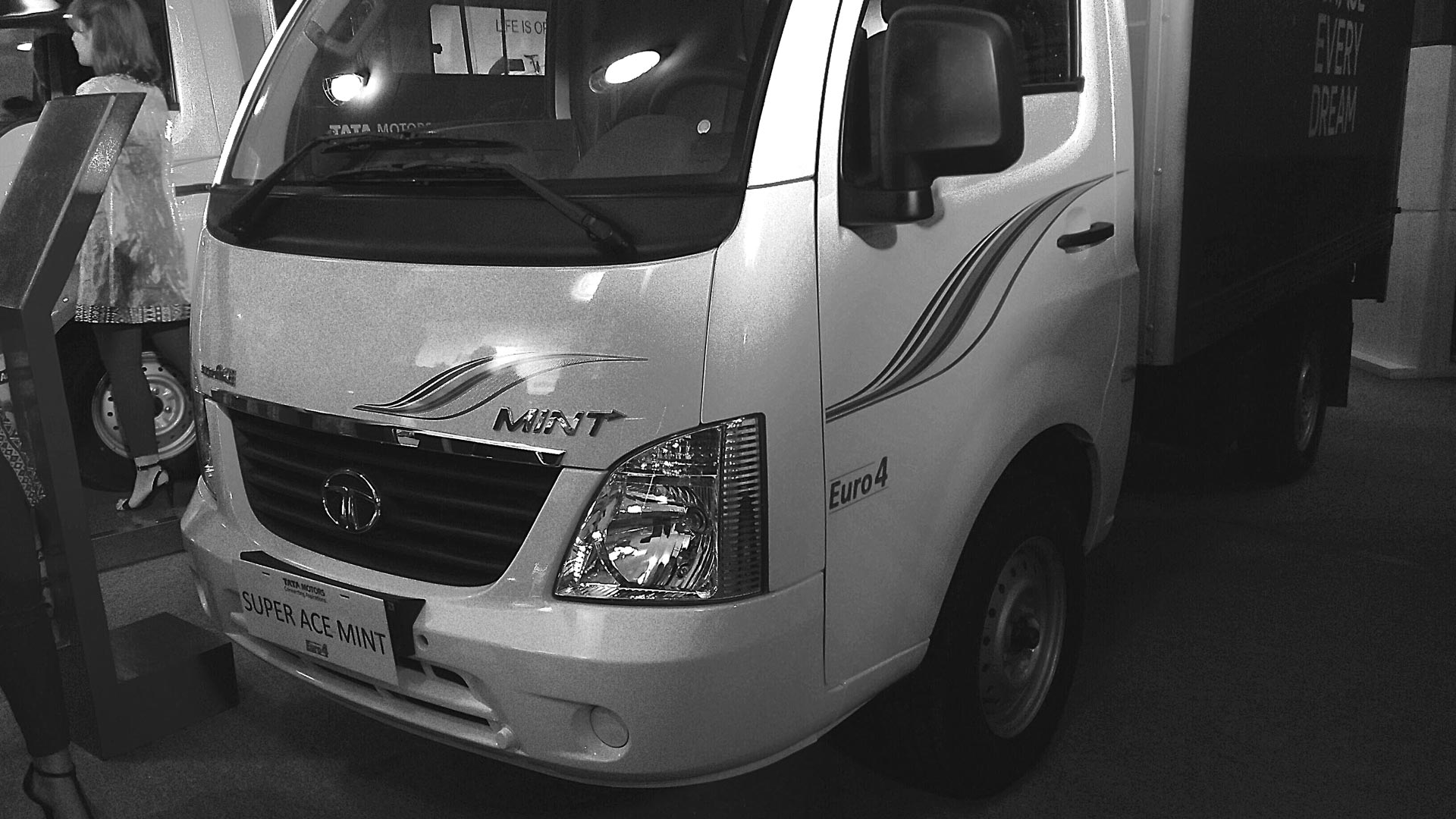
On display at the Philippine International Motorshow (PIMS) that’s running at the World Trade Center (WTC) in Pasay City until Sunday, October 28, is the Super Ace light truck, the same variant with the air-conditioned passenger rear body that we reviewed back in 2015 and found exceptionally suited to our road conditions, but this new Super Ace Mint comes with a 1.4 liter turbodiesel that’s been upgraded to Euro 4 emission standards for 2018.

IMG20150907154311
The Super Ace passenger van we tested on unpaved rural roads in 2015

The old Euro 2 engine, the Tata 475 IDI TCIC, was a rugged and proven powerplant, having put in decades of service on the Super Ace truck as well as Tata’s older, classic and pioneering Indigo sub-compact sedan that we also reviewed back in 2016 and again drove in an auto-rally last year.  And we liked that old engine, I liked it. Drive it right in the truck or the sedan, let up on the clutch and get real pressure-plate contact before giving her a little gas (or diesel … you know what I mean), gently hit that rpm sweetspot for accelerating upshifts, and save that turbo boost for second to third gear overtakes, you’ve got yourself a quiet gem that could sound like a sprinting bus and that’d make drivers in SUVs want to catch up with you and check out what had showed them up.

The Indigo we drove in STV Auto Rally Corporate Challenge (ARCC) last year

So, we were apprehensive, I was apprehensive, about the Euro 4 replacement turbodiesel for 2018 that Tata Motors warned us would be from an entirely different engine series (and not a mere refinement on what I’ve gotten attached to, the old 475 IDI). Common wisdom in anticipation of this year’s mandatory switchover to Euro 4 standards warned of cleaner burning engines made eco-friendly by holding these back in some way. Frankly, first-world sensibilities being imposed on Tata diesels didn’t sit well with me, not when we’re talking about feisty tropics- and desert-tough diesels from rough-roads India.

But–and here’s the big “but” you’ve been wading through my ramblings for–Tata’s done well with the Euro foured replacement, apparently and on paper.

Tata 475 IDI TCIC >>> Tata 1.4 CRAIL 12
Emission standard Euro 2 >>> Euro 4
Type 4 cylinder inter-cooled turbodiesel >>> 4 cylinder inter-cooled turbodiesel wih ECU control and direct-injection common-rail (DiCOR) fuel feed
Displacement 1405cc >>> 1396cc
Bore x stroke 75mm x 79.5mm >>> 75mm x 79mm
Compression ratio 21 : 1 >>> 16.8 : 1
Power 69hp (70ps) @ 4500rpm >>> 70hp (71ps) @ 4000rpm
Torque 135Nm (99lbft) @ 2500rpm >>> 140Nm (103lbft) @ 1800~3000rpm

The new 1.4 CRAIL 12 is so named because that critical jump from level 2 to 4 comes as the result of high-pressure Common RAIL direct fuel injection that’s tightly controlled by the new engine’s ECU grid.  With diesel fuel introduced at high pressure directly into the combustion chamber, the new 1.4 liter diesel appears to have given up 0.5mm of stroke height and 9cc’s in total displacement. But with its compression ratio reduced to 16.8 : 1, it actually gets a 24% gain in net combustion chamber volume from the old 475 IDI’s 67cc over 1405cc, to the new 1.4 CRAIL’s 83cc over 1396cc.

Too many numbers going in surprising directions? Definitely! But the bottom-line of these finessed re-sizings is peak power that’s 1hp more and at 500rpm’s less revolutions, and peak torque that pushes with 5Nm more over a lower/higher rpm range from 1800 to 3000rpm (versus the old 475’s peak just at 2500rpm).  Convert that Nm to lb-ft and you’d figure out that the new engine now pushes like a full-fledged 100hp ++ gasoline engine.  And all these with a diesel engine which balances turbocharger boost against high pressure fuel injection in a larger combustion chamber that ensures more thorough and cleaner fuel burn.

Other words: modern, cleaner burning, and hey, still zippy … maybe zippier!
BAIC Philippines ramps up to PIMS 2018 with launch of renegade crossover

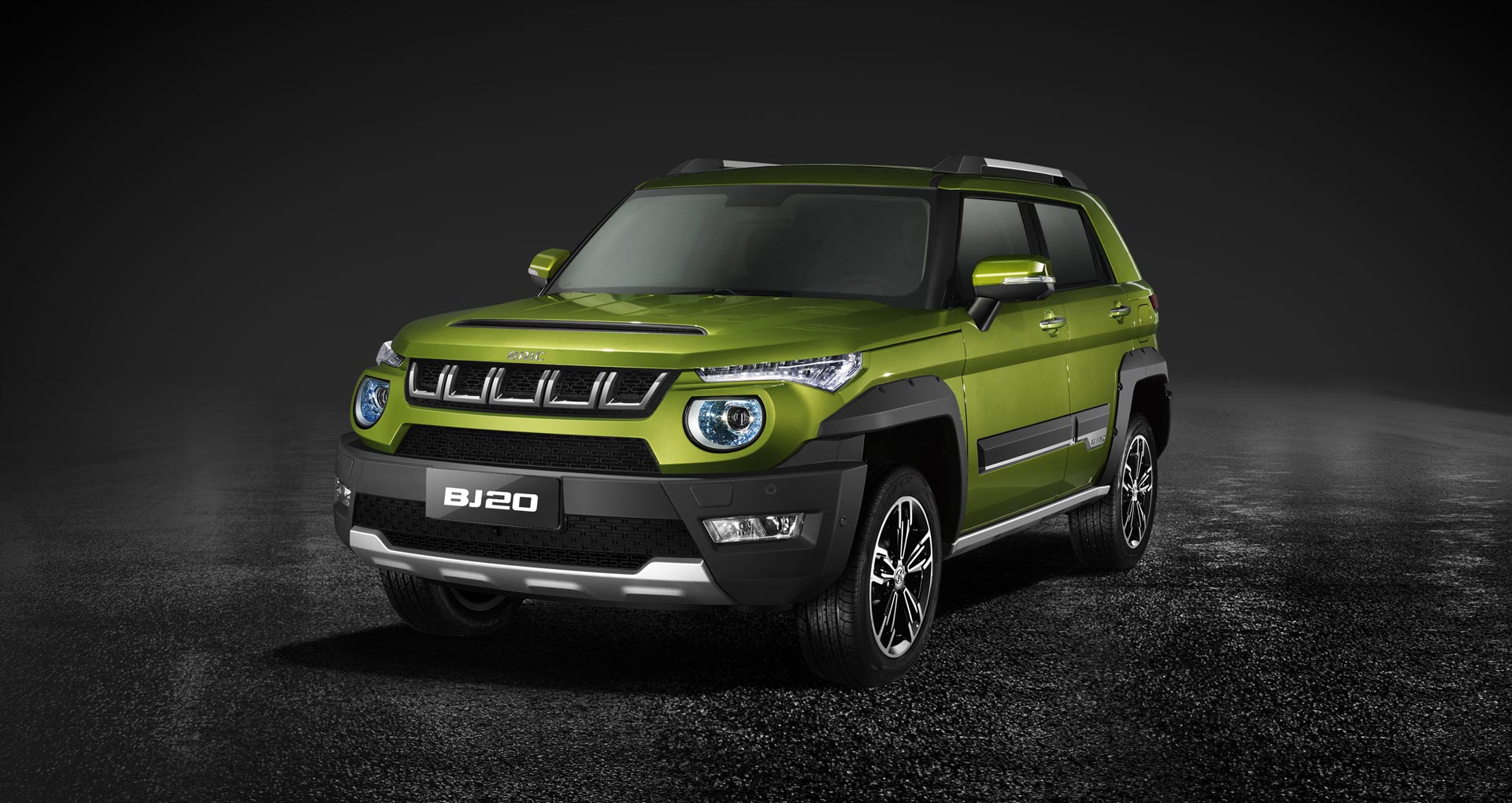
Makati City, 28 September 2018–A month before this year’s Philippine International Motor Show (PIMS), the auto-industry’s major semi-annual event where the brand was introduced here four years ago in 2014, BAIC now launches the Bravo Jeep BJ20 compact crossover SUV. In the crowded two-row SUV super-segment that blurs the line between sub-compact and compact five-seaters, the large BJ20 faces off against dozens of rivals by pitching a new sensibility to the multitudes who seem to aspire for SUV versatility.

Sure, the BJ20 looks like what a general-purpose government-issue military transport would evolve into after decades of service in cold and wet hinterland. But, get past that striking lack of sleekness and you’d find engineering that’s elegant and nowhere near the brute force mindset that it projects … engineering that makes it at home on hard smooth roads as well as soft, unpaved tracks.

The BJ20 is a front-wheel-drive crossover with fully independent suspension up front and in back that floats atop 215mm of ground clearance. That kind of altitude makes for generous articulation where each wheel assembly has ample telescoping range for the suspension to keep both front drive wheels well planted on uneven ground. And those stock 225/55 R18 tires on alloy rims make for wheel discs with 0.685m diameters, the gentler arc on those large wheels making for easy rolls across potholes and for good leverage to float up and over inevitable bumps. It’s by no means an off-roader, it still needs a semblance of roadway, but the BJ20 won’t balk at straying from hard pavement.

(It’s like they had appraised the OX Truck: that 2.5 ton hauler designed by a MacLaren Formula One engineer for relief work in Africa; that truck with its front-engine and front-wheel-drive managing to get enough traction to carry tons of payload over unpaved roads. It’s a way to thumb noses at 4×4 purists … and that’s cool.)

The powertrain is also a surprise, evincing quips of “how the heck did they do that?!” and similar invectives. The BJ20 mounts a 1.5 liter Mitsubishi 4A91T 4-cylinder gasoline burner with that maker’s trademark MIVEC variable-valve-timing tech and their TF036HW turbocharger. Sourced from the Shengyang Aerospace Mitsubishi Sino-Japanese joint venture, the 4A91T’s turbocharger delivers early onset and lingering boost. In fact the turbo boost is so early and prolonged, the engine’s torque curve looks like that of a turbodiesel but, of course, with a higher and less stressed top end.

On a naturally aspirated 1.5 liter 4A91 (note the missing “T” from the end, like the type mounted on the Mitsubishi Xpander SUV-wannabee), peak torque is 141Nm @ 4000rpm. But, with the TF036HW turbocharger that Shenyang Aerospace asserts to have turbine vanes with advanced aerodynamic geometry, the 4A91T has torque already reaching 160Nm immediately after roll out with 1500rpm, then hitting 180Nm for early transition at 1750rpm, then peaking with a rich 210Nm at 2000~4500rpm. That’s an extra-wide powerband that starts at 2000rpm, stays peaked until 4500rpm and lingers long enough to deliver a top power figure of 147hp with the system hitting its highest “torque x revolutions” numbers at 6000rpm.

Under the hood: 1.5L Mitsubishi 4A91T turbocharged 4-cylinder with MIVEC valvetrain and high pressure GDI fuel injection rail.

BAIC asserts that the 4A91T was chosen as much for efficiency as for performance: good reminder of why turbochargers were first mainstreamed back in the 1990’s, for cleaner emissions and better fuel mileage. In effect increasing engine displacement by 33 to 50 percent, but only when you step on the gas and spool things up, the plumbing on that 1.5 liter engine makes it push like a 2 liter mill but with a turbocharger’s typical 15 percent fuel mileage improvement over a naturally aspirated engine of that size. BAIC reports getting 13.15km/l on a comprehensive mixed-mode drive.

Undoubtedly contributing to that mileage number is the continuously variable transmission (CVT) they’ve mated to the engine. It’ll be a sore point for some prospective buyers, it not being a traditional or manual transmission with discrete gear ratios, and instead having a chain between pulleys that automatically change diameters (and thereby vary their reduction ratio). But that continuously changing ratio without need for shifting between gears is what keeps the turbo unceasingly spooled up for acceleration–talk about an effective and efficient match up.

Plus, if the BJ20 has the JATCO CVT8, the CVT gearbox that’s been widely paired to Mitsubishi engines with actual or boosted displacements of 2.0 to 3.5 liters, it gives the compact crossover an exceptionally deep “first gear” ratio for hauling itself out of sticky situations. The JATCO CVT8 has a maximum deep ratio 7.0:1 that’s better than the 6.0:1 typical of other CVTs and can multiply torque significantly more than manual or automatic transmissions with first gear ratios that are typically around 4.0:1.

The BJ20 with its pugnacious looks, elegant powertrain and sublime undercarriage comes in two variants: the 1.5L Turbo CVT Standard that lists at PhP1.148M and the 1.5L Turbo CVT Luxury at PhP1.288M.

China’s BAIC partners up with behind-the-scenes giant Magna of North America

After their major win overtaking Nissan and Tesla sales with their all-electric EC hatchbacks, leading Chinese carmaker BAIC partners up with North American giant Magna International to build electric vehicles at a 180,000-unit annual capacity plant in Zhenjian.

Press Statement by BAIC Philippines, “BAIC and silent giant Magna partner up to make electric vehicles in China,” 2018:

Magna International, Inc., the auto-industry’s silent global giant, is partnering up with BAIC to build electric vehicles for and in China, the world’s largest automotive market. Well known only in B2B circles, Magna International of Canada is the world’s largest automotive contract manufacturer, both producing parts for major brands like Detroit’s big three and assembling entire vehicles for marques such as Peugeot and MINI.

Where China has required joint ventures of any foreign company intending to manufacture vehicles in the country, they are now phasing out the requirement in the case of electric vehicles, zero-emissions vehicles that they’ve fast tracked to advance their eco-industrial agenda. But, in spite of this shift that would allow Magna to set up their wholly-owned shop in China, they’ve partnered up with BAIC subsidiary Beijing Electric Vehicle Co. Ltd,.

With a deal already in place to develop an all-electric vehicle for China, the partners now add a second agreement for Magna to take over an existing BAIC production facility in Zhenjian, Jiangsu Province where they intend to roll out new models by 2020. Part of the large facility’s 180,000-vehicle annual capacity will also be used for contract work for other companies.
BAIC Chairman Xu Heyi says, “from a strategic point of view, the establishment of the JV’s will benefit both Magna and BAIC to further strengthen our business growth in China.”

Hino invests further in workforce, breaks ground on new technical training center

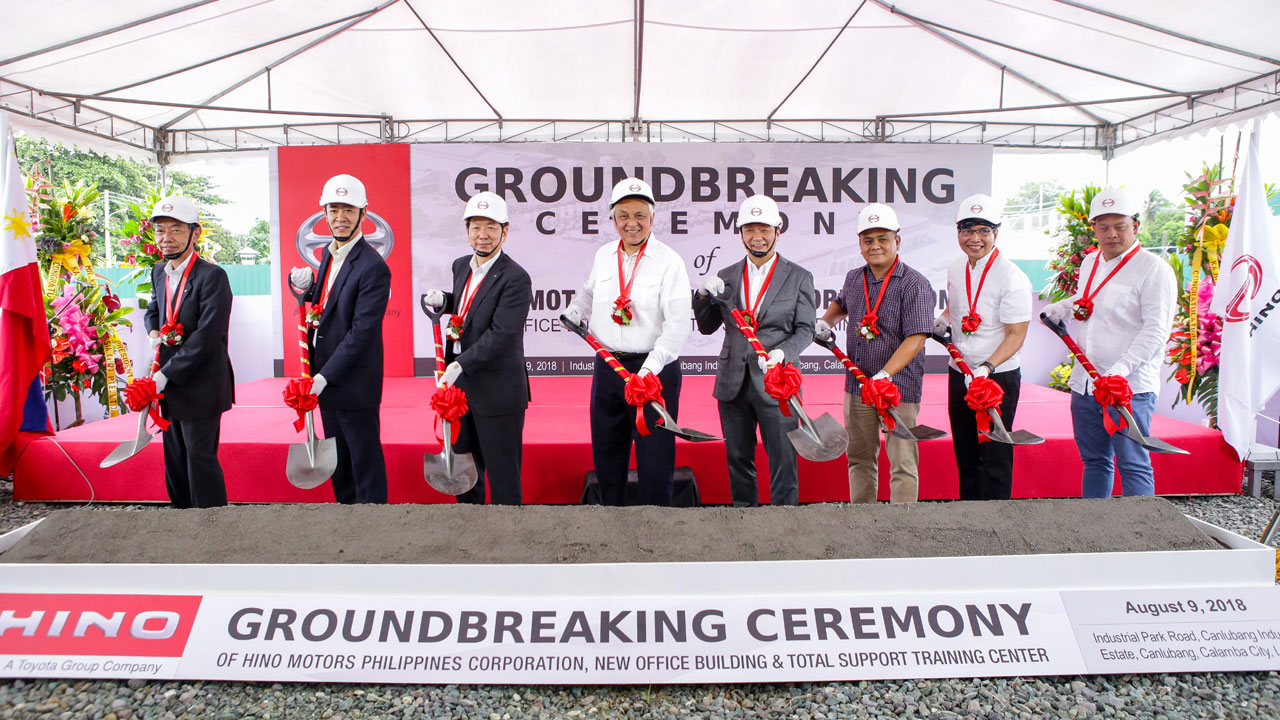
Hino Motors Philippines, the country’s second largest truckmaker and the top brand with trademark in-house body-building operations, is investing further in the country’s workforce, breaking ground on a new building to house a technical training center as well as new offices at their expansive grounds in Canlubang, Laguna. The new facility will have 17,990sqm of floor space and will be completed by July next year.

Press Statement by Hino Motors Philippines, “Hino breaks ground for newest building and training center,” 2018:

Laguna, 11 September 2018–Hino Motors Philippines (HMP), the exclusive distributor of Hino trucks and buses in the Philippines, has recently broken ground for its new office building and technical training service center in Hino Plant, Canlubang, Laguna.

Besides expanding business operations, Hino’s new facility will be used to strengthen the skill set of the company’s manpower through the technical training service center. Rooted on its commitment to providing Total Support, Hino hopes to provide the best kind of training and preparation for its staff and dealers to enable to handle different situations as truck service providers.

“Hino is always looking for opportunities to improve the quality of products and services that we offer. From launching Euro 4 vehicles and the new truck line to opening new dealerships and continually improving our aftersales program, Hino ensures that we always offer something new and of high value to our customers,” said HMP President Hiroshi Aoki.

Hino Motors, Ltd. President and CEO Yoshio Shimo also graced the groundbreaking ceremony and shared a few words in light of the event with emphasis on communicating Hino as the “trucks and buses that do more”.

As the only one-stop shop in the Philippines for trucks and buses, Hino upholds its vision of creating a more connected community where goods and people reach their destination in the most efficient manner possible.

“All our actions derive from our commitment to provide Total Support to all our partners. By being passionate to serve the Filipino people, we uphold the premium standard Hino is known for globally and across the country,” HMP Chairman Vicente T. Mills, Jr. shared.

The new 17,990-square-meter facility is expected to be completed by July 2019.

Bestselling BAIC electric hatchback beats Nissan Leaf and Tesla Model S in first quarter 2018

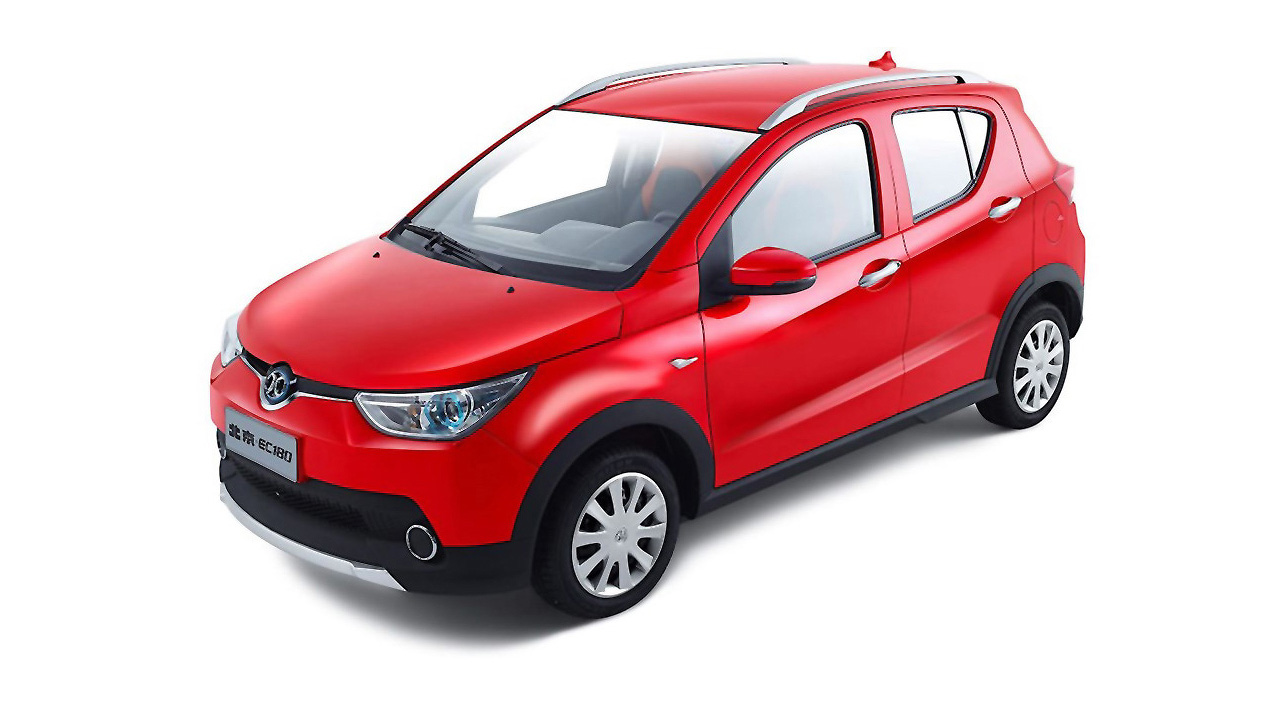
From China, where energy strategies reach beyond maxing out efficiencies and scrubbing up emissions from gasoline and diesel fuel, comes the BAIC EC electric car that outsold the popular Nissan Leaf and Tesla Model S in the first quarter of the year.  Unmistakably an economy model, the BAIC EC hatchback is a fitting leader, harking back to when sub-compacts dominated global markets after the oil crises of the last millennium.

Press Statement by BAIC Philippines, “BAIC overtakes Nissan and Tesla with bestselling electric car for first quarter 2018,” 2018:

The BAIC EC has overtaken the Nissan Leaf and Tesla Model S as the world’s bestselling purely battery-powered electric vehicle. The first quarter 2018 review completed by industry monitor JATO Dynamics puts BAIC EC sales at 25,360 units, giving the Chinese carmaker a comfortable margin over the Nissan Leaf’s 22,124 units and the Tesla Model S’s 11,450. The numbers depict phenomenal 260 percent growth for the BAIC EC since the first quarter of 2017, as compared to the Nissan Leaf’s 47 percent increase and Tesla Model S’s 6 percent decrease.

The BAIC EC leads the battery-powered electric vehicle (BEV) category which, along with hybrid electric vehicles (HEVs) and plug-in hybrids (PHEVs), as well as extended range electric vehicles (EREV) and fuel-cell vehicles (FCVs), comprise the industry’s alternative fuel vehicle (AFV) segment. In this context, given how electrics represent a major avenue for curbing the world’s fossil fuel consumption and emissions, it seems appropriate that the BAIC EC sub-compact hatchback comes in ahead of the larger and more sporty Nissan Leaf compact hatchback and Tesla Model S premium mid-size sedan.

The base variant of the Tesla Model S has its motor delivering 362hp with 441Nm of torque to attain a top speed of 249km/h. The Nissan Leaf’s powerplant puts out 147hp with 320Nm of torque to push things up to a max of 150km/h. In contrast, and in context, the bestselling BAIC EC is optimized as a city commuter with an efficient 41hp and 140Nm motor keeping things civil with a top speed of 100km/h,

Consequently, these top-ranking BEVs, which represent a good sampling of all models that are currently on offer across markets, also have efficiency numbers that differ widely. Without needing a full picture of the fuel burnt for generating city grid power, a simple scan of battery capacities and vehicle ranges reveal just how divergent these models are in terms of energy efficiency.

The Tesla Model S with a 60kWh battery giving it a range of 335km manages to get 5.6km per kWh of capacity. The Nissan Leaf, its 40kWh battery giving it a 240km range, is more efficient as it gets 6.0km per kWh. But, best of all, the top-selling BAIC EC has its base variant’s 20kWh battery lasting for 156km and managing to deliver 7.7km per kWh.

This year’s first quarter is also when overall AFV sales broke the million-car mark with a total volume of 1.09 million units after a 21 percent increase over numbers from the same period last year. It seems even more appropriate that, behind this historic million-cars milestone for fossil fuel alternatives, the bestselling battery-powered electric vehicle is the BAIC EC, a sub-compact economy model much like the hatchbacks that started overtaking fuel-guzzling land yachts in the 1970’s.

Volkswagen newsmakers on mall tour this weekend

After last week’s game changing debut of Volkswagen models sourced from China (and priced for Asia) for the very first time, the Volks folks are now ready to have their new Santana and Lavida sedans, and their new Tiguan Mk.I crossover SUV, scrutinized and scrutineered by the motoring public. Tomorrow and on Sunday, get up close and personal with the Volkswagen newsmakers they’ll be exhibiting at the Glorietta Activity Center in Makati and at the Eastwood Mall Atrium in Quezon City.

Press Statement by Volkswagen Philippines, “Newly launched Volkswagen models go on weekend mall tour on May 26-27,” 2018:

Volkswagen Philippines, which just launched its five groundbreaking models: the Santana MPI M/T Trendline, the Lavida 230 TSI DSG Comfortline, the Tiguan 280 TSI DSG Comfortline, the Santana GTS MPI A/T Comfortline, and the Lamando 280TSI DSG Highline last May 18 at the Shangri-La at the Fort, now takes its newest vehicles closer to the public via a mall tour this weekend of May 26 and 27.

From 9 a.m. to 10 p.m., mallgoers at the Glorietta Activity Center in Makati City will get to see up close the Santana MPI M/T Trendline, the Lavida 230 TSI DSG Comfortline, and the Tiguan 280 TSI DSG Comfortline. Shoppers at the Eastwood Mall Atrium in Libis, Quezon City will also see these three new vehicles on display from 11 a.m. to 10 p.m. (May 26) and from 10 a.m. to 10 p.m. (May 27). And from 10 a.m. to 10 p.m., Cebuanos will also get to see these three new models at The Gallery of Ayala Center Cebu.

Volkswagen Lifestyle items will be given to customers who will make inquiries, or book a test drive.

The Santana, which was among the 10 best-selling models in China in 2017, is powered by a 1.4-liter Multi-Point Injection (MPI) 4-cylinder gasoline engine mated to a 5-speed manual transmission, with maximum power output of 90 Ps at 5,500rpm and maximum torque of 132 Nm at 3,800rpm. For ride comfort and stability, the Santana features electronic power steering, front McPherson Independent Suspension, and rear composite torsion beam semi-independent suspension. Safety highlights include ISOFIX anchorage points (mounting fixture for two child seats on rear seat bench), Anti-lock Braking System (ABS), and wireless doorlock with immobilizer. Available exterior colors are Polar White, Reflex Silver, Pepper Grey and Deep Black with an SRP starting at P686,000.

The Lavida, which is still one of the best selling sedan Volkswagen model, is equipped with a 1.4-liter Turbocharged Stratified Injection (TSI) 4-cylinder gasoline engine with BlueMotion Technology mated to a 7-speed Direct Shift Gearbox (DSG) transmission, capable of 130 Ps of power at 5,000 rpm and 225 Nm of torque at 1,400 to 3,500 rpm. The interior features and comfort amenities include leather seat material, cruise control, Climatronic air conditioning, and sunroof. Safety highlights include the Electronic Stabilisation Program (ESP) with Brake Assistant, ABS, Electronic Differential Lock and Anti Slip Regulation (ASR), hill hold control, Push Start, and Front and Rear Park Distance Control (PDC). Available exterior colors are Polar White, Reflex Silver, Deep Black, Limestone Grey, Sunset Red, and Opalsilver Metallic with an SRP starting at P1,171,000.

The Tiguan, which has comfortably maintained its position as segment leader, has a 1.4-liter TSI 4-cylinder gasoline engine with BlueMotion Technology mated to a 6-speed DSG transmission. Maximum power output is 150 Ps at 5,000 rpm, while maximum torque is at 250 Nm at 1,750 to 3,000 rpm. Its interior features and comfort amenities include Vienna leather seat material, 2-zone Climatronic airconditioning, Panoramic sunroof, 8 speakers, and driver power 12-way seat adjustment. Safety systems include ISOFIX anchorage points, ESP, ABS, brake assistant, ASR, EDS, EDTC, hill hold control, and rear PDC with acoustic warning signal. Available exterior colors are Polar White, Titanium Beige, Hunting Brown, and Deep Black with an SRP starting at P1,648,000.

The warranty coverage for all these five new models are comprehensive. Aside from the 3 years or 100,000-km general warranty, whichever comes first, Volkswagen Philippines also offers a 3-year warranty for paint and another 3-year warranty for through-corrosion of the main steel body structure.

The periodic maintenance service (PMS) interval schedule for these new models is also structured for its owners convenience. The PMS interval is once a year, or every 10,000 kms, whichever comes first. This is more convenient and more cost-efficient compared to the industry-standard 5,000-km PMS interval.

Beyond the vehicles value-for-money specifications, features, and the warranties and PMS intervals, the five new models unveiled open new chapters to the continuously evolving relationship between Filipinos and Volkswagen, making the world-class auto brand much more accessible than ever to the Filipino car-buying public.

Automotive excellence and heritage unique to Volkswagen are now within reach of the hardworking, daring Filipino. And when these cars eventually bring you to the verge of your own personal breakthrough, thats when you know that with Volkswagen, Your Drive Just Got Better.

The Santana MPI M/T Trendline, Lavida 230 TSI DSG Comfortline, and Tiguan 280 TSI DSG Comfortline are available at all eight Volkswagen Philippines dealerships: Volkswagen BGC at 938 28th Street City Center, Bonifacio Global City, Taguig City; Volkswagen Quezon Avenue at 1229 Quezon Avenue, Quezon City; Volkswagen Alabang at Caltex along Alabang-Zapote Road, Madrigal Business Park, Ayala Alabang, Muntinlupa City; Volkswagen Greenfield District Service Center at 833 Sheridan Street, Barangay Highway Hills, Mandaluyong City; Volkswagen Pampanga at McArthur Highway, Dolores, City of San Fernando, Pampanga; Volkswagen Cebu at A. Soriano Avenue, North Reclamation Area, Cebu City; Volkswagen Iloilo (upper ground level of SM Iloilo along Benigno Aquino Sr. Avenue), and Volkswagen Bacolod (along Araneta Street, Singcang, Bacolod City, Negros Occidental).

For more information, log on to www.volkswagen.com.ph

For us folks once again, Volkswagen

If you recall the time when Ayala Corporation’s Fernando Zobel became the elegant and surprisingly hip model for those Swiss-made but cheap Swatch wristwatches, then the sight of him driving Volkswagen’s newly introduced Santana sedan serves as swift reminder of how that German marque’s direct translation asserts them to be the People’s Car champion.

Last Friday, at an elegant evening event auspiciously attended by leaders of global engineering giant Robert Bosch GmbH as well as those of Ayala Corporation’s other automotive brands such as Isuzu and Honda, Volkswagen Philippines launched five new models that, as they put it, “redefine how the world-renowned German marque in the Philippines will develop and expand its local presence.”

Now, five years after Volkswagen AG had appointed Ayala Corporation as sole distributor to the Philippines in May 2013, after half a decade of marketing models that both brandished and seemed burdened with premium, up-market prices, the country is receiving models designed for and manufactured in Asia, and that are finally priced for emerging markets. The Ayala group’s Arthur Tan (president and CEO of their AC Industrials subsidiary) says that now, five years later, these five new models make them “faithful to the original intent of Volkswagen to offer cars that are accessible to the people.”

Introduced last Friday were Shanghai Volkswagen’s Santana, Lavida and Lamando sedans, and the Santana GTS hatchback–all designed initially for the China market and built on globally standardized Volkswagen platforms. The fifth model introduced was the face-lifted first-generation Tiguan which they continue to manufacture in the China market despite the second generation model having already been introduced here as well as other markets globally. First to become available at all Volkswagen dealers starting last weekend were the Santana sub-compact and Lavida compact sedans, and the Tiguan crossover SUV. The Santana’s GTS sub-compact hatchback version and the large Lamando sedan will be on offer come November.

According to Shanghai Volkswagen first vice president David Powels, the Philippines is the first country ever to receive models from their production lines in China. The timing is understandable with the China market’s unparalleled economies of scale finally being complemented with preferential tariff rates this year under the completed implementation of the ASEAN-China Free Trade Agreement.

Tiguan 1.4L TSI compact crossover SUV, already available at P1,648,000

The ironic new Tiguan’s first generation origin (hidden as it is behind its current-theme facelift) is easily overshadowed by its P1,648,000 price tag that makes it over P600,000 cheaper than the P2,259,000 second-generation Tiguan they had on offer before (and until now, actually, with both models still being featured at the volkswagen.com.ph online showroom). At that price, the new Tiguan which features the same Euro 5 compliant 1.4 liter turbocharged gasoline engine as on the previous, more expensive Tiguan, now squares off firmly against premium compact crossover SUVs such as the Honda HR-V and Mazda CX-3.

Lavida 1.4L TSI compact sedan, already available at P1,171,000

On the other hand, the new Lavida compact sedan’s P1,171,000 price pits it squarely against the Altis of global leader Toyota with its P941,000 to P1,451,000 price range. This while the Lavida features a sportier powertrain, its 1.4 liter turbocharged gasoline engine with stratified injection mated to a Direct Shift Gearbox (DSG, their brand of dual clutch transmission) trumping the Altis’ naturally aspirated 1.6 or 2.0 liter engines being mated to less rugged continuous variable transmissions or CVTs.

Santana 1.4L MPI MT sub-compact sedan, already available at P686,000

The new base-model Santana sub-compact sedan is the actual gem, the very point of this new spear that Volkswagen Philippines is bringing to the fight. Built on the Volkswagen Group’s A05+ platform (the same underpinnings as that of the popular Polo), the Santana brandishes a spartan configuration behind trademark Volkswagen and generally European touches. The Santana with a 1.4 liter naturally aspirated gasoline engine mated to a 5-speed manual gearbox is slightly larger than the market-leading Vios while listing at an astounding P686,000 that lances right through the P629,000 to P791,000 price range of the 1.3 liter manual gearbox variants of Toyota’s popular sub-compact sedan.

Santana GTS sub-compact hatchback, available in November

Volkswagen Philippines’ sudden and extensive competitiveness could have clay feet because of the China connection, but any skepticism about build quality, fair or otherwise, is directly addressed by their unprecedented claim of 10,000km (twice the industry standard) between PMS visits. Ruggedness is presumed and even further guaranteed with the options for a 3-year paint warranty and a 3-year warranty against corrosion of main steel structures, these over and above the standard 3-year or 100,000km general warranty.

Lamando compact sedan, available in November

What about Volkswagen’s other vulnerability, about their reserved design language that’s kept intact among the China-sourced models? This design that’s criticized as not being young enough by them, the young? At the launch, when Fernando Zobel drove in and unveiled the all-important Santana, he matter-of-factly and wordlessly underscored how critics are missing the point entirely, underscored how it takes an iconic and deeply storied brand like Volkswagen to pull off a design like Volskwagen’s.

It takes a brand like Volkswagen to offer up a design that’s bare of frivolous flourishes, that doesn’t stoop to pandering pantomimes of jet-fueled or fire-breathing things, and turns this simplicity into ageless elegance. Remember? It was the Volkswagen Beetle in the 1960s that bucked the trend and pulled the rug out from under those huge land-yachts with their ironic tail fins and gas-guzzling V8s.

Suzuki previews next generation Dzire notchback sedan at MIAS 2018

Compact-car expert Suzuki Philippines joins the Manila International Auto Show (MIAS) for the first time and teases a new Dzire sedan that leaves its Swift roots behind and now features an economical auto-shifting gearbox.

Seeking to keep up their strong showing in 2017, CAMPI member Suzuki Philippines joins the popular annual MIAS tradeshow that’s now running at the World Trade Center until Sunday, April 8. On exhibit, along with their Ertiga MPV and Ciaz compact sedan mainstay bestsellers, are their all-new Vitara crossover SUV and next generation Dzire sub-compact sedan. Just now being previewed and still to be introduced formally this year, the third-generation Dzire represents a subtle yet major departure from the current model short sedan.

Still a sub-4 meter notchback sedan (so configured to fit a popular tax niche in India where the Dzire was originally developed by the Maruti-Suzuki partnership) this new model is now based on the HEARTECH platform of their sub-compact Baleno hatchback. This, in contrast to the current, second-generation Dzire that was developed off the underpinnings of the sporty Swift hatchback.

5th-gen Suzuki Baleno hatchback

The new, 2017 model-year Dzire looks more of a sedan, despite that notch of a trunk, with her proportions being stretched and hunkered down onto a svelte torso. And, this evolution in platform from the Swift’s sporty form to the Baleno’s filled out family-friendly layout is matched with a sensible engineering change in the drivetrain.

To replace the current Dzire’s auto-shifting feature on the top-end GL variant is the new model’s Auto Gear Shift (AGS) system, a.k.a. an Automatic Manual Transmission (AMT). Actually less sophisticated than the 4-speed conventional automatic gearbox of the previous Dzire model, this AMT variant basically takes the Dzire’s manual transmission variant and removes the manual clutch pedal and mechanical stick shift, replacing these with an electro-mechanical Magneti Marelli auto-shifting module.

When using full auto mode, the driver delegates clutch- and stick-work to the algorithms and solenoids of Magneti Marelli robotics. In manual mode, the driver takes control of the shifts (or, at least, requests these from the module) while still leaving the automatics in charge of the clutch-work. (The setup takes some getting used to, is closer in feel to a manual transmission rather than an automatic. To understand the dynamics of such a set up, see our review of the BYD F-0 AMT.)

Magneti Marelli bolt-on electro-mechanical AMT module

Undeniably, an AMT is less sophisticated than a conventional 4-speed AT with its planetary gears and hyrdraulic torque converter. The good news is that this is reflected in the sticker price of the new Dzire. Where the current Dzire GL with 4-speed AT lists at P718k, the next-gen model with its AMT auto-shifting variant will have an SRP that’s under P700k, reportedly.

<SOURCE> Press Statement by Suzuki Philippines, “Suzuki Philippines joins the Manila International Auto Show 2018,” 2018:

Manila, Philippines (April 6, 2018) – Suzuki Philippines (SPH), the country’s pioneer compact car distributor, marks a new milestone as it joins the Manila International Auto Show (MIAS) for the first time last April 5 at the World Trade Center, Pasay City.

MIAS, the country’s biggest annual motoring event, serves as an avenue for showcasing the latest automotive, bicycle, rickshaw and spare parts from various brands. The show is known for hosting exhibits, activities and product reveals of the local auto industry’s leading players.

According to SPH Vice President and General Manager for Automobile Shuzo Hoshikura, the four-day event opens opportunities for SPH to further its goal of strengthening the brand’s foothold in the country.

“We want to build on the momentum we achieved early this year. While our expansion and sales efforts prove to be effective, we remain active in looking for platforms that can help us broaden the reach of the Suzuki brand in the country, and joining MIAS showed promising potential to fulfil that objective,” shared Hoshikura.

To celebrate SPH’s inaugural participation in MIAS, the brand displayed its award-winning and best-selling vehicles such as the all-new Vitara, 2017 CAGI Car of the Year awardee under the Subcompact Crossover Category; Ciaz, Best Fuel Economy Rate awardee of the DOE Eco Run 2017 and Best Personal Commuter awardee of the 12th C! Magazine Awards; and Ertiga, Suzuki’s popular life utility vehicle. The Suzuki Hayabusa from the Motorcycle Division and Suzuki outboards from the Marine Division were also showcased to present the brand’s other product lines.

SPH also provided a preview of the soon-to-launch Suzuki Dzire with Auto Gear Shift technology upgrade. Designed to deliver better engine performance and smoother driving, the enhanced sedan enables versatility through the combined fuel efficiency of manual gearbox and convenience of automatic transmission. It also sports an elegant look that’s perfect for millennials and Gen Z.

“It would be a waste if we did not seize the chance for the public to witness the newest in our product lineup. Although the official launch is still later this year, we opted to display the new Suzuki Dzire to show everyone that we indeed stay true to the promise of bringing the latest of our technological innovations to the Filipino people,” added Hoshikura.

Ertiga influencer Kelly Misa and Vitara influencer Mikael Daez were present during SPH’s program on the first day of the show. They were joined by the Suzuki Safety Scouts, the kiddie ambassadors of the Suzuki brand, who invited other young attendees to be part of their troop that promotes Suzuki’s road safety advocacy.

Hoshikura emphasized that beyond extending to the Filipino market its latest product upgrades and quality service, Suzuki is committed to the duty of contributing to achieving a safe and secure environment for everyone.

“The customers have always been at the core of all our pursuits. Fueling our passion of providing only the best-value vehicles is the vision of creating a responsible driving community because a good lifestyle is not just about style but also, and more importantly, life or quality of life, and such is the Suzuki Way of Life,” said Hoshikura.

For more information, please visit http://suzuki.com.ph/auto/ and like it on www.facebook.com/SuzukiAutoPH, https://twitter.com/SuzukiAutoPH and follow on Instagram at @suzukiautoph.

GAZ introduces military-grade 4×4 medium truck at MIAS 2018

“The Russian deuce-and-a-half,” spoken in a North-American accent, is how a middle-aged caucasian visitor described the tall GAZ SK 3308 being exhibited at MIAS. With the nickname, he was referring to the US armed forces’ own iconic 2.5 ton payload all-terrain troop and cargo carrier.

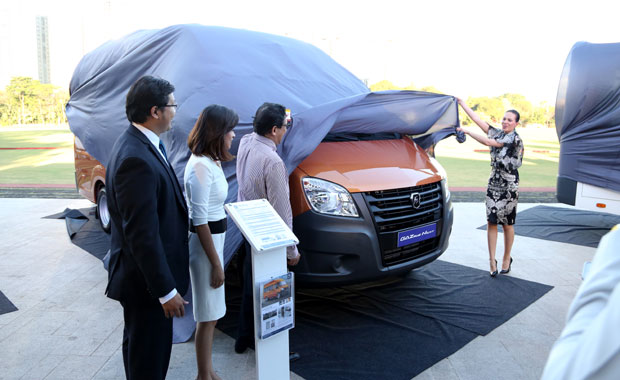
As promised during the brand’s launch of their GAZelle Next oversized van platform last month, and bowing to the brand’s global reputation for rugged all-terrain military vehicles, top Russian automaker GAZ now introduces their iconic 3308 at the ongoing Manila International Auto Show (MIAS) being held at the World Trade Center (WTC) until Sunday, April 8.

First established almost nine decades ago, GAZ (which stands for Gorkovsky Avtomobilny Zavod or the Gorky Automobile Plant, translated into English) started out as the Russian communist government’s cooperative effort with the Ford Motor Company in 1929.

The 3308 does indeed have the telltales of a spartan and immensely capable military truck. The 4×4 undercarriage with leaf-sprung drive axles front and back is built rugged to the point of making the vehicle take up 63 percent of its 6350kg gross and maximum loaded weight (yielding a 2360kg payload at a 37 percent load factor for people and cargo).

That “deuce-and-a-half” nickname might as well refer to its price with the SK 3308 reportedly being introduced here at a surprising P2.5M.

And, all that mass rides on 12.00R18 balloon tires that are outfitted with on-the-fly tire pressure regulators that enable the driver to adjust the tires’ contact footprints–softer pressure for larger footprints on rough/slippery surfaces, harder pressure for smaller footprints on smooth pavement.

<SOURCE> Press Statement by Gazelle Motors Corp., “All-wheel-drive GAZ SK 3308 4×4 Truck to track its course in Manila through Gazelle Motors Corporation,” 2018:

MANILA, Philippines–The GAZ SK 3308 4×4 Truck – GAZ Group’s all-wheel-drive medium truck – is expected to begin tracking its course in the Philippines’ automotive industry.

Unveiled at the 2018 Manila International Auto Show, the GAZ SK 3308 4×4 Truck runs on a 134-horsepower and 4.43-liter turbocharged YaMZ-534 diesel engine and coupled to a 5-speed manual transmission – is considered to be one of the most powerful trucks in its class.

The GAZ SK 3308 4×4 Truck is also equipped with power steering, a comfortable two-seat cabin, easy-to-reach controls, a tire pressure control system and mechanically driven winch. The GAZ SK 3308 4×4 Truck vehicle chassis are widely used to place various special add-ons for a wide range of activities.

Given its engine’s power, the GAZ SK 3308 4×4 Truck could loads of up to 2 tons and boasts of its rich history of transporting both military personnel and equipment in Russia and its 4×4 configuration helps enable the GAZ SK 3308 4×4 Truck to carry goods and people regardless of the terrain.

“Known for its all-terrain qualities in Russia makes the GAZ SK 3308 4×4 Truck ideal to be used in the country particularly by either government agencies or private socio-civic organizations in bringing relief to Filipinos affected by natural disasters,” Dr. Fernando L. Martinez, Gazelle Motors Chairman and Chief Executive, said.

He added, “Road conditions do not matter to the powerful truck. The GAZ SK 3308 4×4 Truck could run on paved roads, asphalt, dirt, off roads and could even cross river streams, if and when needed.”

The GAZ SK 3308 4×4 Truck is popular among the armed forces of many countries, and resource and geology companies that operate in deserts, jungle and mountainous areas, to say nothing of forest and countryside regions.

Gazelle Motors Corporation was incorporated after the cooperation agreement was signed between GAZ Group and Eastern Petroleum in September last year. The partnership between Eastern Petroleum Group of Companies and Gaz Group of Russia was initiated during President Rodrigo R. Duterte’s visit to Moscow, Russia in May last year.

Based on the cooperation agreement, Eastern Petroleum Group of Companies has the exclusive right to distribute and conduct after-sales services of GAZ Group Light Commercial Vehicles Llc.’s light commercial, medium and heavy-duty vehicles in the Philippines.

Russian automaker GAZ brings in minibuses for PHUV public jeepney modernization program

GAZ, the Cold War’s giant automaker for the million-man armies of the former USSR and the rest of the Eastern Bloc, now brings their GAZelle Next oversized vans and minibuses to the Philippines, pitching their Cityline model in particular for the government’s public utility jeepney modernization program.

Next evolution

First established almost nine decades ago, GAZ (which stands for Gorkovsky Avtomobilny Zavod or the Gorky Automobile Plant, translated into English) started out as the Russian communist government’s cooperative effort with the Ford Motor Company in 1929. Now, even after Perestroika and Glasnost in the 1990’s, GAZ continues to be Russia’s biggest automaker after prudently having discontinued their passenger car lines and focusing instead on trucks, buses and military vehicle production.

Introduced in 2015, the GAZelle Next is the latest evolution of their original GAZelle Business and smaller GAZelle Sobol lines which first rolled out in the 1990’s after Perestroika reforms. And, those original GAZelle Business and Sobol models, have been credited with facilitating the growth of small- and medium-scale enterprises in what is now Russia and its surrounding Confederation of Independent States or CIS.

While previous GAZelle Business and Sobol lines featured homegrown, Russian-built GAZ engines, the new Next line seems more prepared for a discerning global market with U.S.-branded Cummins ISF 2.8L turbodiesels that are up to Euro 4 and Euro 5 standards.

Next vans and Next Cityline buses

The large, 6.4m long GAZelle Next vans and minibuses are in the same class as the Mercedes-Benz Sprinter and the Volkswagen Crafter, and can seat as many as 17 people–16 passengers plus the driver. These mount the Cummins ISF2.8s4R148 delivering peak power of 150hp @ 3400rpm, peak torque of 330Nm @ 1800~2600rpm. The GAZelle Next vans are rated for a top speed of 130km/h but are most efficient at city cruising speeds with mileage numbers of 11.76km/l at 60km/h and a slightly degraded 9.7km/l at 80km/h.

GAZelle Next van

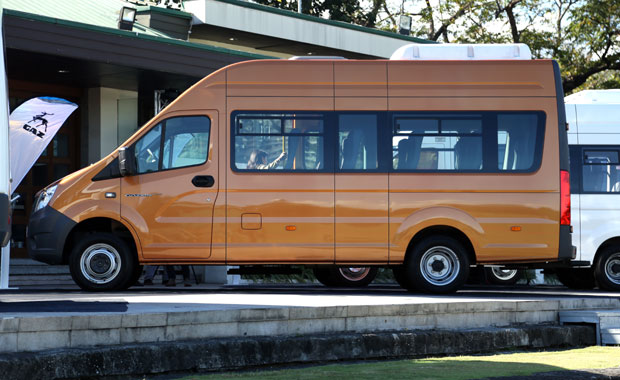
The specially configured GAZelle Next Cityline city commuter with its tall windows and curbside doors front and back, was kept shorter at 6m but also wider than the standard Next vans to mount seating rows of four abreast. It seats a total of 19 people–18 passengers plus the driver–and all in front-facing seats. The Cityline has a slightly tuned down diesel compared to standard Next vans, its Cummins ISF2.8s4R129 delivering peak power of 130 hp @ 3200rpm, peak torque of 295Nm @ 1600~2700rpm. Predictably, it has a lower top speed of 110km/h but the diesel detuning renders the bigger, heavier Cityline as efficient as its standard Next counterparts with mileage of as much as 11.76km/l at typically top city speeds of 60km/h.

GAZelle Next Cityline minibus

GAZ Philippines

The GAZelle Next vans and GAZelle Next Cityline buses are just the first GAZ models that’ll be brought here by Philippine distributor Gazelle Motors Corporation, a subsidiary of major industry player Eastern Petroleum. GAZ Group SVP for Sales and Marketing Christian Kremer said that, “the start of sales of multi-functional, reliable and eco-friendly GAZelle Next minibuses is the first stage of our entrance in the Philippine market, which is interesting from both points of view – commercial sales and in terms of participation in a large-scale state program of public transport modernization.” Kremer added, “I am sure that together with such a strong partner as Gazelle Motors Corp., we will be able to quickly and confidently develop in this market.”

Gazelle Motors Chairman and CEO Dr. Fernando Martinez said that they are pitching the GAZelle Next models, the Cityline in particular, as replacements for public jeepneys under the Class 1 category of the government’s modernization initiative. While the original Class 1 specification was for 10 to 14 seat transports for short city routes of around 5km, this has recently been expanded into sub-classes 1a and 1b.

GAZelle Next Cityline minibus

With this expansion, 10- to 14-seaters in sub-class 1a are supplemented with 15- to 20-seaters in sub-class 1b. It’s to the latter that Cityline minibuses look ideally matched with its capacity for 18 passengers and the driver in front-facing seats, plus the standing headroom for several more passengers in the aisle, and all these even without yet trying to reconfigure it with more efficient side-facing seats. Dr. Martinez asserted that, “the Philippines will benefit from advanced technology from Russia with respect to reliable and competitively-priced vehicles,” adding that “comfort” is one of the major benefits they intend to deliver to common commuters.

Dr. Martinez estimates that with substantial tariffs totaling 32% on Russian imports somewhat offset by around P185k in government subsidy, per unit, they could price the GAZelle Next Cityline at around P1.3M. For sales and servicing, he points to Gazelle Motors’ 5 dealer centers across the country, and to their 35 accredited service centers nationwide through local partners Rapide and Payless.